Decoding the Pre-Match Friction
International football windows are often packed with standard media boilerplate, but occasional friction punctures the routine. On October 3, 2026, just a day before a critical UEFA Nations League Group 3 fixture, Austrian manager Ralf Rangnick stepped to the microphone in Pristina and delivered a blunt assessment of the facilities at the Fadil Vokri Stadium [1]. Comparing the venue unfavorably to the freshly renovated terrain where Austria hosted their previous encounter in Vienna, Rangnick pulled few punches [1].
Rangnick characterized the playing surface as not too well maintained
and argued that given favorable weather conditions, the pitch ought to meet a higher standard [1]. Labeling the situation as pointless,
the German manager's remarks quickly transformed a standard pre-game press conference into a flashpoint of controversy [1]. For digital audiences scanning sports news ahead of the match, an outspoken critique from a high-profile manager provided an immediate narrative hook, turning technical ground maintenance into a headline debate.
The Reciprocal Rebuttal
It did not take long for Kosovo's camp to respond. Later that same day, Kosovo coach Franco Foda took to the podium to offer his own perspective on the state of the Fadil Vokri Stadium grass [2]. Rather than igniting a bitter feud, Foda acknowledged the underlying reality while defusing the tactical implications of the complaint [2].
Foda admitted that the field was indeed not in very good condition,
attributing the wear and tear to heavy usage by multiple teams throughout the summer [2]. However, he deftly shifted the focus back to sporting equality, stressing that the imperfect surface applied equally to both sides and offered zero inherent advantage or disadvantage [2]. I understand Rangnick's criticism,
Foda noted, before pivoting the narrative toward the competitive points at stake [2].
Contextualizing the Attention Spike
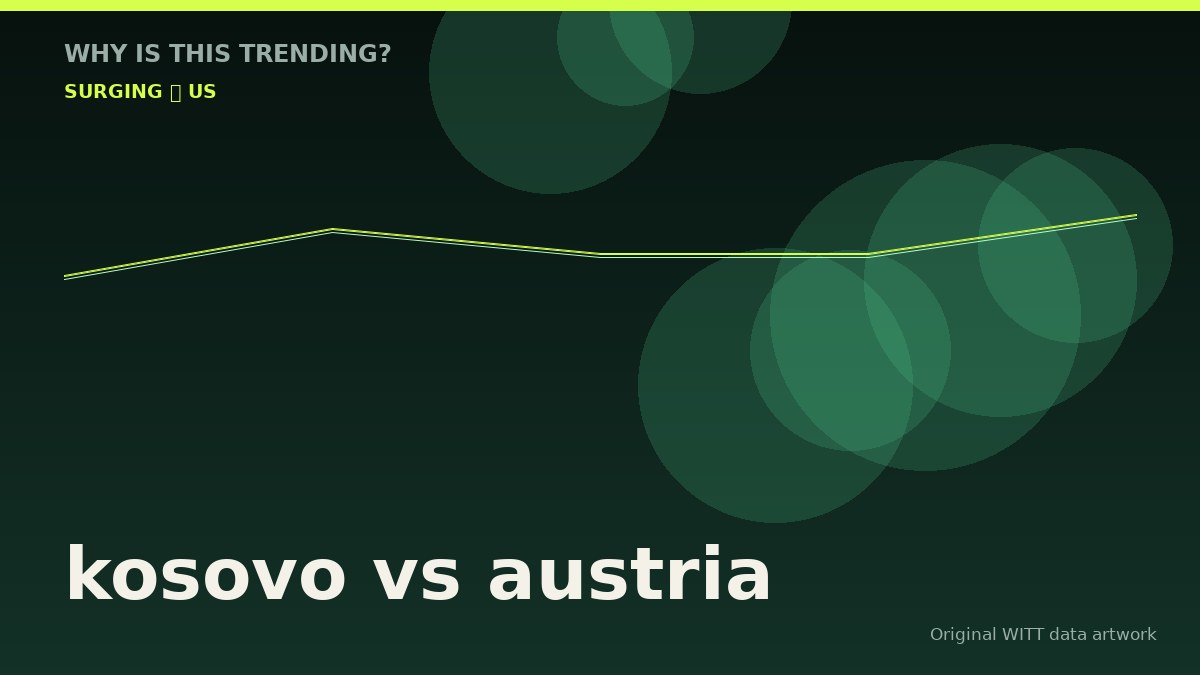
Google Trends registered a marked surge in searches for kosovo vs austria
on October 4, 2026, coinciding precisely with kickoff day [5]. It is vital to separate this digital spike from search volume estimates or proof of direct causation regarding match outcomes; search trends reflect public curiosity and media consumption patterns rather than predicting who will win on the pitch. The timing demonstrates how pre-match friction acts as an attention catalyst.
The backdrop to this fixture also fueled public intrigue. Austria arrived in Pristina sitting comfortably at the summit of League B Group 3, carrying seven points from their opening three matches [3], though they were coming off a 2-2 draw against Ireland where they surrendered a two-goal lead [5]. Meanwhile, Kosovo held second place with four points, looking to avenge a 3-1 defeat handed to them by Austria in their reverse fixture on September 27, 2026 [3]. When a rematch of a recent decisive loss is immediately preceded by managerial sparring over stadium conditions, the appetite for live broadcasts on platforms like Fubo, FS2, and ViX naturally intensifies [3].
Signal Versus Noise
Navigating modern sports discourse requires separating fleeting controversies from meaningful tactical analysis. Here is how the elements of this trending topic break down:
-
Signal: Managerial transparency and pragmatic management. Foda's candid admission that the summer workload heavily impacted the turf provides genuine local context regarding stadium infrastructure challenges in international windows.
Noise: The notion that pitch complaints serve as a valid pre-built excuse or tactical game-changer. As Foda correctly pointed out, both squads had to navigate the exact same blades of grass when the whistle blew at the Fadil Vokri Stadium [2].
Ultimately, the digital spike serves as a reminder that football fans consume drama well before the opening whistle. Rangnick's blunt critique provided an engaging storyline for sports desks across Europe, while Foda's calm pivot kept the focus squarely on the ninety minutes ahead [1], [2]. Whether watching from home or tracking updates online, observers tuned in to see if Austria's firepower could conquer Pristina once again or if Kosovo could rewrite the script on home soil [4].