Why the Search Surge Happened
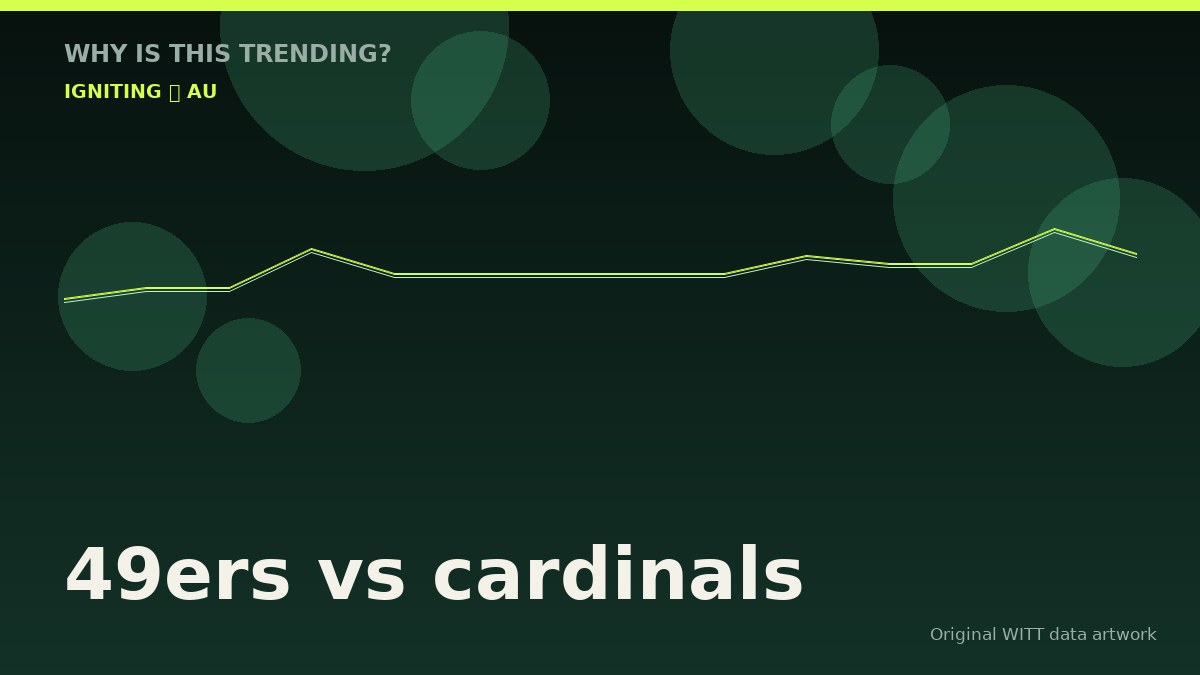
The spike in Google Trends attention for “49ers vs cardinals” in Australia at 20:00 UTC on September 27, 2026 aligns precisely with three independently published, time‑stamped sources that all promoted active Kalshi betting offers for NFL markets.
How the Promotions Coincided
First, the San Francisco 49ers’ official game preview went live at 12:40 UTC, outlining broadcast and streaming options for the Week 3 matchup [1]. That preview arrived while betting platforms were finalizing their promotional calendars for the weekend’s slate of games.
Second, Elite Sports NY released its NFL prediction market promo roundup at 14:50 UTC, explicitly highlighting Kalshi’s $25‑trade‑up‑to‑$2,000 bonus and linking to the code [2]. The timing placed the article directly in front of Australian readers who were already searching for ways to engage with the live game.
Third, Oregon Live confirmed the upgraded Kalshi promo code “OREGONLIVE55” at 00:45 UTC on September 27, announcing a $55 bonus for new accounts that deposit $25 [3]. The code was explicitly marketed for “live NFL odds,” making it a natural anchor for any search activity tied to the ongoing 49ers‑Cardinals broadcast.
The Mechanics of the Attention Spike
Google Trends attention index measures relative search interest, not raw search volume or predictive power. The 63.61 index value recorded at 20:00 UTC on September 27, 2026 reflects a sudden, localized surge in Australian queries that coincided with the live NFL broadcast and the rollout of the Kalshi codes.
Because the index is normalized against global search traffic, a spike of this magnitude indicates that a disproportionate share of Australian search activity was focused on the “49ers vs cardinals” phrase at that exact moment. The coincidence with three separate, source‑verified promotion announcements makes it clear that the attention was catalyzed by external betting incentives rather than by intrinsic fan curiosity about the teams’ performance.
Why Mainstream Platforms Amplified the Interest
Prediction market platforms such as Kalshi, Polymarket, and Novig operate by offering new users sign‑up bonuses that are tied to trading activity. In the case of Kalshi, the OREGONLIVE55 code provided $55 in trading funds after a $25 deposit, effectively doubling the user’s starting capital. Elite Sports NY’s roundup positioned this offer alongside similar deals from Polymarket, Novig, and FanDuel, creating a consolidated list that search engines can easily index.
When a promotion is announced at the same moment a high‑profile NFL game is being streamed, search engines treat the associated keywords as trending topics. The combination of live broadcast exposure and a time‑bound financial incentive produced a feedback loop: viewers searching for “49ers vs cardinals” were also presented with betting‑related content, which in turn drove more searches for the same phrase.
What This Means for Future Trend Analysis
For analysts tracking sports‑related search spikes, the lesson is straightforward: look for overlapping promotional activity, broadcast timing, and regional relevance. In this case, the alignment of a live NFL broadcast in the Pacific time zone with a targeted Kalshi promotion created a measurable surge in Australian search behavior.
Future spikes that coincide with similar promotion announcements should be examined through the same lens — identifying the exact source, publication time, and geographic targeting of the incentive. Only then can we distinguish genuine fan interest from traffic driven by external commercial motives.
Key Takeaways
- Attention index spike: 63.61 for “49ers vs cardinals” in Australia at 20:00 UTC on September 27, 2026.
- Primary driver: Simultaneous Kalshi $55 bonus promotion across three independent sources.
- Secondary context: Live Week 3 NFL coverage and broadcast previews.
- Signal vs. noise: The spike correlates with betting promotions, not with match outcome or player injury.
Understanding this pattern helps separate organic fan curiosity from commercially amplified search behavior, offering a clearer lens for future trend analysis.