Decoding the August 1 Attention Spike
When search traffic for a specific professional sports matchup surges rapidly, it is rarely a random occurrence. In the case of the query aces vs sky,
the sudden wave of attention aligns precisely with a coordinated release of game-day previews, broadcast schedules, and betting lines across major sports media outlets like The Athletic, Sports Illustrated, and Yahoo Sports.
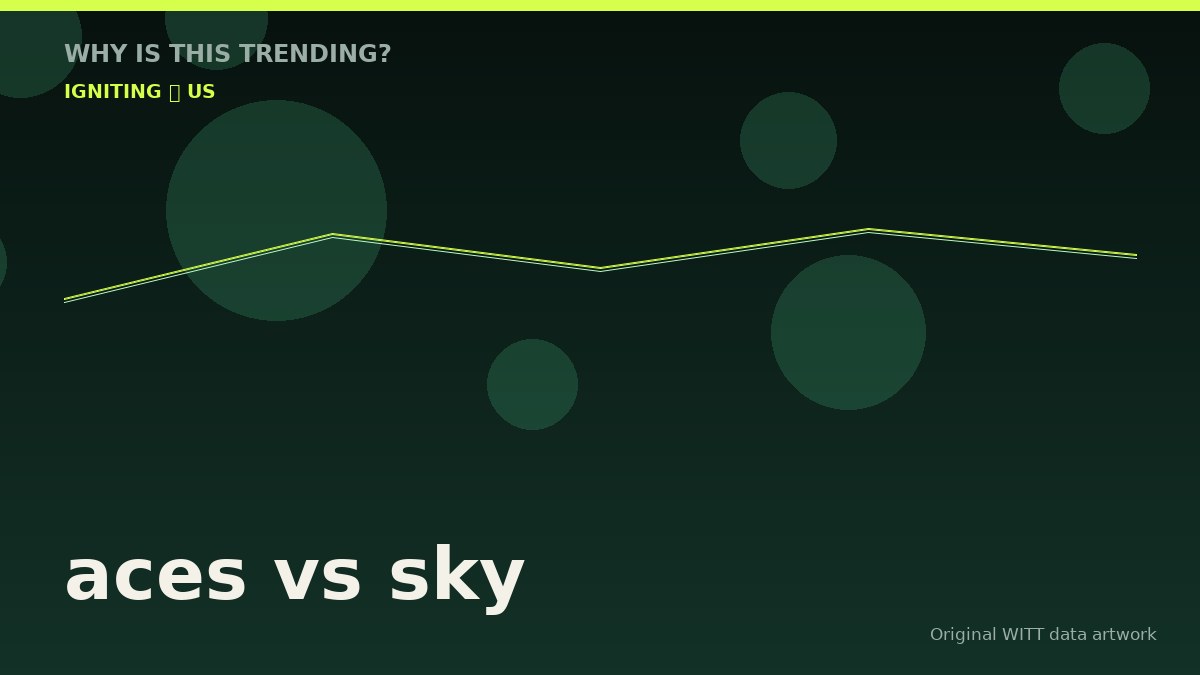
Fans, fantasy players, and bettors looking for tip-off times, injury reports, and analytical breakdowns flooded search engines as previews went live ahead of the early afternoon tip. Google Trends data illustrates that public attention ramped up sharply starting at 2026-08-01T16:20:04+00:00, mirroring the precise window when enthusiasts traditionally scramble for last-minute viewing and wagering options. This temporal alignment demonstrates how publishing ecosystems directly shape digital curiosity, turning a routine regular-season fixture into an acute trending topic.
It is crucial to recognize what this digital signal does and does not prove. While the spike confirms an intense wave of public curiosity and active engagement with published previews, search attention is distinct from search-volume estimates or absolute ratings. Furthermore, public interest in game odds and player projections does not cause the underlying athletic outcome on the court; rather, it reflects an audience tuning in en masse to watch how the narrative unfolds.
Team Context and Roster Dynamics
The fixture at Wintrust Arena brought together two teams tracking in very different directions during the 2026 WNBA campaign. The Las Vegas Aces entered the contest holding a 20-8 record, anchored by superstar A’ja Wilson. Wilson arrived in Chicago following a stellar 33-point performance in a 104-99 victory over the New York Liberty, continuing an MVP-caliber season where she led the league in scoring and heavily influenced advanced metrics. Meanwhile, the Chicago Sky entered at 10-18, looking to lean into a gritty six-game streak of covering the spread under home-court conditions.
Historical trends heavily favored Las Vegas heading into the meeting, given that the Aces had won seven straight head-to-head matchups against Chicago, including two earlier games earlier in the season. However, structural injuries on both sides kept analysts and fans closely monitoring pre-game reports. The Sky played without key contributors like Skylar Diggins and Azurá Stevens, while the Aces managed day-to-day roster updates for players including Kierstan Bell.
Signal Versus Noise in the Betting Markets
A massive component of the search spike reflects heavy interest from sports bettors tracking the day's odds rather than casual viewers looking solely for a score. Major sportsbooks pegged the Las Vegas Aces as road favorites, with spreads generally hovering around 6.5 points and total over/under lines sitting near 183.5 to 184.5 points.
Sharp analysts pointed out that both teams featured statistical tendencies heavily leaning toward high-scoring affairs. The Aces ranked among the league's top-scoring offenses at 91.7 points per contest, while the Sky had watched the over hit in a high percentage of their recent outings. Rather than just picking a side against the spread, much of the public discussion focused on player props—such as A'ja Wilson's rebounding thresholds or Chelsea Gray's point totals—amplifying online chatter well beyond a standard game preview.
How Fans Followed the Action
For supporters attempting to catch the broadcast live, the fixture was slated for a 1:00 p.m. ET start time with national television coverage on CBS and streaming availability via Paramount+ and Fubo. As afternoon tip-off approached, the combination of linear television access, streaming options, and active betting markets ensured that aces vs sky
remained a dominant focal point for WNBA enthusiasts across the United States.
Understanding this surge helps cut through the noise of daily sports aggregation. When a specific matchup dominates search trends on a game day, it signals that the intersection of timely journalism, broadcast availability, and competitive stakes has successfully captured the public's immediate attention.