A Debut of Consequence
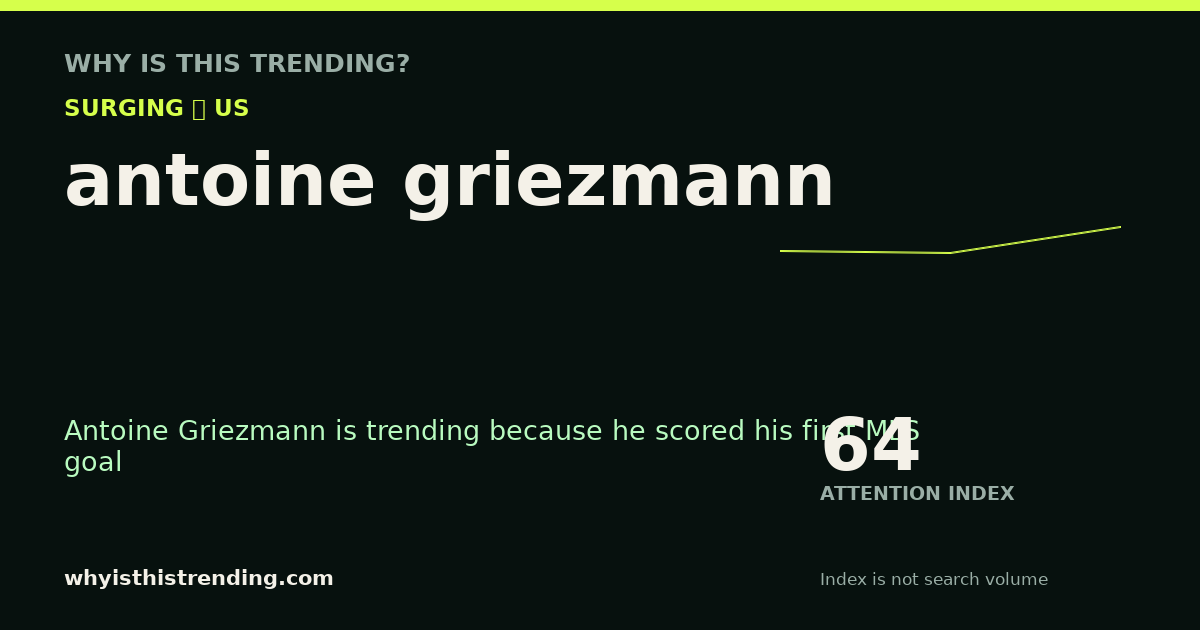
The arrival of a world-class talent often brings a mix of spectacle and uncertainty, but Antoine Griezmann’s official entry into Major League Soccer on July 22, 2026, leaned heavily into the former. In a 4-0 rout of the San Jose Earthquakes, Griezmann did more than simply make his first appearance for Orlando City; he validated the club’s aggressive recruitment strategy by finding the back of the net in the 48th minute (MLSSoccer.com). The goal, a clinical near-post finish following a high-press turnover, was the third of the night for the Lions and served as the 300th club goal of his illustrious career (Yahoo Sports).
For Orlando City, the timing of this impact could not be more critical. The club entered the match sitting 13th in the Eastern Conference, burdened by a difficult first half of the season that saw them concede a league-worst 44 goals. By securing a decisive victory against a Western Conference contender in their first match back from the two-month FIFA World Cup hiatus, Orlando has signaled a tactical reset. The win moved the club up to 10th place, narrowing the gap to the final playoff position to just two points (MLSSoccer.com).
The Signal vs. The Noise
When analyzing high-profile signings, it is easy to conflate the “star power” narrative with actual on-field utility. In this case, the signal is not just the goal itself, but the integration. Griezmann’s ability to score in two pre-restart friendlies—against the Tampa Bay Rowdies and FC Dallas—provided a necessary runway that allowed him to hit the ground running when the league resumed (The Athletic). His seamless transition into the lineup suggests that the club’s preparation during the mid-season break was not merely symbolic, but functionally effective.
The noise, conversely, lies in the expectation that a single player can immediately fix a team’s systemic defensive issues. While the 4-0 scoreline suggests a complete transformation, the match also highlighted the importance of a healthy supporting cast. The performance of midfielder Eduard Atuesta, who provided three assists, and goalkeeper Maxime Crépeau, who recorded seven saves, suggests that Orlando’s resurgence is a collective effort rather than a solo act (Orlando City SC). Griezmann is the marquee addition, but his success is tethered to the team's newfound defensive discipline, which finally yielded their first clean sheet of the season. The victory against San Jose—a team that had previously been undefeated at home—is a significant data point, but it remains one match in a long, uphill climb.
Strategic Context: Building Toward 2026
Orlando City’s decision to sign Griezmann follows a historical pattern of targeting globally recognized talent—a lineage that includes Kaká and Nani (MLSSoccer.com). However, the context of the 2026 World Cup break provides a unique variable. The two-month hiatus allowed interim head coach Martín Perelman to implement structural changes that were clearly visible in the team's defensive shape against San Jose (Orlando City SC). Perelman has framed every remaining match as a "final," emphasizing the urgency required to salvage the season.
The following table illustrates the immediate impact of the match on Orlando's standing:
| Metric | Pre-Match Status | Post-Match Status |
|---|---|---|
| Eastern Conference Rank | 13th | 10th |
| Points | 14 | 17 |
| Playoff Gap | 4 points | 2 points |
The path forward for Orlando remains steep. While the win over the Earthquakes was a statement of intent, the team must maintain this momentum through the remainder of the season to bridge the gap to the playoff line. For Griezmann, the goal was a successful introduction to the American audience, but the true measure of this signing will be whether he can sustain this output as Orlando faces the pressure of a condensed, high-stakes second half of the year. The club’s ambition to be a contender is now backed by a proven winner, but the league's parity ensures that no single star can guarantee a postseason berth without consistent, week-to-week execution from the entire roster.