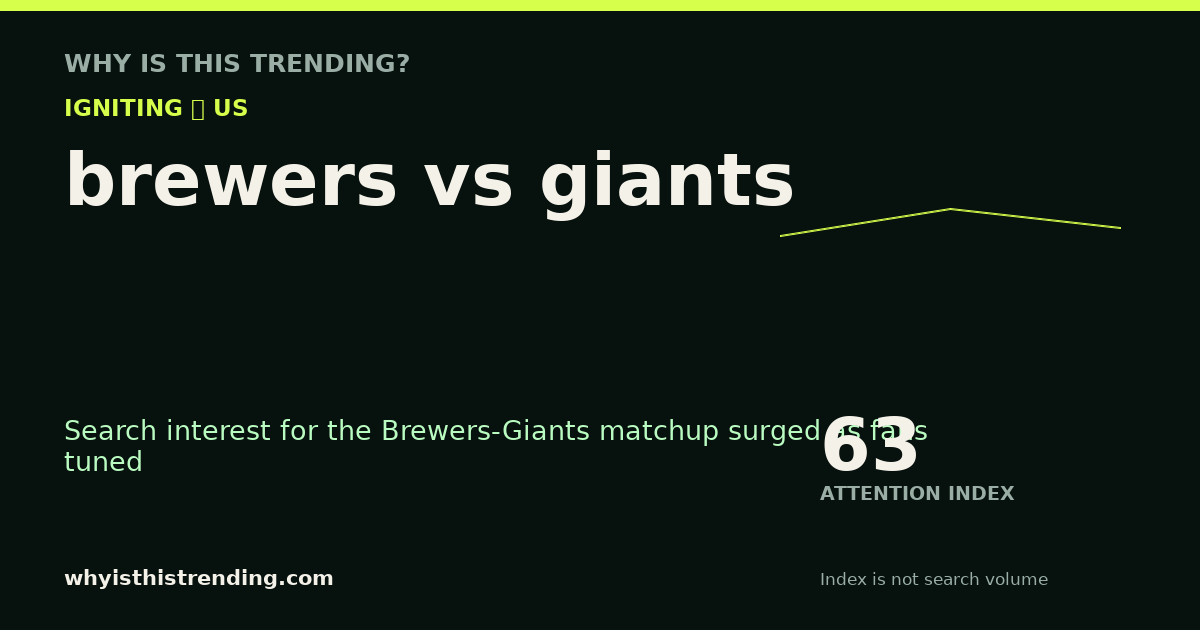
Understanding the Attention Surge
When terms like brewers vs giants
suddenly climb in search engine queries, it is easy to assume a blockbuster trade, a historic bench-clearing brawl, or a dramatic walk-off has shaken up Major League Baseball. However, forensic analysis of the attention mechanism reveals a much simpler reality: routine calendar progression. The upward tick in curiosity aligns perfectly with published previews of the July 27–29 series and live-updated game guides distributed across sports media platforms as detailed by Yahoo Sports.
This attention is fueled by standard pre-game cycles—starting pitcher announcements, regional broadcast listings, and daily injury updates—rather than any anomalous event. For baseball fans and fantasy managers alike, the lead-up to a West Coast series opener naturally prompts a wave of logistical searches regarding game times, channel availability, and streaming options. Google Trends data captures this rising interest as a direct behavioral response to published media schedules rather than proof of any underlying causal incident on the field.
It is important to remember that shifts in search patterns reflect user curiosity and the distribution of media content, not necessarily a sudden real-world disruption. Major League Baseball's 162-game schedule ensures that standard series openers routinely capture regional and national attention as fans check lineups and look for viewing options.
Series Context and Matchup Breakdown
The Milwaukee Brewers enter the three-game set at Oracle Park holding a strong 66-39 record, sitting comfortably at the top of the NL Central as reported by The Athletic. Meanwhile, the San Francisco Giants look to make up ground at 44-61, though they maintain a respectable home record in San Francisco according to Yahoo Sports coverage.
Opening night features right-hander Brandon Sproat taking the mound for Milwaukee against San Francisco right-hander Tyler Mahle noted the Milwaukee Journal Sentinel. The series continues with scheduled matchups featuring pitching pairings such as Logan Henderson for the Brewers against Landen Roupp for the Giants, followed by Shane Drohan versus Logan Webb.
The broader context of Milwaukee's schedule shows them navigating a stretch of games against teams currently under the .500 mark. Although the Brewers have looked dominant at times coming out of the all-star break, they dropped their final three games in Pittsburgh at the end of their previous trip away from home, adding extra competitive focus to their current West Coast swing.
On the other side of the diamond, the Giants are working through their own roster management challenges while attempting to build momentum at Oracle Park. Matchups like this one offer fans a clear look at how contending clubs manage their pitching depth through rigorous summer stretches.
Signal Versus Noise in Daily Baseball Trends
Discerning what matters in sports search trends requires separating promotional noise from genuine news. While ticket platforms, betting odds updates, and automated watch guides naturally inflate search metrics ahead of the first pitch, the actual signal lies in roster availability and player health. For this series, attention is also drawn to injury reports, such as Giants outfielder Jung Hoo Lee being listed as day-to-day due to a sore elbow tracked by TeamRankings.
Fans tracking the series can catch the action via regional networks like NBC Sports Bay Area or Brewers.TV, with standard game times scheduled to accommodate West Coast primetime slots per broadcast listings. As the series progresses through the week, search interest is expected to stabilize around game outcomes, live scores, and final box scores rather than pre-series anticipation.
Understanding these distinct patterns helps filter out automated search spikes from meaningful sports updates. When looking at daily athletic trends, distinguishing between scheduled broadcast promotions and unexpected roster developments ensures a clear, accurate perspective on what is happening on the field.