The Mechanics of the Spotlight
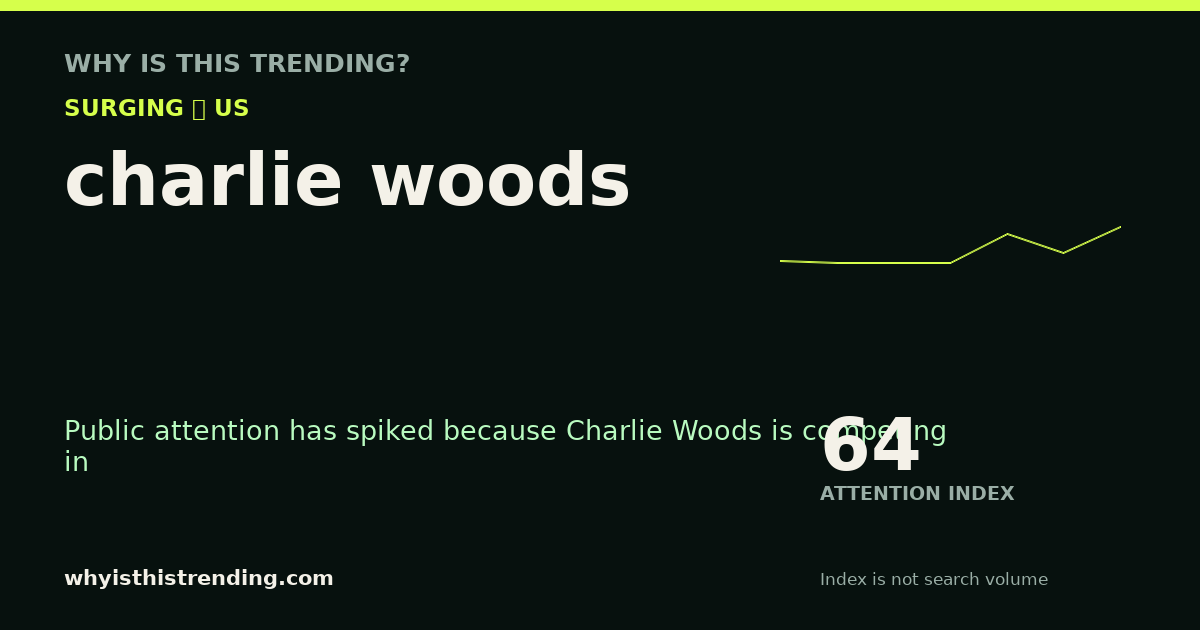
On July 21, 2026, Google Trends registered a sharp increase in search interest for Charlie Woods. This surge in digital curiosity coincided precisely with the opening day of the 78th U.S. Junior Amateur Championship at Saucon Valley Country Club in Pennsylvania. While the tournament features over 260 of the world’s top young golfers, the disproportionate focus on Woods is a recurring phenomenon rooted in his status as the son of Tiger Woods.
The attention mechanism here is straightforward: the public is not reacting to a statistical anomaly or a career-defining win. Instead, the search volume is a direct response to the visibility of a high-profile name in a high-stakes, prestigious amateur setting. As reported by WFMZ.com, the tournament is a major event for the region and the sport, but for many spectators and digital observers, the primary draw remains the opportunity to witness the younger Woods in his competitive environment.
Legacy vs. Performance
To understand why this trend is noise rather than a signal of a professional breakthrough, one must look at the context of the tournament. The U.S. Junior Amateur is a proving ground, but it is also a stage where the burden of expectation is uniquely heavy for the Woods family. As noted in coverage by Sports Illustrated, observers often treat Woods as an "oddity" to be analyzed, with crowds following his every move not necessarily because of his current leaderboard standing, but because of the inevitable, if unfair, comparisons to his father’s historic dominance in the same event.
The reality of the situation is that Charlie Woods is a developing amateur, not a finished product. He recently faced a setback in qualifying for the U.S. Amateur, missing the mark by six strokes at Ohio State University’s Scarlet Course, as documented by NGSC Sports. This contrast—between the intense, global attention he receives and the standard, albeit high-level, reality of amateur golf—is the defining feature of his current public profile.
Distinguishing Signal from Noise
When analyzing the trend, it is crucial to separate the event from the outcome. The spike in attention is a function of the calendar. The U.S. Junior Amateur is a prestigious USGA event, and the presence of a recognizable name acts as a multiplier for interest. However, the search intent is largely driven by curiosity about how the younger Woods handles the pressure of his legacy, rather than a reaction to a specific, game-changing performance on the course.
| Factor | Nature of Interest |
|---|---|
| Tournament Start | Primary driver of search volume (Signal) |
| Legacy Association | Persistent, long-term interest factor (Context) |
| Performance Outcomes | Secondary to the act of simply competing (Noise) |
The Inquirer notes that the U.S. Junior Amateur trophy was recently redesigned to honor Tiger Woods, further cementing the thematic link between the father's past achievements and the son's current participation. This narrative framing ensures that every time Charlie Woods tees off, the media and the public are primed to look for echoes of the past.
A Defensible Point of View
The public's focus on Charlie Woods is a testament to the power of sports legacy, but it is also a reminder of the limitations of such narratives. By projecting the achievements of a 15-time major champion onto a 17-year-old amateur, the public creates a feedback loop where the athlete is judged by a standard that is nearly impossible to meet. The most useful way to view this trend is as a snapshot of a young athlete attempting to navigate a high-pressure environment while the world watches, waiting to see if the "magic" of his father’s career will manifest in his own.
Ultimately, the search spike confirms that Charlie Woods is one of the most visible figures in amateur golf, but it tells us very little about his trajectory. His commitment to Florida State University and his continued participation in major USGA events demonstrate a commitment to the sport that exists independently of the public's desire for a prodigy. The trend is a reflection of the audience's investment in a story that is still being written, one that is far more about the weight of a name than the current state of a golf swing.