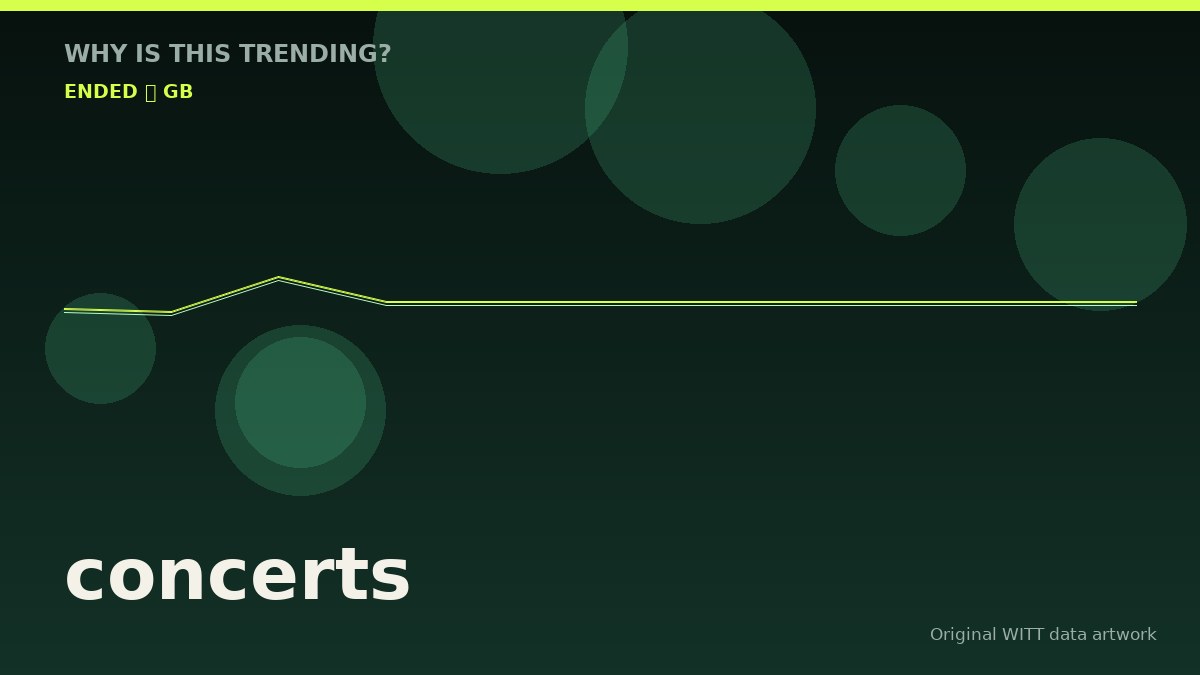
The Anatomy of an Attention Surge
When an iconic musician halts a massive global tour at the eleventh hour, digital interest responds instantly. Google Trends recorded a sharp attention spike beginning August 12, 2026, directly mirroring a wave of breaking news reports published on August 11 regarding Rod Stewart's health. Rather than reflecting general ticket sales or routine tour chatter, this specific surge was driven by concern and confusion over a medical emergency that upended a packed summer and autumn schedule.
In trend-forensics, this type of movement is categorized as a classic news-driven catalyst. The public attention mechanism activated not from a promotional campaign, but from sudden negative disruption—the abrupt cancellation of highly anticipated live performances across multiple regions and venues.
Understanding this attention shift requires looking closely at how information travels when a legacy artist faces sudden health challenges. Fans, ticket holders, and music enthusiasts flooded digital platforms to verify whether upcoming dates were postponed or entirely called off. Because live music is deeply experiential and heavily planned months in advance, any abrupt fracture in a tour schedule immediately reverberates across search queries.
What Triggered the Cancellations?
The cascade of cancellations began when the 81-year-old British rock legend postponed a performance in Cincinnati at the last minute due to an unforeseen but minor medical procedure that required prompt attention
as reported by Global News. What initially appeared to be a brief postponement quickly escalated as doctors ordered a mandatory period of rest and further evaluation.
Following further medical evaluation, representatives confirmed that Stewart had successfully undergone a routine coronary stent procedure
according to CBS News. Doctors advised the singer to rest and take the following four weeks to recuperate, putting a complete halt to his One Last Time
farewell tour commitments. This included a prominent Sept. 1 appearance at the Minnesota State Fair Grandstand alongside Richard Marx, as well as several dates in his Las Vegas residency and stops across the Midwest and Mexico.
Following further medical evaluation, Sir Rod Stewart has successfully undergone a routine coronary stent procedure. Doctors are pleased with his recovery, and Rod is doing very well and has returned to his normal daily activities.
Representatives for Rod Stewart via USA TODAY
This medical hurdle follows a series of recent health and logistical disruptions for the singer. Earlier in the year, Stewart experienced a frightening moment during a Utah performance where he had to take puffs of oxygen from a tank on stage after telling the audience he nearly fainted. Additionally, a planned appearance in Niagara Falls had to be scrapped due to a mechanical fault with aircraft landing gear, compounding the scheduling instability of his farewell journey.
Signal Versus Noise in Live Music Tracking
During any given week, search interest around broad entertainment terms pulls in multiple competing narratives. It is vital to separate the genuine signal from background noise when interpreting what global audiences are focusing on:
- The Signal: Verified reporting regarding Stewart's heart procedure, the immediate cancellation of his August and September tour dates, and the logistics surrounding ticket refunds at venues like the Minnesota State Fair and Cleveland's Rocket Arena.
- The Noise: Unrelated regional events—such as massive crowds gathering in Victoria for a David Foster foundation celebration, or exorbitant secondary-market pricing for K-pop acts like BigBang—frequently occupy entertainment feeds but share no causal link to Stewart's medical status.
It is important to remember that Google Trends measures relative shifts in online curiosity rather than exact search volumes, and it does not imply that every user searching for concerts is tracking the same underlying story. However, the precise temporal alignment between the August 11 medical announcements and the subsequent August 12 attention spike confirms that health-related tour interruptions carried immense gravitational pull across digital platforms.
Looking Ahead and Managing Tickets
Stewart has expressed deep disappointment over missing his scheduled dates, telling fans I’m already feeling better and very much on the mend,
as noted by USA TODAY. Medical professionals have expressed satisfaction with his recovery progress, allowing him to return to normal daily activities while he takes the necessary four weeks to regain full fitness before contemplating a return to the stage.
Ticketholders affected by the sweeping cancellations—ranging from his Las Vegas residency slots at the Colosseum to fairground appearances across the United States—are advised to monitor their original points of purchase. Promoters and venues have initiated refund processes, though policies vary depending on whether tickets were acquired through official primary vendors like Etix or secondary marketplaces. Fans holding tickets should consult their specific venue guidelines for automated credit card refunds or mail-in procedures as further scheduling details are finalized.