The Intersection of Environmental Risk and Sports Scheduling
On July 19, 2026, the Milwaukee Brewers hosted the Miami Marlins at American Family Field while the city faced a significant environmental challenge. Air quality in the region had reached a level categorized as "very unhealthy," with an Air Quality Index (AQI) of 185, largely attributed to smoke drifting from Canadian wildfires. Despite the severity of the air quality, the game proceeded as scheduled. This decision highlights the complex regulatory framework governing professional sports in the face of environmental hazards.
The authority to postpone a game due to air quality rests solely with Major League Baseball, not the individual clubs. According to reporting from the Milwaukee Journal Sentinel, the league opted not to intervene, even as the AQI approached the unofficial 200-point threshold often used as a benchmark for canceling outdoor events. The stadium's retractable roof, while a hallmark of American Family Field, offered little respite in this scenario; closing the structure would not have inherently improved the air quality inside without specialized filtration or heating systems, the latter of which was not a viable option given the ambient temperatures.
The decision-making process was centralized, with the team confirming that they were in constant communication with the league office. As noted by TMJ4 News, the Brewers were notified by MLB on the day of the game that play would proceed as scheduled. This highlights a critical tension in modern sports: the balancing act between the health of participants and fans, and the logistical necessity of maintaining a 162-game schedule.
Distinguishing Signal from Noise: The Cooper Pratt Surge
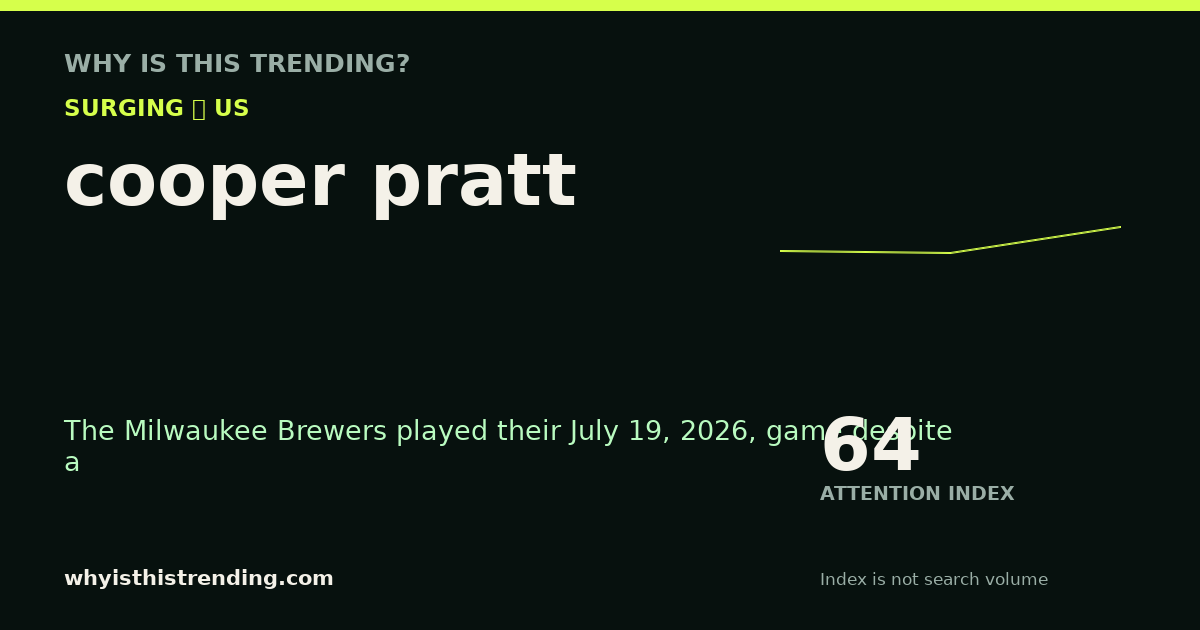
In the days following the air quality alert, digital attention shifted sharply toward Brewers prospect Cooper Pratt. It is a common analytical error to conflate the timing of the air quality controversy with the surge in interest for the young infielder. However, the data confirms that the spike in searches for "cooper pratt" on July 21, 2026, was fundamentally triggered by his promotion to the major leagues and his subsequent debut on July 20, rather than any lingering public concern over the stadium's environmental conditions.
Pratt’s arrival in the majors has been a focal point for fans and analysts alike, representing a strategic shift in the Brewers' roster management. His debut, which occurred during a 2-1 victory over the Cleveland Guardians, was documented extensively across sports media platforms. As reported by Yahoo Sports, Pratt recorded his first career home run during the contest. The narrative surrounding his promotion—characterized by social media buzz and the "hug watch" phenomenon—demonstrates how modern sports fandom creates its own momentum, independent of the external logistical challenges the franchise may face.
Strategic Implications of the Brewers' Roster Moves
The decision to promote Pratt during a high-stakes stretch of the season suggests a long-term commitment to youth development. While his debut performance was statistically modest, the organization’s willingness to integrate him into the lineup during a competitive series against the Guardians signals a broader philosophy. The following table summarizes the key events that defined this period:
| Date | Event |
|---|---|
| July 19 | Brewers vs. Marlins played at American Family Field (AQI 185). |
| July 20 | Cooper Pratt makes his MLB debut against the Guardians. |
| July 21 | Peak attention for "cooper pratt" on search platforms. |
Ultimately, the Brewers' ability to navigate both the environmental pressures of mid-July and the transition of a top prospect into the big leagues reflects the multifaceted nature of modern sports management. The air quality situation served as a reminder of the league's centralized control over game status, while the attention on Pratt underscores the enduring power of player development narratives to capture the public imagination. The surge in interest for Pratt is a classic example of a "trigger event" in search trends: a specific, high-interest milestone (the debut) creating a temporary but intense concentration of traffic that eclipses the background noise of local logistical news.
For fans and observers, the lesson here is one of context. While the air quality alert and the roster promotion occurred in the same week and within the same city, they are distinct threads in the organizational fabric of the Brewers. One was an exercise in league-wide risk management, and the other was a deliberate, long-planned investment in the team's competitive future. Understanding the difference between these two events is essential for interpreting why the public attention shifted when it did.