The Breaking Point of a Grassroots Movement
For weeks, major Indian cities including New Delhi, Mumbai, Bengaluru, and Patna became focal points of intense youth-driven agitation. What began as an online satirical movement coalesced into the Cockroach Janta Party (CJP), a political pressure group mobilizing millions of young online followers and thousands of street demonstrators Al Jazeera. At the center of the fury was the recurring crisis of national examination paper leaks—most notably the May cancellation of the National Eligibility-cum-Entrance Test (NEET), which affected over two million candidates BBC News.
The tension transformed into a full-scale political crisis following a severe escalation in state friction. Authorities forcibly removed prominent activist Sonam Wangchuk from the primary protest site at Jantar Mantar after a 26-day hunger strike, citing health concerns BBC News. Days later, police cracked down on demonstrators attempting to march toward parliament, leaving dozens injured with fractures and sparking widespread public fury BBC News.
The geography of dissent expanded rapidly as students from various regions poured into public squares. The choice of Jantar Mantar as the focal point concentrated national and international media attention on the capital, forcing an administration that had initially attempted to ignore the protests to change its posture entirely BBC News. The emergence of digital-native campaign tactics meant that images of police intervention circulated instantly, fueling offline participation across multiple state boundaries.
From Resistance to Resignation
The intense pressure ultimately forced the hand of Prime Minister Narendra Modi’s administration. Late in the week, Prime Minister Modi posted a video message emphasizing that the government was preparing a stringent new law to combat examination paper leaks BBC News. Shortly thereafter, the Union Cabinet approved a draft amendment to the Public Examinations (Prevention of Unfair Means) Act, proposing harsher penalties—including up to 10 years in prison and fines reaching ₹10 crore for organized syndicates Fortune India.
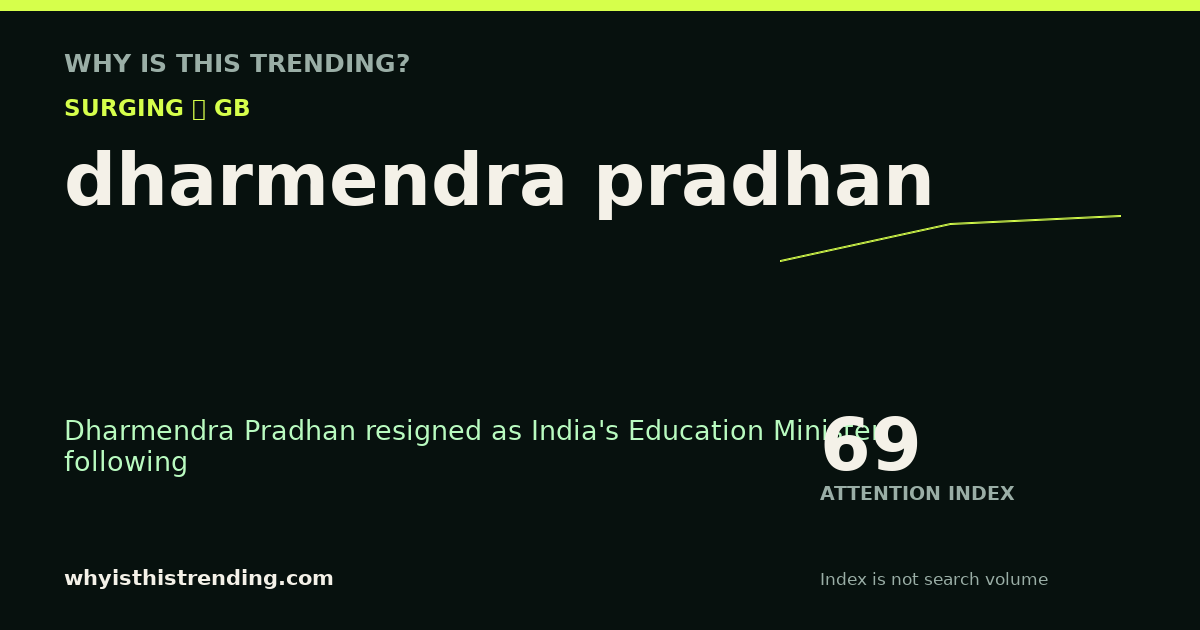
The pivotal development arrived when Union Education Minister Dharmendra Pradhan tendered his resignation Telangana Today. In his resignation letter, Pradhan stated that the decision was intended to safeguard examination integrity and protect students from further disruption, adding that he took responsibility for the situation from the outset Telangana Today. His departure marked a rare instance of a senior cabinet member stepping down directly in response to street-level youth mobilization.
Prior to the resignation, negotiations had already yielded partial agreements. Senior government ministers met with CJP representatives in New Delhi to defuse the standoff Al Jazeera. Government interlocutors indicated openness regarding the withdrawal of police cases filed against protesters and discussed avenues for financial restitution, setting the stage for Pradhan's eventual exit BBC News.
Signal Versus Noise: What Changes Now
While the departure of a high-profile cabinet minister is a monumental victory for the student movement, analysts tracking the negotiations emphasize that the crisis is far from resolved. CJP leadership made it clear that Pradhan's exit satisfies only their primary grievance The Economic Times.
The movement's remaining core demands include:
- Financial Restitution: ₹1 crore in compensation for the families of students who reportedly died by suicide following exam cancellations The Economic Times.
- Accountability: Formal disciplinary and legal action against police personnel responsible for injuries sustained during the July 20 crackdown The Economic Times.
- Systemic Overhaul: Structural safeguards to permanently halt the corruption networks plagging India's public testing ecosystem Al Jazeera.
As discussions between government ministers and CJP representatives continue, the movement has proven that decentralized youth activism can successfully pressure the upper echelons of the Indian state. Whether proposed legislative fixes and leadership changes will satisfy a generation demanding total administrative reform remains the defining political question for Modi's government.
Observers should distinguish between legislative announcements and actual institutional change. While draft amendments proposing fast-track courts and severe penalties signal a strong executive response The Economic Times, the underlying administrative vulnerabilities in large-scale testing bodies require sustained oversight. The true test of this political shift will lie in whether future examination cycles proceed without systemic fraud or renewed youth disruption.