The Catalyst: A Failure of Supervision
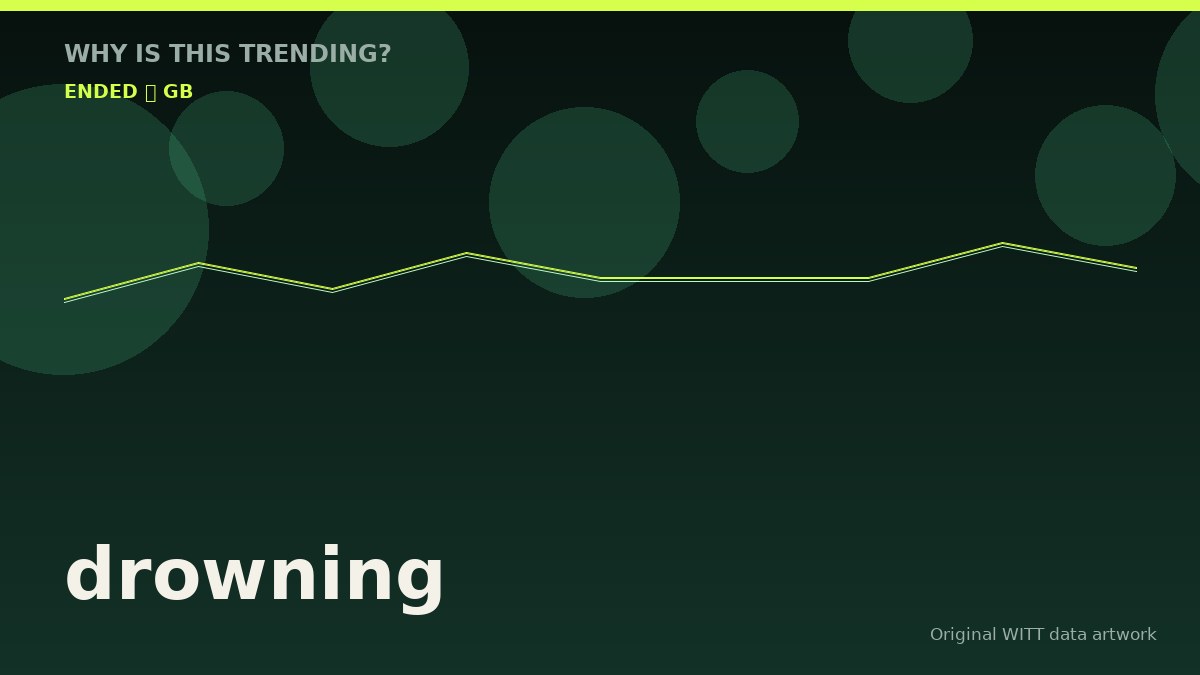
On July 21, 2026, the search term "drowning" experienced a rapid, concentrated spike in interest, peaking within 90 minutes of its initial climb at 21:40 UTC. The primary driver of this attention was a specific, high-impact local incident: a near-drowning of a young participant at a Nike Soccer Camp held at the University of the District of Columbia (UDC) athletic complex. According to reporting from WJLA, the incident occurred on July 20, but the public discourse ignited the following day after details emerged regarding supervision gaps. Specifically, the UDC police report indicated that the lifeguard on duty had stepped away for a 30-minute lunch break, returning only to discover the child unresponsive in the water.
This detail—the absence of a lifeguard during a supervised camp activity—transformed the story from a tragic accident into a broader conversation about child safety and professional negligence. The university has since closed the pool pending a formal review of the circumstances, and the child was hospitalized for observation.
Distinguishing Signal from Noise
While the UDC incident serves as the clear "signal" for the July 21 spike, the digital landscape for "drowning" is often cluttered with "noise"—unrelated stories that happen to share the same keyword. To understand why the search volume surged so sharply, one must account for the broader context of water-safety reporting occurring simultaneously:
- The Anniversary Effect: Media outlets were reporting on a lawsuit filed by the widow of actor Malcolm-Jamal Warner, who tragically drowned in Costa Rica on July 20, 2025. Coverage of this legal dispute, which surfaced on the one-year anniversary of his death, likely contributed to the keyword's sustained visibility.
- Regional Tragedies: The public consciousness was already sensitized to water-related risks due to recent, unrelated reports, including a Florida mother who died while saving her four-year-old son from a river and a separate drowning incident in Belton, Texas.
When these disparate threads of news—a current local crisis, a celebrity anniversary, and regional fatalities—converge under a single search term, the result is a disproportionate "surge" in metrics that might otherwise be attributed to a single event.
The Mechanics of Attention
The spike observed on July 21 is a classic example of how local news, when it touches on a universal fear like child safety, rapidly transcends its geographic boundaries. The UDC story was quickly picked up by major networks, including CBS News and Yahoo News, ensuring that the "lifeguard on break" narrative reached a national audience.
It is important to note that search volume is a measure of curiosity and concern, not necessarily a reflection of a statistical increase in drownings. The public is often driven to search when they encounter a "what if" scenario—in this case, the realization that a supervised environment failed to provide the expected level of security. This is distinct from the positive, human-interest stories that occasionally surface, such as the teenager who rescued a man from the Yellowstone River using a lasso, which also circulated on July 21. While both stories involve the word "drowning," the former drives anxiety-based search behavior, while the latter typically generates social media engagement rather than search-engine queries.
Defensible Takeaway
The spike on July 21 was not a random fluctuation; it was a direct reaction to the perceived vulnerability of children in supervised settings. For parents and community members, the UDC incident serves as a stark reminder that "supervised" does not always mean "monitored." The intense focus on the lifeguard's 30-minute break suggests that the public is less interested in the general statistics of drowning and more focused on the specific, preventable lapses in safety protocols. When evaluating such trends, look for the "human failure" element—that is the variable that consistently turns a local news item into a national search trend.