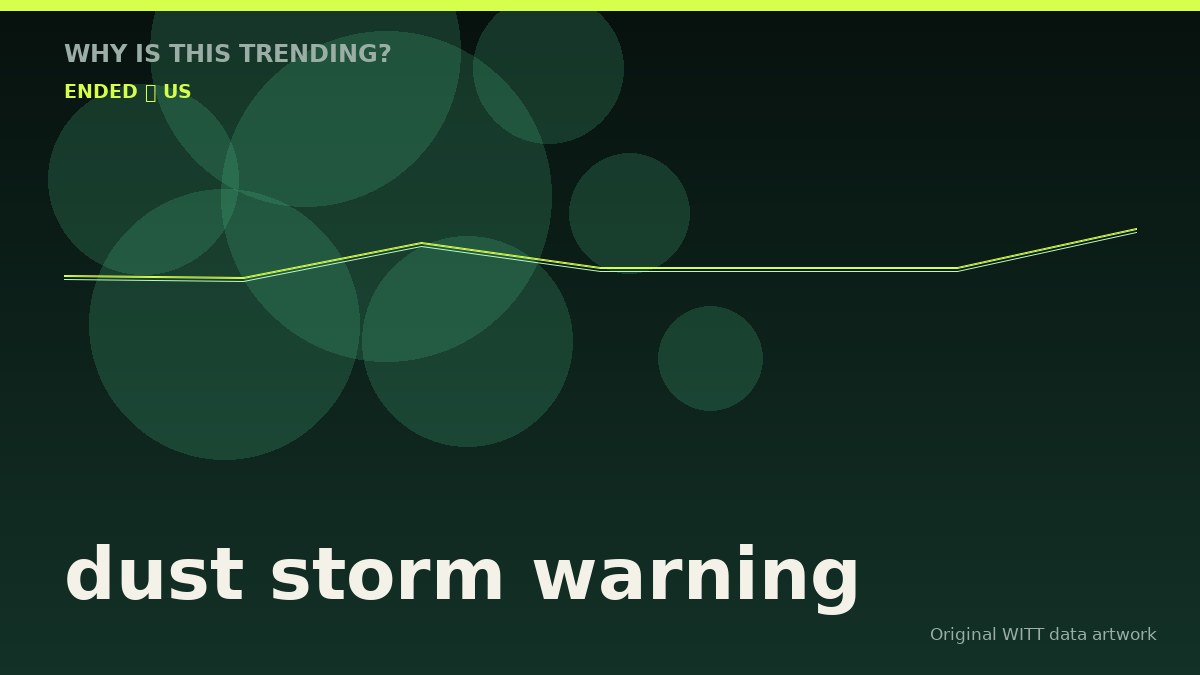
The Mechanics of a Sudden Attention Surge
When digital attention spikes in a matter of minutes, it rarely happens in a vacuum. The rapid ascent of search interest surrounding the Arizona weather event illustrates how physical infrastructure failures and automated emergency alerts instantly translate into digital behavior. The spike in attention mapped directly onto a fast-moving meteorological event that swept across Maricopa and Pinal counties, bringing hazardous travel conditions and immediate utility failures [1].
Understanding this dynamic requires separating the trigger from the noise. While regional weather discussions happen frequently during monsoon season, the transition from routine weather tracking to an acute attention spike relies on hard escalations: official warnings that demand immediate behavioural changes, coupled with physical disruptions that affect tens of thousands of households simultaneously. Google Trends data reflects this abrupt shift in public curiosity, though search-volume fluctuations measure online inquiry rather than proving direct causation for every individual action taken on the ground.
What Changed on the Ground
The sequence of events unfolded rapidly across the Greater Phoenix area as a surge of moisture from the Gulf of California interacted with desert heat [1]. Outflow boundaries collided to create towering walls of blowing dust, forcing state and federal agencies to issue urgent safety directives.
- Emergency Directives: The National Weather Service issued coordinated Dust Storm Warnings and Severe Thunderstorm Warnings covering major population centers including Phoenix, Mesa, Chandler, and Gilbert [2].
- Infrastructure Impact: Major utilities reported significant losses of service. Salt River Project (SRP) and Arizona Public Service (APS) tracked outages affecting upwards of 23,000 customers at peak impact, plunging neighborhoods into darkness [2].
- Travel Hazards: The Arizona Department of Transportation issued strict safety advisories as high winds reduced visibility to near-zero along key corridors like Interstate 10 and Interstate 17, reinforcing the life-saving mantra to pull aside and stay alive [2].
Signal Versus Noise in Severe Weather Events
During fast-developing regional emergencies, public curiosity often blurs the line between general weather awareness and urgent safety necessity. The signal in this event was unmistakable: a confluence of zero-visibility haboobs, downed trees blocking roadways in municipalities like Gilbert, and multi-community power failures [1].
When automated phone alerts buzz across millions of devices warning of life-threatening travel conditions, recipients immediately jump online to verify radar loops, check local power restoration estimates, and assess whether their immediate neighborhoods are in the direct path of the storm. This behavioral pivot is precisely what registers on trend-monitoring tools—not as a measure of search volume alone, but as an indicator of collective real-time crisis response. It is crucial to remember that search interest tracks attention and information-seeking behavior, but it does not cause the weather phenomena themselves nor quantify the full physical scale of the storm.
Navigating Monsoon Hazards Safely
Severe desert storms carry multifaceted risks that extend well beyond high-velocity wind gusts. Meteorological agencies and public health officials emphasize several critical guidelines when haboobs strike:
- Never Drive Into a Dust Storm: Sudden walls of dust can drop visibility to absolute zero within seconds, leading to catastrophic multi-vehicle pileups on major highways [3].
- The Safe Protocol: If caught on the road, drivers are advised to pull entirely off the asphalt, turn off headlights so other motorists do not track your vehicle from behind, and release the brake pedal [3].
- Health Precautions: Inhalation of fine desert particulates carries biological risks, including exposure to spores responsible for Valley Fever, making indoor shelter vital during peak dust events [3].
As desert monsoon seasons continue to produce volatile shifts between extreme heat advisories and sudden convective storms, checking official channels remains the most reliable way to separate passing wind shifts from genuine emergencies.