Decoding the Surge in Digital Attention
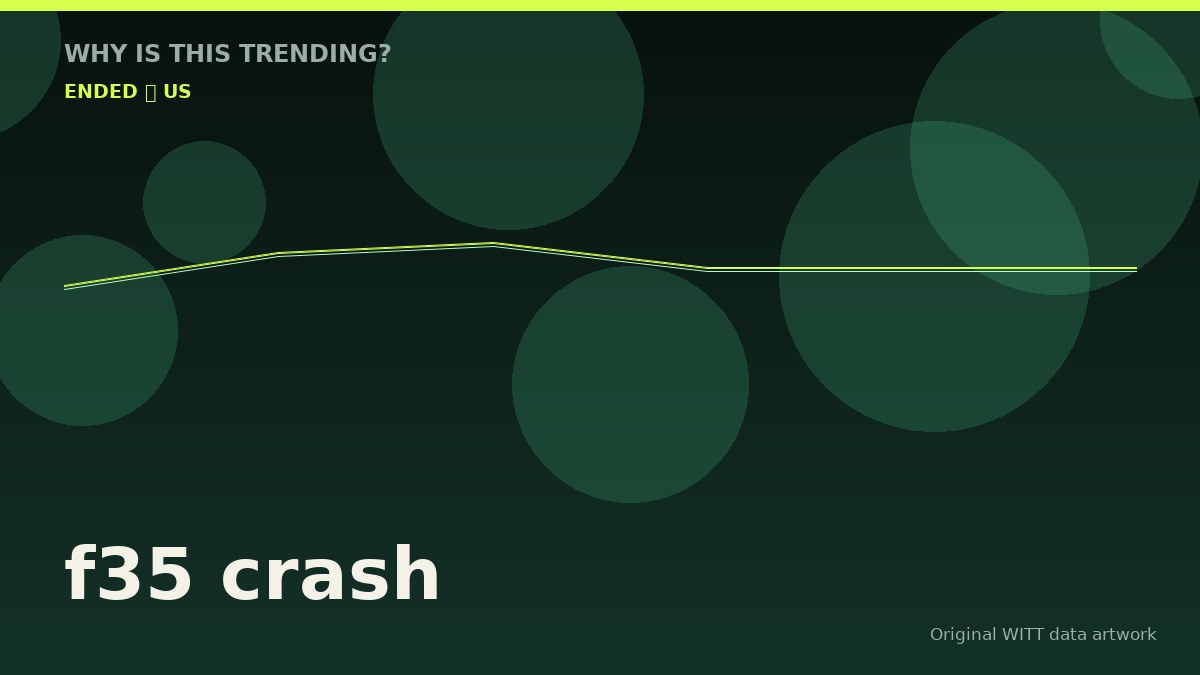
An intense wave of online interest materialized around queries regarding an f35 crash
following a high-stakes exchange of claims and counterclaims between Tehran and Washington. Google Trends recorded a sharp uptick in public curiosity, ignited on July 31, 2026, as audiences scrambled to verify conflicting reports concerning the survivability and status of America's premier fifth-generation stealth aircraft. This sudden curiosity reflects a broader public anxiety whenever high-value military assets become the focal point of geopolitical friction in the Middle East.
The digital reaction was fueled by a dramatic assertion from Iran's Islamic Revolutionary Guard Corps (IRGC) that a recent ballistic missile assault on Jordan’s al-Azraq air base—also referred to in regional reporting regarding infrastructure at Muwaffaq Salti Air Base—had successfully neutralized high-value hardware. Yet, distinguishing between verified military reporting and strategic information warfare requires examining the precise timeline and the stark divergence in source credibility. Online searches frequently conflate separate tactical incidents, blending historical or domestic aviation mishaps with active theater combat claims, making a disciplined assessment of the facts essential for cutting through the noise.
The Competing Claims and the Official Record
According to statements published by Iranian state media, the military action occurred on July 30, 2026, executed in alleged retaliation for earlier American strikes on Qeshm Island [3]. The IRGC asserted that three F-35 Lightning II stealth fighters were completely destroyed, three additional aircraft were severely damaged, and multiple maintenance personnel were casualties of the parking-area strike [2]. State-linked channels subsequently circulated photographic imagery purporting to show structural impacts on a local maintenance hangar [6].
Conversely, the United States Central Command (CENTCOM) issued an immediate and categorical rejection of the narrative. In a public statement shared via social media and official channels, CENTCOM dismissed the reports as fabrications, insisting that no US aircraft suffered destruction or damage and that incoming projectiles were successfully intercepted or missed their intended footprints [3]. Independent verification from neutral observers, Jordanian authorities, or objective defense monitors confirming the loss of these multi-million-dollar assets remains entirely absent. The US military further emphasized that its regional posture remains fully operational, maintaining strict oversight of its deployment nodes across the theater.
Over the past few hours, Iranian state media have continued to report false claims by the Islamic Revolutionary Guard Corps (IRGC)... FACT: No U.S. aircraft were destroyed or damaged in recent attempted Iranian attacks. All missiles and drones were intercepted or failed to reach targeted areas.
US Central Command via EURASIAN TIMES
Signal Versus Noise in Strategic Messaging
When analyzing why this specific flashpoint captured global attention, it is vital to separate verified operational friction from psychological posturing. The F-35 Lightning II is widely recognized as a cornerstone of modern Western air dominance, carrying a procurement cost well in excess of $100 million per unit [5]. Consequently, any credible report of multiple units destroyed would represent a major tactical shift in regional deterrence, fundamentally altering the perceived vulnerability of advanced stealth technology against sophisticated ballistic missile arsenals.
However, analysts note that Tehran maintains a documented history of exaggerating combat successes against high-profile American hardware to project internal strength and boost domestic morale [3]. While lower-level structural impacts or localized base debris can be captured in wartime imagery, stretching those visuals to confirm the total loss of elite stealth fighters runs ahead of the available evidence. Google Trends spikes of this nature demonstrate how rapidly unverified battlefield declarations can cascade through digital networks, often outpacing the deliberate pace of official military confirmation. Readers monitoring developments should continue to weigh official military dispatches against independent verification before treating strategic propaganda as settled fact.