The Road to the First Round Proper
The Emirates FA Cup fourth round qualifying draw took place on Monday, October 5, 2026, at approximately 2pm BST (The FA). This stage of the world’s oldest cup competition represents the final hurdle before Football League clubs enter the fray, injecting immense anticipation into non-League football communities (Carlisle United FC). With 64 teams split evenly between northern and southern regional sections, clubs fought to secure their place in ties scheduled for the weekend of Saturday, October 17, 2026 (Daily Mirror).
Because major television networks such as the BBC, ITV, and Sky Sports do not hold broadcasting rights for this specific qualifying round, traditional screen coverage was unavailable (Daily Mirror). Instead, the Football Association routed broadcast rights exclusively through audio platforms (Daily Mirror). The draw was broadcast live on talkSPORT during the Hawksbee and Jacobs Show, with Ben Fletcher hosting alongside Paul Hawksbee and Andy Jacobs conducting the draw (The FA). This audio-first approach drove digital search interest toward live blogs, regional newspaper updates, and club websites as supporters hunted for real-time information.
For clubs lower down the pyramid, navigating these preliminary stages is an existential exercise. Every advancement carries immediate financial implications that can stabilize operational budgets or fund community initiatives through the winter months. Fans understand these stakes implicitly, which explains why a Monday afternoon draw commands such fierce, localized digital attention.
Northern Section Highlights and Regional Pairings
The northern draw brought together a volatile mix of National League heavyweights, lower-division giant-killers, and sides still waiting on third-round replays (Carlisle United FC). Notable pairings finalized during the broadcast included Harborough Town facing Spennymoor Town, Chorley taking on Worcester City, Gateshead drawn at home against either Stafford Rangers or Halesowen Town, and FC Halifax Town meeting South Shields (Chronicle Live). Other ties paired Carlisle United against Tamworth, Kidderminster Harriers with Solihull Moors, and Boston United versus Scunthorpe United (Chronicle Live).
For clubs like Gateshead—who entered the draw amidst financial headwinds—a deep cup run offers both financial salvation and prestige (Chronicle Live). Similarly, Southern Premier Central Division outfit Worcester City secured their spot following a 3–1 victory at Kettering Town, earning valuable prize money and setting up their clash with Chorley (Worcester News). These financial injections matter immensely at this level; victory in the fourth qualifying round yields notable prize money that can sustain a club through the winter months, whereas defeat leaves a smaller consolation payout.
The regionalised structure of the draw ensures that historic local rivalries frequently bubble to the surface, amplifying local media coverage and driving supporters to scour the internet for early team news and ticket announcements. As clubs prepare for the upcoming fixtures, managers must balance league ambitions with the seductive allure of an FA Cup run.
Decoding the Digital Scramble
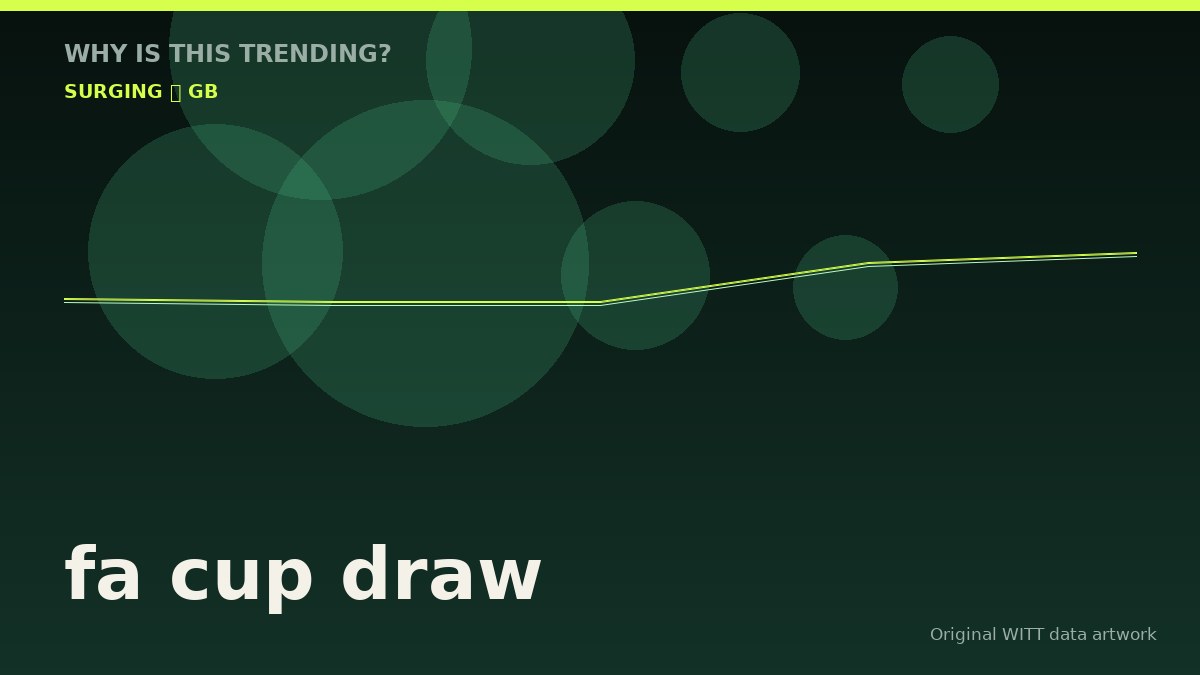
The sudden surge in search traffic around the phrase fa cup draw
reflects a classic operational bottleneck. When live television coverage is absent, fans cannot simply park in front of a screen to watch velvet bags open. Instead, they migrate en masse toward search engines, audio streams, and live-text blogs to follow minute-by-minute textual updates. This shift highlights how modern sports audiences pivot across platforms when traditional broadcasting rights leave gaps in visual delivery.
It is vital to separate this surge in user curiosity from broader demographic shifts or permanent changes in media consumption. The traffic spike is a precise, event-driven reaction tied directly to a two o'clock afternoon broadcast slot where supporters desperately wanted to know who their local heroes would face next. Google Trends data captures this frantic moment of collective attention, proving that local football loyalty remains fiercely vibrant even in the preliminary rounds of historic competitions.
Discerning signal from noise during these spikes requires looking past generalized sports interest to examine regional search behavior. Users typing specific queries into search bars are typically looking for immediate, actionable answers regarding opponent confirmations, match dates, and ticket details rather than sweeping analytical commentary.
Looking Ahead to Matchday
As clubs pivot from the administrative tension of the draw rooms to the physical reality of training grounds, attention settles firmly on the upcoming fixtures. The fourth qualifying round matches are locked in for the weekend of Saturday, October 17, 2026 (Daily Mirror). Winning sides will advance one step closer to the lucrative first round proper, where League One and League Two heavyweights finally enter the hat, bringing the ultimate dream of a televised giant-killing within touching distance for non-League players and supporters alike.
Fans eager to follow their teams should monitor official club channels and regional sports desks for kickoff confirmations and broadcast updates as matchday approaches. While the television cameras may bypass this stage, the drama on the pitch promises to deliver everything supporters expect from the world's most famous knockout tournament.