The Mechanics of Fan Frustration
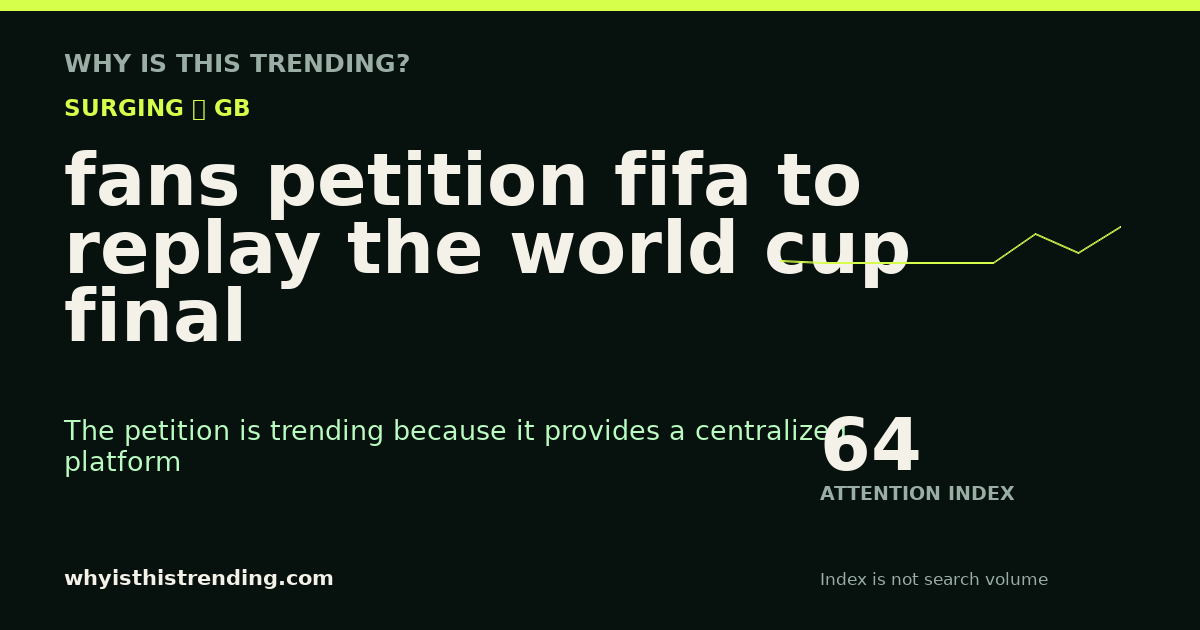
In the wake of Argentina’s 1-0 extra-time defeat to Spain in the 2026 World Cup final on July 19, 2026, a digital campaign has emerged as the primary outlet for aggrieved supporters. Started by fan Gisela Sanchez on Change.org, the petition calls for a replay of the match, citing alleged bias and irregularities in the officiating of Slovenian referee Slavko Vinčić [1]. By July 22, 2026, the movement had surpassed 61,000 signatures, reflecting a significant, albeit localized, surge in online attention [2].
It is critical to distinguish this digital activity from actual regulatory pressure. While the signature count is high, the petition functions primarily as a barometer of fan sentiment rather than a legal instrument. FIFA has not indicated any intention to review the match result, nor do they have a precedent for overturning an official final based on public pressure [3]. The petition is a manifestation of the intense emotional investment fans place in the tournament, particularly following a narrow loss that denied the team a second successive title.
Signal vs. Noise: The Anatomy of the Trend
To understand why this is trending, one must look at the context of the 2026 tournament. This is not an isolated incident but part of a broader pattern of fan-led digital activism. During the tournament, a similar petition regarding the France-Spain semifinal gathered over 82,000 signatures, yet it yielded no official response from FIFA [2]. The repetition of this behavior suggests that digital platforms are increasingly being used as a space for collective grieving and protest, regardless of the lack of a tangible outcome. The signal here is the depth of fan dissatisfaction; the noise is the implication that such a petition carries administrative weight.
The following table clarifies the disconnect between public sentiment and regulatory reality:
| Metric | Status |
|---|---|
| Petition Signatures | Over 61,000 (as of July 22, 2026) |
| Evidence of Manipulation | None provided |
| FIFA Regulatory Standing | None |
| Likelihood of Replay | Zero |
The Reality of FIFA Regulations
The core of the petition rests on the claim that refereeing decisions were biased. While fans have pointed to specific moments—such as disputed fouls and card decisions—these are standard components of post-match discourse [5]. Crucially, even if a referee makes a high-profile error, FIFA’s statutes are clear: a match can only be replayed under highly exceptional circumstances defined by governing bodies, not by public demand [6]. The petition lacks any verifiable evidence of match manipulation or procedural failure that would trigger such a rare intervention.
Even within the Argentine camp, the narrative is not monolithic. Argentina head coach Lionel Scaloni offered a more pragmatic perspective, stating that the team lost because Spain was the better side on the day, effectively distancing the team’s leadership from the calls for a replay [6]. This contrast between the fans' emotional reaction and the professional assessment of the team's leadership highlights the symbolic nature of the campaign.
Why the Attention Persists
The surge in attention is fueled by the emotional stakes of the final. For many, the match represented the culmination of a high-profile tournament, and the loss was deeply felt. The petition serves as a vessel for this disappointment. However, it is essential to recognize that the viral nature of the petition on social media is not a proxy for a legitimate investigation. The lack of verifiable evidence, combined with the clear regulatory stance of FIFA, confirms that this is a social phenomenon—a way for fans to process a difficult loss—rather than a developing news story with a potential for procedural change.
Ultimately, while the petition may continue to gather signatures, its impact will remain confined to the digital sphere. Fans are using these platforms to express their passion, but the finality of the match result remains firmly in the hands of the sport’s governing body, which has consistently ignored such requests in the past. Readers should view the petition as a reflection of fan culture and the democratization of post-match complaints, rather than a credible threat to the tournament's official records.