Decoding the Surge Behind 'Furious'
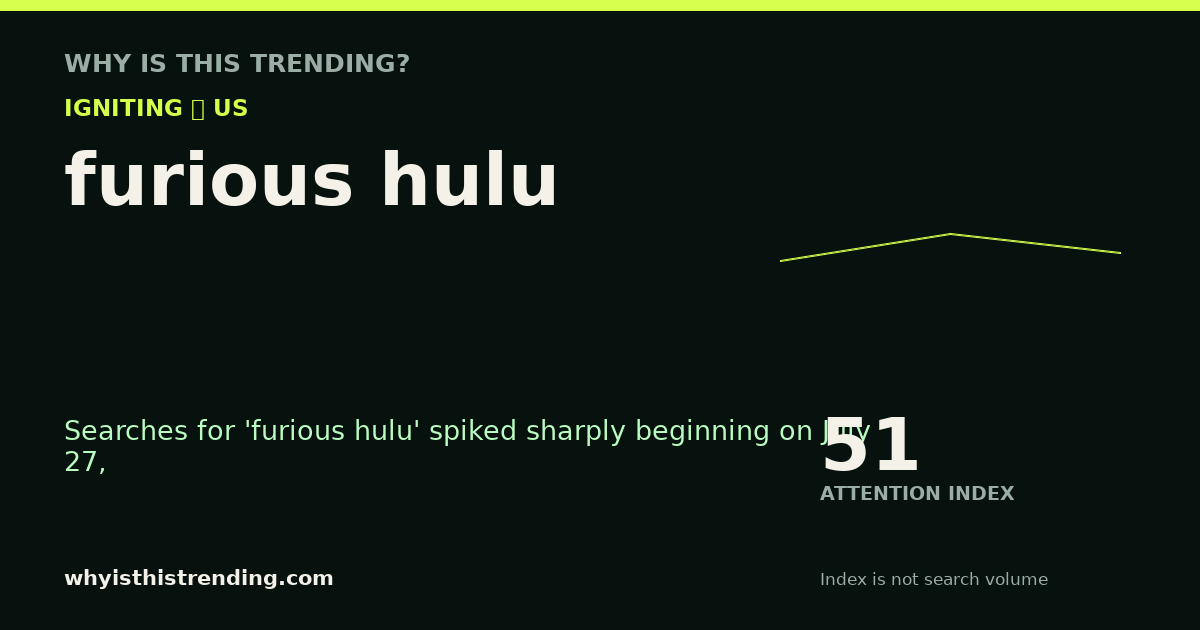
When a new television series triggers an abrupt wave of public curiosity, it rarely happens by accident. Google Trends registers a sharp upward trajectory beginning on July 27, 2026, aligning precisely with the multi-episode debut of the thriller Furious. While a platform launch provides the structural anchor for this attention, the underlying momentum was carefully engineered by a strategic promotional rollout in the days preceding the release.
Viewers searching for the project are encountering a high-stakes psychological drama backed by recognizable creative powerhouses. Understanding the mechanics of this trend requires separating the immediate noise of launch-day excitement from the creative signals driving long-term audience engagement. Rather than treating the spike as a random statistical blip, we can trace how deliberate media timing converts passive observers into active searchers.
In the digital landscape, a sudden influx of queries often acts as a barometer for cultural curiosity, capturing the exact moment a title transitions from industry trade announcements into mainstream consciousness. The convergence of targeted press tours, morning television appearances, and global streaming availability ensures that potential viewers are hit with reminders from multiple directions simultaneously.
The Talent and Premise Driving the Buzz
At the center of the conversation is a deliberate subversion of traditional crime thriller tropes. Created by Elizabeth Meriwether—known for her work on The Dropout and Dying for Sex—the series pairs Emmy Rossum as FBI agent Alice Black against Lola Petticrew as Catherine, a calculating killer targeting powerful men.
Rather than relying strictly on a procedural whodunit format, promotional interviews published between July 24 and July 26 emphasized complex character motivations. Rossum and Meriwether sat down for high-profile morning and print features, discussing how the narrative explores institutional trauma, personal compartmentalization, and the murky grey areas of justice. In these interviews, the creators and cast stressed that the show refuses to present its characters as simple saints or monsters, inviting audiences to grapple with difficult moral questions instead of providing easy answers.
The stellar ensemble cast further widens the show's appeal. Alongside Rossum and Petticrew, the series features performances by Scoot McNairy, Quincy Tyler Bernstine, and Jake Lacy, grounding the psychological tension in rich, character-driven performances that demand intense emotional labor from both sides of the law.
Chronology of a Digital Spike
The convergence of publicity and platform availability illustrates how modern streaming interest builds momentum over a compressed window:
- July 24–26, 2026: Cast members Emmy Rossum and Lola Petticrew, alongside creator Elizabeth Meriwether, saturation-marketed the series through interviews on outlets like Good Morning America and specialized entertainment features.
- July 27, 2026: The series officially premiered on Hulu and Disney+, deploying its first three episodes and triggering an immediate, measurable spike in search engine queries as fans rushed to access the content.
This timeline highlights the direct correlation between promotional visibility and consumer action. When studios align press days with immediate streaming availability, they eliminate the friction of long waiting periods, allowing curious audiences to search and stream within the exact same attention window.
Signal Versus Noise in Streaming Trends
It is easy to mistake raw search volume for guaranteed cultural longevity or absolute viewership numbers. Search spikes often reflect baseline curiosity about a new title card, a platform push notification, or morning-show segment appearances rather than definitive proof of long-term retention. A sudden surge tells us that millions of people heard a title at the exact same moment, but it cannot measure whether those users will stick around for the entire rollout.
However, the qualitative signal here points to a distinct audience appetite for morally complex storytelling. By rejecting easy hero-and-villain binaries, the creative team has positioned the show to sustain conversation as weekly episodes roll out toward the season finale on August 31, 2026. For viewers looking to dive in, the first three episodes are currently streaming, with subsequent chapters dropping weekly on Mondays.
Ultimately, separating the temporary noise of release-day hype from the signal of genuine engagement means watching how audiences react once the initial mystery of the premiere wears off. The early search spike proves the marketing machine and talent roster successfully captured public attention; what happens next depends entirely on whether the story delivers on its provocative premise.