Understanding the Surge in Attention
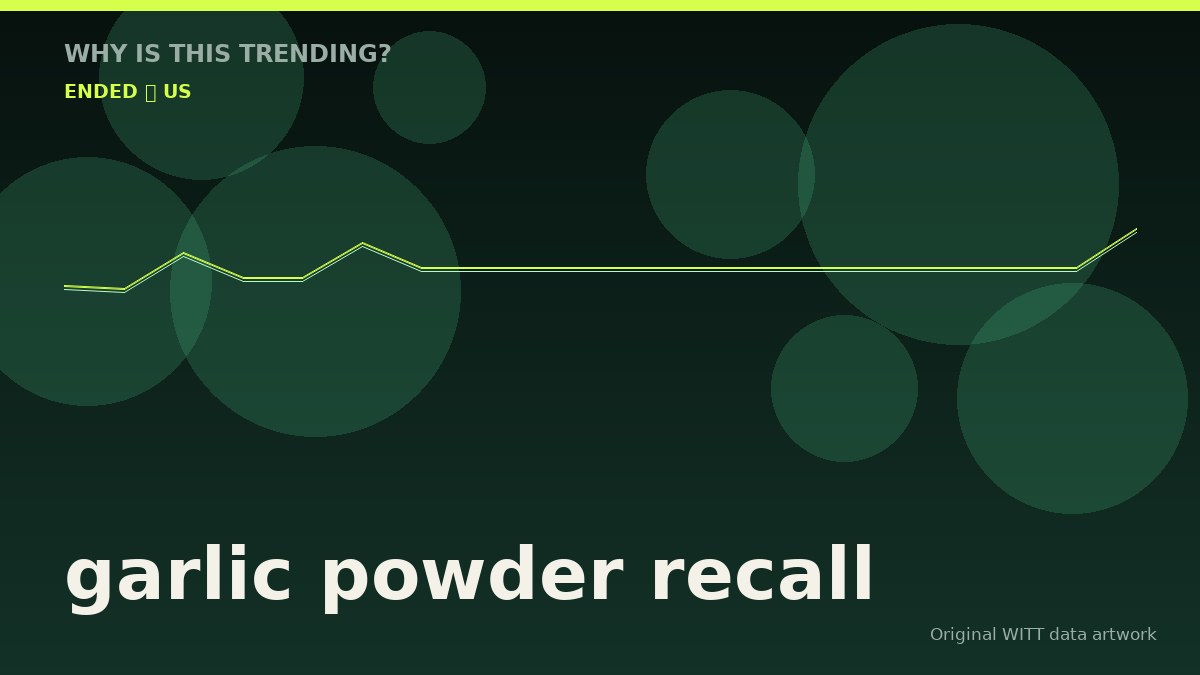
When a common kitchen staple like garlic powder becomes the subject of a safety alert, the resulting spike in search interest is often a reflection of consumer anxiety following publicized recall notices. In this instance, the surge in interest regarding the 'garlic powder recall' followed publications between July 18 and July 20, 2026. Major outlets, including Fox Business and AOL, disseminated the news, transforming a localized regulatory action into a national conversation about food safety.
It is important to distinguish between the raw search volume and the underlying reality: the attention is a reaction to the news cycle. The recall specifically targets Heavenly Spices garlic powder sold at Dollarama stores across Canada. By contextualizing this event, we can separate the signal—the need to check specific product labels—from the noise of general food-safety apprehension.
The Contamination Risk: Bacillus cereus
The core of this recall is the potential presence of Bacillus cereus. While the name may sound intimidating, it is a bacterium frequently associated with foodborne illness. According to the International Business Times, the Canadian Food Inspection Agency (CFIA) classified this as a Class 2 event. This designation is critical for understanding the risk level: it indicates a moderate risk, meaning that while consumption could lead to health issues, they are typically short-term or non-life-threatening.
Symptoms of Bacillus cereus infection generally include:
- Nausea and vomiting
- Abdominal cramps
- Watery diarrhea
These symptoms typically manifest and persist for 24 to 48 hours. The bacterium is often found in foods that have been improperly stored, such as cooked rice, gravies, or meat, but its presence in a dry spice like garlic powder serves as a reminder that contamination can occur at various stages of the supply chain, from harvesting to packaging.
How to Identify Affected Products
Not all garlic powder is subject to this recall. The confusion often stems from the broad nature of the search term, which can lead consumers to worry about products that are perfectly safe. To determine if you have an affected item, you must check the physical packaging for the specific identifiers provided by the CFIA:
Checklist for the Recalled Product
- Brand: Heavenly Spices
- Container Size: 70 grams
- UPC: 6 67888 50634 7
- Best-Before Date: 2029 JAN 30
- Lot Code: GP 30ZV PIT
If your container matches these details, the advice from health authorities is clear: do not use, sell, serve, or distribute the product. Dollarama has provided a mechanism for resolution, offering a $2.00 e-gift card as a replacement for affected customers who provide a photo of the product and its lot number to their customer service department.
Contextualizing the Food Safety Landscape
The heightened sensitivity to this recall is likely amplified by a broader environment of food safety alerts. In the same week as the garlic powder announcement, other high-profile recalls—such as the General Mills recall of Pillsbury bread products due to potential glass contamination and ongoing concerns regarding Cyclospora outbreaks linked to produce—have kept food safety at the forefront of the public consciousness. When multiple food safety notices appear in a short window, consumers naturally become more vigilant, leading to a compounding effect on search interest.
The takeaway for the home cook is not to panic, but to remain methodical. Food recalls are a standard, albeit inconvenient, part of the regulatory safety net designed to prevent illness. When you see a trend regarding a recall, use it as a prompt to verify your pantry against the specific lot numbers provided by official sources, rather than assuming all products in a category are compromised. By focusing on the specific identifiers, you can effectively manage your household safety without falling prey to unnecessary alarm.