The Anatomy of a Matchday Surge
When digital attention spikes around a concise, everyday term like hearts,
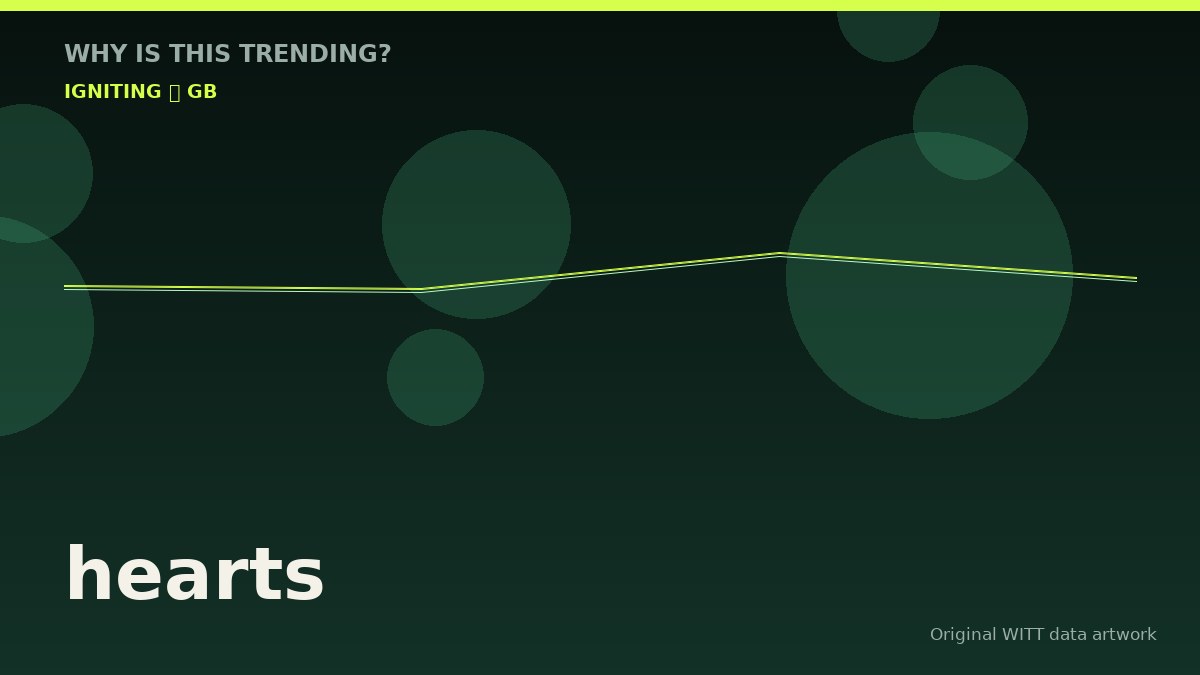
it often points to a concentrated real-world event rather than a diffuse cultural phenomenon. On 6 August 2026, search metrics registered a distinct upward trajectory that peaked just half an hour before kick-off [1]. Rather than reflecting unrelated entertainment announcements or unrelated sports stories, this specific wave of digital curiosity mapped directly onto the football calendar: Hearts FC was preparing to face Benfica in the Europa League third qualifying round first leg [1].
To understand what changed on that Wednesday, one has to look at how modern football supporters interact with away fixtures. European ties away to continental giants carry heavy logistical hurdles. Hours before the 20:00 UTC kick-off, Hearts published detailed travel, security, and ticketing guidelines for the traveling contingent [1]. That timely release served as an immediate information hub, pulling in supporters, traveling media, and curious observers all at once who needed to verify transit routes, gate choices, and security restrictions in a foreign city.
Managing travel logistics in a major European capital requires precision. Fans navigating unfamiliar metro systems rely heavily on mobile access to club-issued directives, turning search engines into impromptu travel agents. The convergence of official club updates and fan preparation created an ideal environment for a rapid digital mobilization.
Signal Versus Noise in the Data
It is easy to misinterpret broad search queries during heavy news cycles. At any given moment, public platforms aggregate dozens of unrelated stories sharing common vocabulary—from medical reporting on pediatric heart transplants [3] and cardiovascular health studies [5] to regulatory recalls on cardiac medical devices [6]. However, the precise timing of the evening peak—sitting just thirty minutes before the opening whistle in Lisbon—confirms that the primary driver was sports-related urgency [1].
Fans turning to search engines moments before entering the stadium were looking for practical guidance rather than general news. The club's matchday advisory outlined exact parameters that required active compliance from every attending fan:
- Kick-off time: Scheduled strictly for 20:00 UTC on 6 August 2026 [1].
- Turnstile access: Gates opened early at 18:00 UTC, with club officials urging supporters to arrive as close to that window as possible [1].
- Entry points: Designated away access via Gate 23V, reached most efficiently by taking the metro and alighting at Colegio Militar for a short five-minute walk [1].
- Stadium rules: Mandatory bag and flag checks, card-only catering kiosks with no alcohol on sale, and a post-match holdback period of 20 to 30 minutes for visiting fans [1].
By compiling these requirements into a single accessible document, Hearts FC successfully mitigated potential crowd control issues while simultaneously channeling thousands of inquiring minds toward a single digital touchpoint.
Interpreting the Attention Mechanism
The behavior captured by the trend curve illustrates how digital tools act as virtual turnstiles for modern events. When a club publishes logistical notices on the morning of a high-profile match, it triggers a cascade of decentralized sharing across messaging apps, travel forums, and social media. Supporters checking transport links, confirmation of gate entry, and prohibited item lists generate a sharp, highly localized surge in query volume that naturally subsides the moment the match gets underway and fans pass through security checkpoints.
It is important to evaluate what this surge proves and what it leaves open. While the data confirms an intense, time-bound spike in public interest coinciding perfectly with the pre-match window, search volume metrics do not measure match sentiment, television viewership totals, or final game outcomes. They simply reflect the immediate information-seeking behavior of a fanbase coordinating its movements under strict international security protocols.
Ultimately, the spike demonstrates the immediate utility of real-time publishing, capturing a brief, predictable window where digital curiosity peaked alongside fan anxiety and excitement on the ground in Portugal [1]. Observers monitoring similar trends in the future should look past generic keyword overlaps and examine the contemporaneous publishing schedules of involved organizations to uncover the true catalyst behind sudden digital waves.