Decoding the Matchday Attention Surge
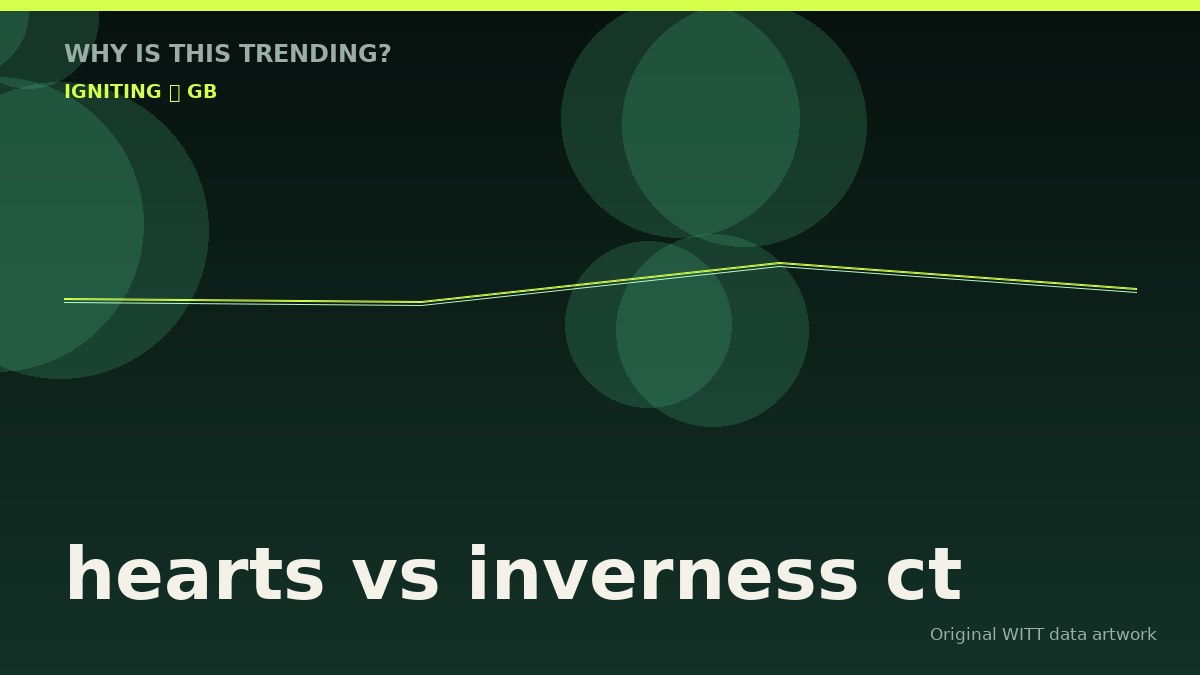
When digital curiosity spikes around a domestic cup tie, it is rarely a mystery of organic discovery. Google Trends recorded a pronounced attention peak on 16 August 2026 for the query hearts vs inverness ct
in Great Britain [1]. This wave of interest aligned precisely with the scheduled match day for their Scottish League Cup encounter at Tynecastle Park [3], alongside a wave of live coverage updates, betting odds, and tactical previews published across sports platforms [2].
Rather than pointing to a sudden off-field controversy or administrative crisis, the attention mechanism here was driven by practical utility and fan anticipation. Supporters across Great Britain turned to search engines to secure logistical updates, verify television and streaming channels, and check starting XIs hours before kickoff [1] [2].
It is important to remember that Google Trends attention reflects relative search interest and query volume patterns rather than direct proof of stadium attendance or causal fan behavior. What the data clearly captures, however, is the exact moment a localized sporting event transitions from a fixture on a calendar into an active, high-priority digital query stream as fans seek out real-time verification.
Contextualizing Fixture History and Team Trajectories
A major underlying driver of the digital footprint was the pairing itself within the knockout tournament format. Hearts entered the competition at this second-round stage under manager Wouter Vrancken following a turbulent start to their campaign—navigating challenging European qualifiers alongside domestic fixtures—while Inverness arrived having topped Group F in the preliminary stage [3].
As detailed in publisher previews, Hearts sought to build confidence following a 4-0 league win over Dundee United and a hard-fought 1-1 draw against Benfica [5]. Meanwhile, Inverness arrived boasting defensive resilience through clean sheets in their prior matches but searching for an attacking spark after consecutive scoreless draws in the Scottish Championship [3]. That fascinating clash of contrasting recent trajectories naturally amplified interest from pundits, tipsters, and neutral observers alike.
Signal Versus Noise: Dissecting the Matchday Triggers
When examining why the attention index spiked so sharply right around midday on Sunday, a clear separation emerges between routine sporting background noise and the concrete operational triggers that mobilized online behavior:
- Practical Supporter Guidance: Hearts FC published essential stadium and ticketing notices hours before kickoff, dictating turnstile opening schedules at 1:00 PM, card-only kiosk policies, and strict entry conditions regarding prohibited items [1].
- Broadcast Availability: With live coverage slated for Premier Sports Player and Hearts TV International [1], supporters actively searched for streaming access, international viewing windows, and authorized channels to follow the action.
- Lineup Speculation and Odds: Outlets like Footlive and Sports Mole provided granular predicted formations and head-to-head records, keeping fans updated on squad rotations and injury absences for key personnel [2] [3], while betting analysis platforms published odds matrices [4] [6].
Ultimately, this surge stands as a textbook example of matchday synchronization. When a high-profile Premiership side hosts a resilient lower-league opponent in a knockout tournament, the convergence of practical ticketing releases, live-score tracking [2], and broadcast announcements [1] reliably generates a sharp, temporary spike in search attention. For readers monitoring similar trends, recognizing this pattern helps separate the predictable rhythm of matchday preparation from genuine unexpected news developments.
Interpreting these search spikes requires keeping a steady eye on what the data actually tells us. The metrics show a collective surge in inquiries, but they do not prove causation or guarantee that every searching user tuned into the 90 minutes. Instead, the numbers map out the logistical heartbeat of modern football fandom: a synchronized rush to confirm where to watch, who is playing, and what the odds look like before the referee blows the opening whistle.