Decoding the Reality TV Rebuttal and Text Message Politics
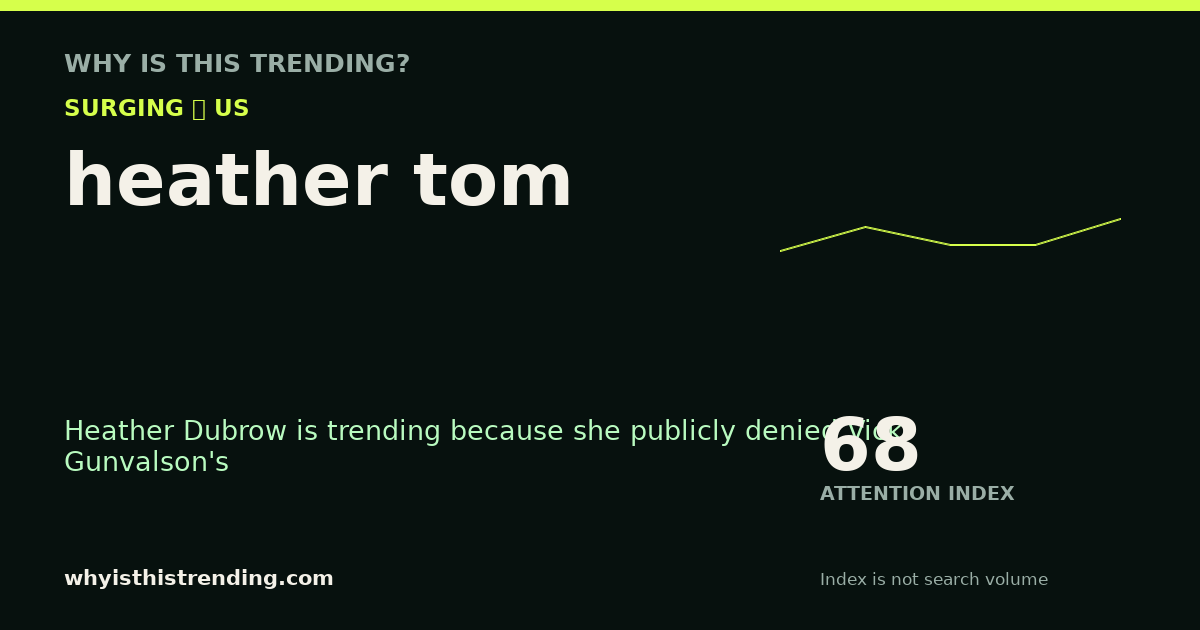
When long-running reality television veterans clash over text message receipts, the fallout inevitably spills far beyond the broadcast. Search interest surged around Heather Dubrow as entertainment outlets highlighted her direct pushback against a controversial storyline playing out on season 20 of The Real Housewives of Orange County. The catalyst was a sharp confessional remark made by returning franchise fixture Vicki Gunvalson, who alleged that Dubrow had asserted social dominance over the group following a benign electronic exchange.
According to Dubrow's account, the interaction in question was entirely warm and polite. She had reached out to Gunvalson prior to the start of filming to offer a pleasant welcome back to the ensemble. Instead of accepting the gesture at face value, Gunvalson claimed in her on-camera confessional that Dubrow had sent a text saying, Welcome to the group Vicki, I’m the leader of the pack
. Dubrow flatly rejected that version of events during subsequent press interviews, dismissing the narrative as an absurd distortion and stating that she never made such a claim.
The dispute underscores a classic reality television mechanism: the friction that arises when private communications are reinterpreted through the lens of a confessional booth. For viewers, untangling what was actually texted from what was performed for the cameras forms a major part of the weekly engagement cycle. Reality television relies heavily on these micro-disputes, but the digital amplification depends entirely on how aggressively the cast members litigate the edits in the real world.
Signal Versus Noise in the Orange County Feud
It is easy to get lost in the endless web of franchise feuds, but the distinction between on-screen friction and real-world trend mechanics is clear. The wave of attention was driven by Dubrow's active press run—including her interview at an event and her appearance on Watch What Happens Live With Andy Cohen—rather than any isolated plot twist inside a standard episode. She clarified to interviewers that she never uttered the phrase attributed to her, emphasizing that the claim originated entirely from Gunvalson's creative interpretation in the confessional chair.
At the same time, Dubrow leaned playfully into the fan-voted metrics surrounding the title. Highlighting a recent viewer poll on Andy Cohen's late-night program where she secured 53 percent of the audience vote for who really leads the group, she joked that the audience had effectively crowned her. This mix of genuine grievance and tongue-in-cheek acceptance is precisely what keeps viewers debating the social hierarchy long after the credits roll.
Crucially, search activity captures public curiosity and real-time reaction to these press statements, but it does not measure absolute viewership counts or prove that narrative claims are factual. What the search spike does prove is that off-camera public rebuttals have immense power to drive digital conversation and redirect viewer focus toward underlying cast dynamics.
Broader Dynamics and Multi-Layered Cast Friction
The leader of the pack
dispute is only one fracture point in a volatile milestone season. Dubrow has also found herself navigating dramatic fallout with Jennifer Pedranti and Tamra Judge, describing feelings of being treated as collateral damage in broader cast conflicts Us Weekly. Between unpacking off-camera text messages, debating relationship red flags regarding Gunvalson’s personal life Reality Blurb, and defending her standing within the ensemble, Dubrow remains firmly at the center of the season's narrative gravity.
When analyzing why these specific storylines break through the noise, observers must look at how multiple narratives overlap. Dubrow is not just defending herself against a single fabricated quote; she is simultaneously managing ongoing tension from her castmates regarding her friendships, her lifestyle, and her positioning on the show. Whether discussing her concerns over engagement ring etiquette or addressing accusations of manipulating alliances, Dubrow's active engagement ensures that the discourse remains high-intensity.
For followers of the franchise, tracking these multi-layered arguments provides a window into the complex social math of reality television ensembles. As the season progresses, fans tuning in will watch whether these off-screen denials translate to peace on the reunion stage—or if the friction will only intensify under the studio lights. Viewers interested in the outcome should keep a close eye on upcoming episodes and post-show interviews as the rest of the milestone season unfolds.