The Anatomy of an Attention Spike
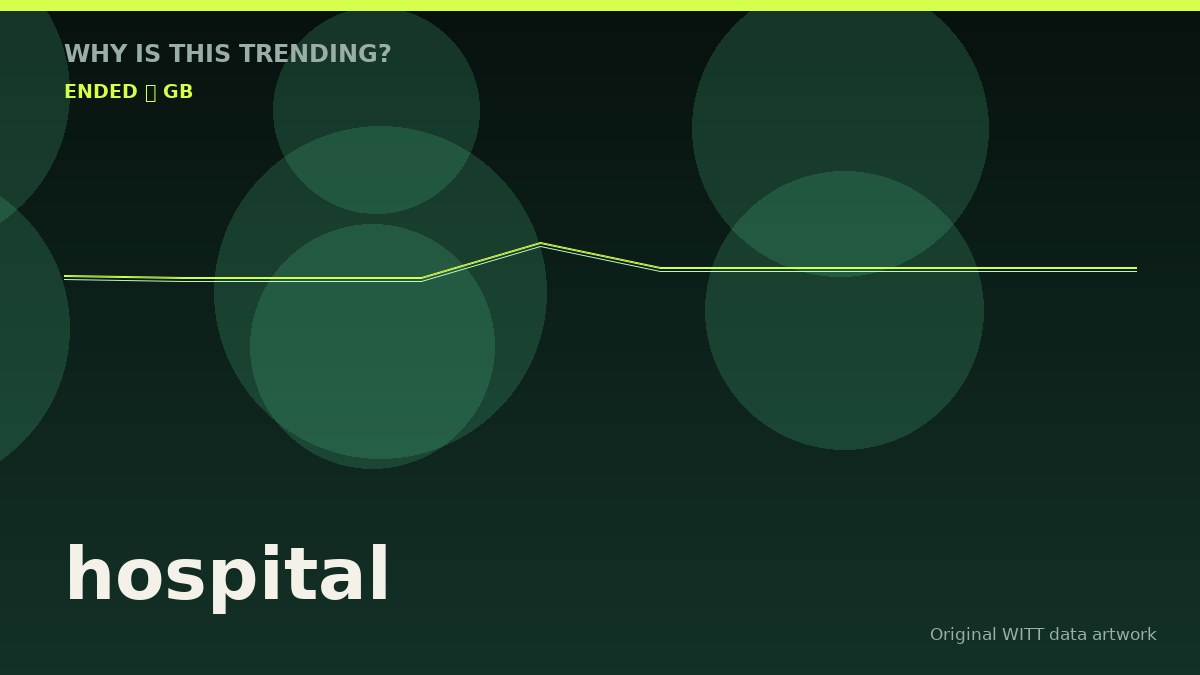
When a broad, generic search term like hospital experiences a sudden, sharp increase in momentum, it is rarely the result of a single narrative. On July 21, 2026, the search term ignited in Great Britain, creating a composite trend that illustrates how global news and local civic engagement can collide in the digital attention economy. The spike is not a monolith; it is a reflection of two very different human concerns: the visceral, immediate fear of a wildlife encounter and the long-term, logistical anxiety surrounding public health infrastructure.
The primary driver of the viral component of this search is the harrowing account of Carl Isom-McDaniel, a 65-year-old grandfather who was tossed eight feet into the air by a bull bison in Yellowstone National Park. As media coverage intensified on July 20 and 21, the public’s focus shifted toward the reality of his recovery, with the survivor speaking directly from his hospital bed. This narrative provided a visceral, high-stakes hook that propelled the term into search bars across the globe, as viewers sought updates on his condition and the circumstances of the attack.
The Seasonal Trigger: Why Bison Are More Dangerous Now
The attention surrounding the Yellowstone incident is not merely a reaction to a singular, isolated accident; it is bolstered by an expert-led public safety warning that provides necessary context for the timing of the surge. Wildlife experts have identified that the bison's aggression is directly linked to the rut, or peak mating season, which spans from mid-July through August. ZooMontana Assistant Curator Allyson Welborn noted that the bison's behavior—while terrifying for the victim—is consistent with biological imperatives to impress potential mates. This context transforms a “random” accident into a seasonal warning, prompting users to search for information on hospitalizations and wildlife safety as they seek to understand the risks associated with summer travel during this specific window.
The Local Signal: Infrastructure and Civic Participation
While the Yellowstone story provides the viral momentum, a significant portion of the search traffic in Great Britain is rooted in tangible, local civic action. The Airedale General Hospital redevelopment project has reached a critical phase, with a public consultation window closing on July 24, 2026. With a £1.5bn price tag and plans for a 10-storey facility, the project has mobilized local residents to search for details regarding the future of their healthcare access. This is a classic example of how local infrastructure projects, when they reach a deadline, create a predictable but significant bump in search volume that can be mistaken for broader, national trends.
The following table clarifies the distinct nature of these two search intents:
| Driver | Intent | Nature of Interest |
|---|---|---|
| Yellowstone Incident | News/Curiosity | Reactive, emotional, global |
| Airedale Consultation | Civic/Utility | Proactive, logistical, regional |
Signal vs. Noise
It is crucial to distinguish between these threads to understand the true nature of the trend. The Yellowstone incident is a high-velocity, short-term news cycle event. It captures attention because it is a dramatic, visual story—often accompanied by footage of the attack—that triggers an immediate, reflexive search for more details. The Airedale Hospital story, conversely, is a slow-burn signal of community engagement. As the consultation deadline approaches, residents are actively seeking information on healthcare accessibility, transport, and facility design.
When you see a spike in a broad term like hospital, you are witnessing the aggregation of these disparate interests. The noise is the overlap; the signal is the public's dual need to understand both the immediate, dramatic risks of the natural world and the long-term, structural evolution of their own local healthcare systems. If you are tracking this trend, focus on the geographic concentration of the searches—the Yellowstone interest is likely global and broad, while the Airedale-related interest will be heavily localized to the West Yorkshire region. The takeaway here is that “trending” is rarely a singular phenomenon; it is often the sum of a global shock and a local necessity occurring simultaneously.