The Production Roadmap Behind the Surge
When major entertainment publications dropped coordinated interviews with showrunner Ryan Condal on August 10, 2026—landing directly on the heels of the Season 3 finale—they answered the primary question occupying the minds of Westeros fans: when and how will this bloody civil war conclude (Esquire)? Rather than leaving the television adaptation's ultimate destination ambiguous, Condal and network representatives confirmed that Season 4 will stand as the final season (Town & Country), bringing George R.R. Martin's Fire & Blood narrative arc to a deliberate, structured close.
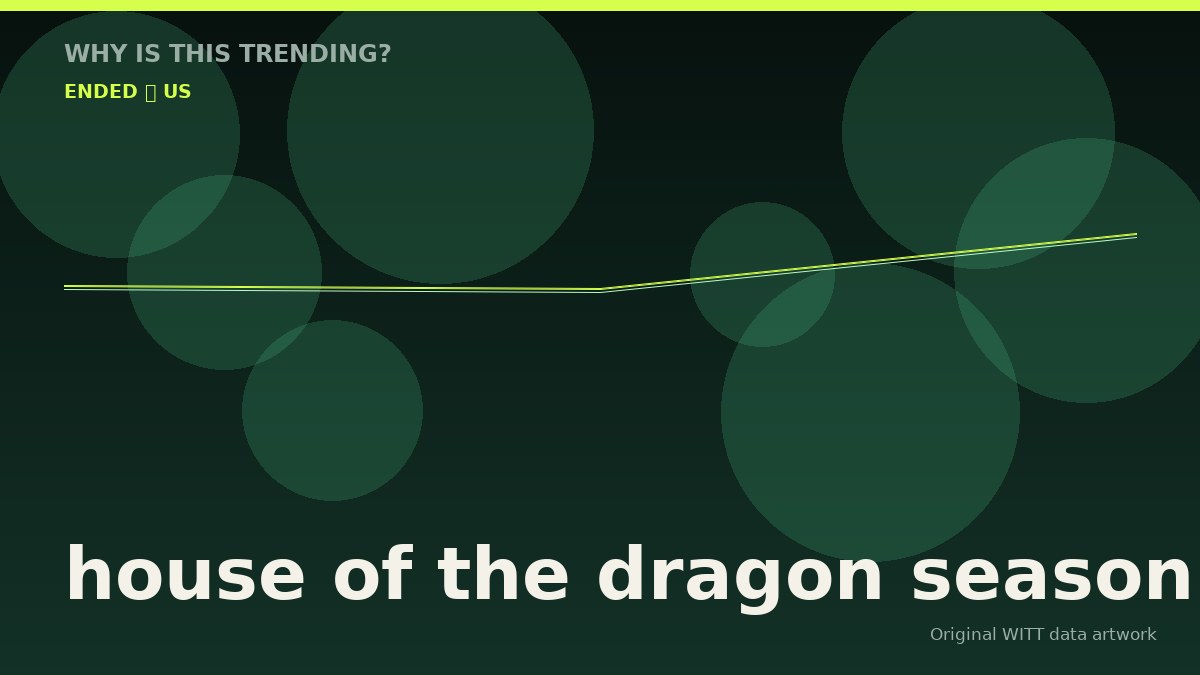
This sharp rise in public attention captures the fascinating intersection where narrative closure meets physical production realities. Traditional television models often rely on an annual cadence, but big-budget fantasy requires an entirely different operational scale. Condal noted that the creative team deliberately broke the narrative back of Seasons 3 and 4 together, establishing a grand superstructure to govern the pacing, dramatic peaks, and valleys (Deadline). Yet even the most meticulous writing room cannot bend the laws of physical filmmaking, a reality that became starkly apparent as the crew managed massive sequences like the Battle of Tumbleton.
As Condal explained regarding the physical strains placed on the crew during production, the machine of production can only absorb so many of these big battles. It’s really just logistics. How many shoot days can you possibly fit into one season? The demand on your crew, who can only be in so many places at once? So we have to resource-plan
(Esquire). That transparency about the heavy lifting required to push the story across the finish line is precisely what shifted public conversation from idle speculation to serious timeline tracking.
Signal Versus Noise: Decoding the 2028 Timeline
It is remarkably easy for enthusiasts to mistake early script drafting for imminent principal photography, but the actual production pipeline demands a patient outlook. While early drafts are actively circulating between the writers and HBO (EntertainmentNow), the physical machinery of the show enforces a lengthy downtime between releases. Observers looking at Google Trends attention should recognize that these surges reflect media coverage cycles rather than sudden shooting updates or immediate release dates.
The actual timeline involves distinct operational phases:
- Writing and Pre-Production: Showrunners are currently shaping early script iterations, refining the final act while wrapping up the heavy lifting of the previous release cycle (EntertainmentNow). First drafts of scripts have already been completed, showing that the creative machine is well ahead of typical production schedules.
- Filming Schedule: Principal photography for the final block of episodes is projected to commence in early 2027 (EntertainmentNow).
- Post-Production Cycle: Because physical prep and shooting consume roughly a year, followed by an intensive seven to eight months dedicated exclusively to digital effects and dragon animation (EntertainmentNow), the series is slated to return to HBO in 2028 (Town & Country).
Contextualizing the End of the Dance
Opting for a controlled, four-season boundary is a calculated strategic choice by HBO and its creators. Following the deeply polarized reactions that shadowed the conclusion of the original Game of Thrones television run, the network is leaning into a definitive, finite arc to preserve narrative cohesion and protect the franchise's long-term reputation (Town & Country). With Season 3 pulling in massive global numbers—averaging over 33 million viewers per episode across platforms despite stiff international competition from events like the World Cup (Comic Basics)—the prequel enters its final lap from an undeniable position of strength.
Furthermore, managing audience expectations around a fixed endpoint allows other extensions of the Westeros universe, such as A Knight of the Seven Kingdoms and upcoming projects exploring Aegon’s Conquest, to carve out their own spaces without creative fatigue setting in (Town & Country). By resisting the temptation to drag out the central Targaryen civil war indefinitely, HBO and Condal are prioritizing narrative tightness over endless franchise expansion.
Ultimately, the surge of interest surrounding Season 4 highlights a maturing, highly pragmatic approach to modern franchise management. By respecting physical production boundaries rather than rushing out half-baked installments, the creative team is prioritizing quality over velocity. Fans looking ahead toward 2028 can take comfort in knowing that the final act of the Dance of the Dragons is being methodically constructed from the ground up, ensuring that Westeros exits the television stage on its own terms.