The Mechanics of an Invisible Outage
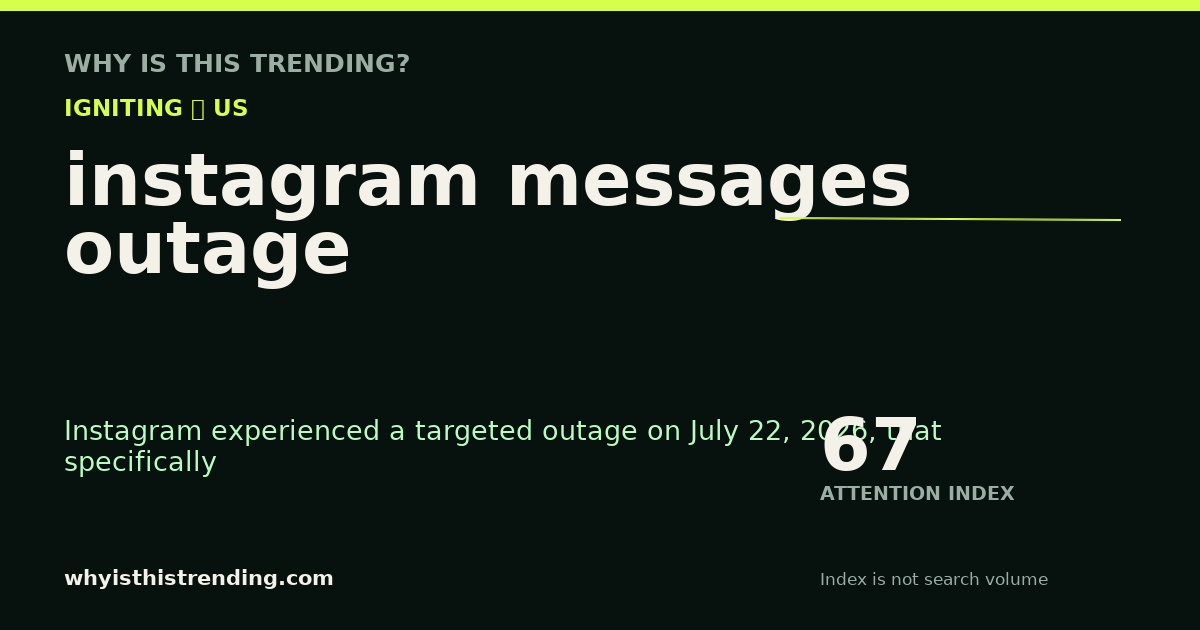
On July 22, 2026, a significant technical disruption rippled through Instagram, specifically targeting the platform's direct messaging (DM) infrastructure. Beginning at approximately 6:30 am ET, users across the United States found themselves unable to send or receive messages. The failure was not a total platform blackout; rather, it was a granular, feature-specific breakdown. Users reported that their attempts to communicate simply sat as unsent in their threads, while others encountered persistent errors when attempting to load historical message data, effectively severing a core utility of the app.
What transformed this technical glitch into a trending event was not merely the loss of functionality, but the vacuum of information that followed. While thousands of users flocked to Downdetector to signal that something was wrong, Meta’s official status page remained stubbornly static, displaying a No Known Issues
message throughout the duration of the disruption. This discrepancy between user reality and corporate reporting created a high-intensity feedback loop, driving reports to a peak of over 4,000 as users sought validation for their experience.
Signal vs. Noise: Mapping the Disruption
In the landscape of digital service failures, the signal is often found in the specificity of the complaints. This incident was distinct because it did not represent a total platform collapse. While Meta’s other services, including Messenger, saw a concurrent rise in reports—likely due to users attempting to migrate their conversations to alternative platforms—the core of the issue was localized to Instagram’s messaging architecture. The spike in Messenger reports, which exceeded 1,000, suggests a ripple effect where users attempted to troubleshoot their connectivity by shifting to a related Meta service, only to find that the underlying infrastructure issues were not limited to the Instagram app alone.
| Metric | Observation |
|---|---|
| Primary Affected Feature | Instagram Direct Messaging |
| Peak User Reports | 4,000+ |
| Outage Duration | Approx. 2 hours |
| Meta Official Status | 'No Known Issues' |
| Primary Geographic Scope | United States |
The data suggests that the outage was a targeted failure rather than a systemic infrastructure collapse. By 15:33 ET, report volumes had begun to subside to 2,600, signaling that the worst of the disruption had passed. The decline in reports serves as a reliable proxy for the restoration of service, as users stopped needing to verify their connectivity issues once the platform resumed normal operations. The rapid drop-off from the peak of 4,000 reports to under 400 by late afternoon indicates a swift resolution, though the lack of a post-mortem from the company leaves the specific technical cause of the DM failure unconfirmed.
The Cost of Corporate Silence
The trend-forensics of this event highlight a recurring theme in modern platform management: the erosion of trust when official channels fail to acknowledge real-world user experiences. When a platform as ubiquitous as Instagram stops functioning, the user base expects a baseline of transparency. By maintaining a status of No Known Issues
while thousands of users were actively documenting their inability to use the service, Meta inadvertently fueled the surge in search interest. This silence forced the public to rely on crowd-sourced reporting platforms to determine if the issue was localized to their own device or a widespread outage.
This is not the first time Meta has faced such scrutiny. The company has a history of global service interruptions, including a notable incident in June 2026 and a separate event on July 20, 2026, which primarily affected browser-based access. However, the July 22 event underscores that even a partial, feature-specific outage can generate significant anxiety. When the official status page is perceived as a lagging or inaccurate indicator, the burden of truth shifts entirely to the user community. This creates a temporary, high-velocity trend driven by the collective need for confirmation. As of late afternoon on July 22, with reports falling well under 250, the event effectively concluded. The takeaway for the user is clear: in the absence of official corporate communication, the volume of community-driven reports remains the most reliable, albeit imperfect, indicator of service health.