The Catalyst Behind the September Surge
When attention spikes around a veteran athlete during a high-stakes September campaign, it is usually a mix of nostalgia and clutch execution. For Hawthorn’s 34-year-old forward, the current wave of interest follows a crucial scoring contribution during the AFL preliminary final match against the Brisbane Lions at the Melbourne Cricket Ground (MCG) as reported by Nine.com.au. Yet looking only at a single scoring play misses the broader architectural shift that has transformed how Gunston operates on the field, capturing the curiosity of fans seeking to understand his late-career evolution.
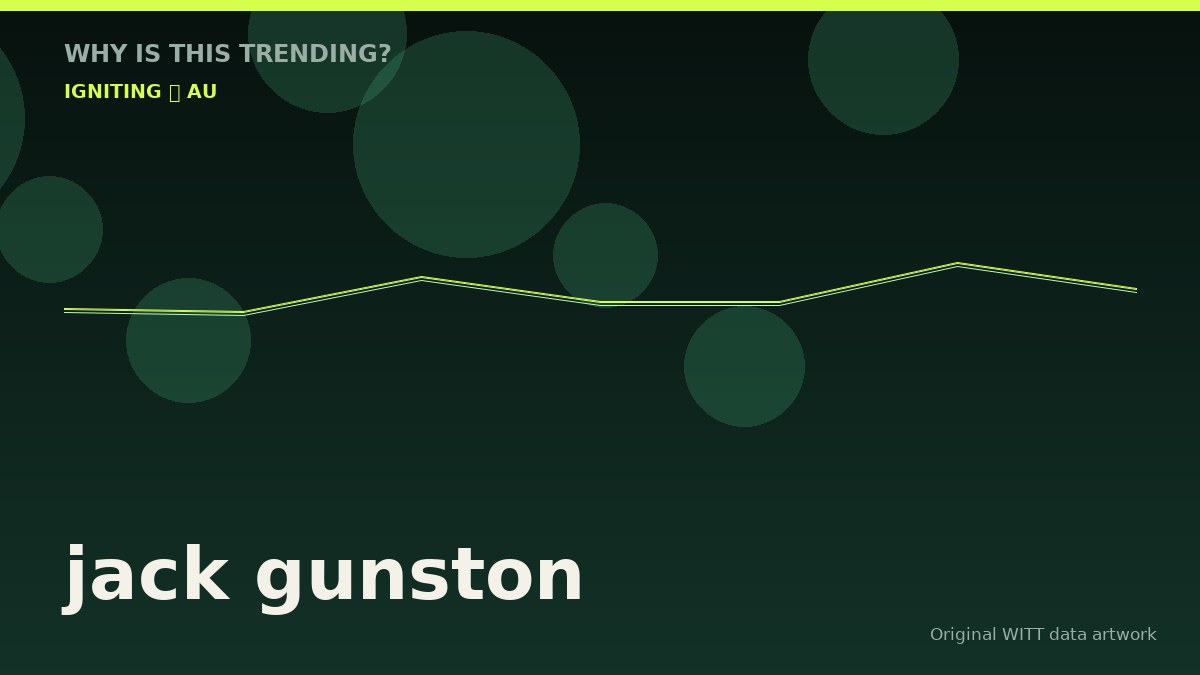
Google Trends attention reflects this groundswell of public curiosity, tracking how a seasoned player manages to dominate conversation heading into the biggest matches of the year. However, it is essential to remember that search interest measures public curiosity and media visibility rather than serving as proof of direct causation on the scoreboard.
Signal Versus Noise: Low Possessions, Maximum Impact
It is easy to misread modern football statistics through a legacy lens. Casual observers scrolling through traditional stat sheets might notice modest disposal counts and wonder why a player commands such heavy tactical analysis. The signal here lies not in sheer volume, but in spatial efficiency and structural gravity.
As detailed by Zero Hanger, Gunston averages just 10.4 disposals per game in 2026, yet he leads the entire competition in average goals with 3.4. This high-efficiency profile is the direct result of a deliberate tactical choice engineered by Hawthorn coach Sam Mitchell.
“Basically, that was Jack Gunston's role that he plays now, where he's quite deep (inside 50) came from him playing as a defensive forward on players, Harris Andrew being one of them,” Mitchell said on SEN (Source: Zero Hanger).
Sam Mitchell via Zero Hanger
By parking himself deep inside the attacking 50—a role that originally blossomed out of defensive assignments on dominant interceptors like Harris Andrews—Gunston forces opposition defenders into a brutal geometric dilemma. Opponents must constantly decide whether to peel off and join the defensive press or stay glued to a veteran who requires microscopic margins to convert.
Beyond the White Lines: Quiet Mentorship
Public appreciation for Gunston extends beyond his on-field scoring output, buoyed by his impact as an informal mentor. Earlier in the development of Hawthorn AFLW standout Aine McDonagh, Gunston and teammate Luke Breust stepped in to offer an impromptu coaching session that fundamentally reshaped the Irish-born athlete's career trajectory as highlighted by AFL.com.au.
Rather than forcing her to unlearn her natural Gaelic football instincts, the two veterans helped her refine her own mechanics, providing a crucial psychological anchor during a period when her confidence was severely tested. McDonagh noted how surprised she was to discover their immense career accolades only after they spent half an hour voluntarily helping a struggling teammate out on the shed floor. This combination of quiet leadership and elite on-field efficiency explains why public discussions frequently highlight his enduring football IQ and character.
Interpreting the Momentum and What Comes Next
When analyzing why a topic surges, it helps to distinguish between fleeting viral noise and structural sporting shifts. Digital interest graphs map out where public attention concentrates, but they do not predict match outcomes or dictate the bounce of a ball on a wet Saturday night. What they do capture is a compelling narrative peak: a veteran defying the conventional aging curve by trading high-running endurance for surgical deep-forward positioning.
As Hawthorn navigates the sharp end of the season, Gunston stands as a living case study in tactical adaptation. Whether this specific forward architecture secures ultimate glory depends on a shifting matrix of match-day variables, but the blueprint itself has firmly cemented its place in modern football strategy.