The Economics of a Championship
In the high-stakes world of NBA salary caps, loyalty is often measured in millions of dollars. Jalen Brunson, the centerpiece of the New York Knicks' 2026 championship run, is currently at the center of a narrative regarding the true cost of building a winner. By signing a four-year, $156.5 million extension in July 2024—a move that provided the Knicks with the financial flexibility to retain key teammates like OG Anunoby, Mikal Bridges, and Josh Hart—Brunson effectively left approximately $113 million in potential earnings on the table.
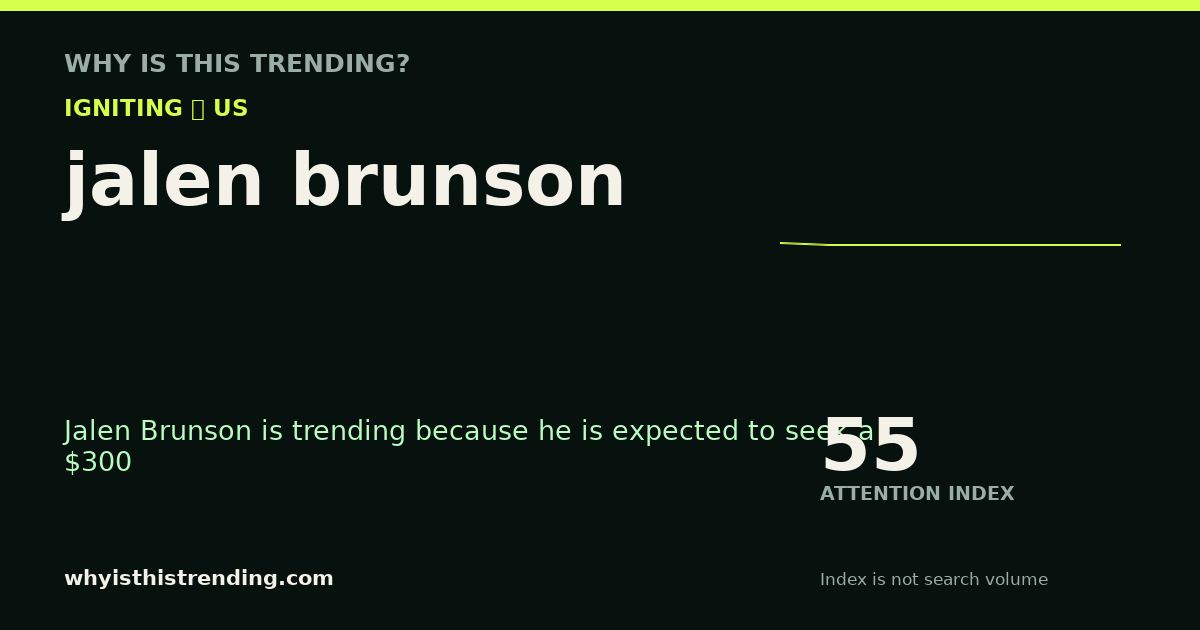
Now that the confetti has settled from the Knicks' June 18, 2026, championship victory, the conversation has shifted from the sacrifice to the repayment. NBA analysts and insiders are widely anticipating that Brunson will seek a maximum extension in the summer of 2027, with figures in the $280 million to $300 million range being cited as the expected target to align his compensation with his status as a Finals MVP and a New York icon. This is not merely a rumor; it is a structural expectation within the league, as the 2027 offseason marks the first point at which Brunson can legally address the shortfall created by his previous, team-first decision-making.
Leverage and the Window of Opportunity
The attention surrounding Brunson’s next contract is not just about the dollar amount; it is about the rigid reality of the NBA’s collective bargaining agreement. Brunson is currently playing on an extension that began with the 2025-26 season and includes a player option in its final year. His eligibility for a new, larger extension arrives in the summer of 2027, creating a critical junction for the Knicks front office. The timing is precise: he is effectively waiting for the window where he can maximize his lifetime earnings while the franchise is still riding the momentum of its first title in 53 years.
The following table outlines the current context of his financial trajectory:
| Milestone | Details |
|---|---|
| 2024 Extension | $156.5 million, signed early to aid roster construction. |
| Financial Sacrifice | Estimated $113 million left on the table compared to waiting. |
| 2026 Achievement | Led Knicks to first NBA title since 1973; named Finals MVP. |
| 2027 Outlook | Extension-eligible; expected to seek $300 million deal. |
The urgency of this trend is driven by the Knicks' current financial constraints. With the team operating near the second apron, the organization faces a delicate balancing act. As noted by industry observers, Brunson’s impending payday creates a significant ripple effect, influencing how the team manages other high-value assets, such as potential extensions for Karl-Anthony Towns. The uncomfortable truth
for the franchise is that while Brunson’s discount allowed them to build a champion, the market value of an elite, championship-winning point guard is non-negotiable. The team is now squeezed between the necessity of keeping the band together and the reality of a superstar who has already proven his willingness to lead by example, both on and off the court.
Signal vs. Noise: The Reality of the Payday
It is important to distinguish the noise of media speculation from the signal of the current NBA landscape. While social media and sports commentary often focus on the spectacle of the Knicks' recent success—including their high-profile celebrity interactions at Madison Square Garden and the team's championship parade—the underlying signal is the professionalization of Brunson’s career.
Brunson himself has remained grounded, noting that he continues to consult his parents for major financial decisions, a testament to his deliberate approach to wealth management. His focus on equity deals
and long-term business ventures, as reported by Fortune, suggests that the $300 million figure is not just about a salary bump; it is a calculated step in securing his financial future beyond the court. He is not merely looking for a payday; he is looking for the market-rate compensation he delayed to facilitate a title run.
For fans and observers, the takeaway is clear: Brunson’s upcoming contract negotiation is the inevitable result of a superstar who prioritized winning over immediate personal gain. The Knicks now face the bill for that success. Whether they can maintain their championship-caliber roster while meeting these massive financial obligations remains the primary question for the 2027 offseason. The market has spoken, and for a player who delivered a 53-year-awaited title, the expectation is that the franchise will pay him his worth in full. The attention here is a signal of a new era in New York basketball, where the front office must reconcile the high cost of winning with the reality of a star who has already given them the ultimate return on their investment.