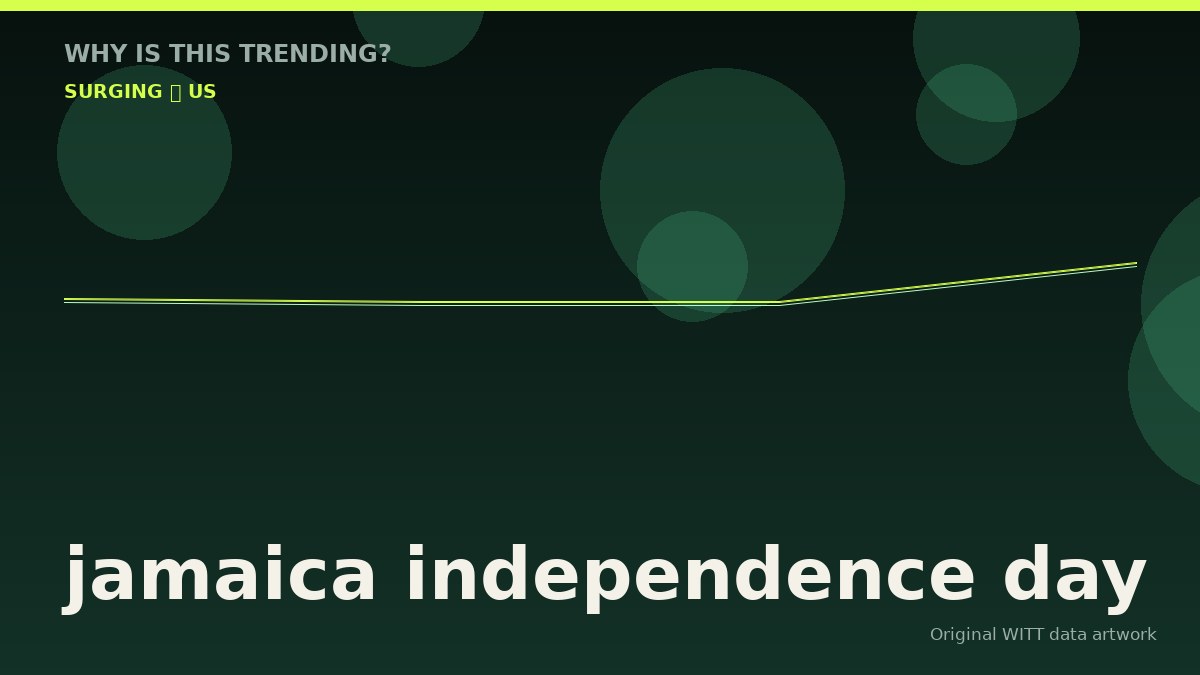
Decoding the August 6 Attention Spike
When public attention rises around a national milestone like Jamaica Independence Day, it creates an immediate window for brands deeply tied to the destination to engage prospective travelers. Attention peaks around August 6, coinciding precisely with scheduled marketing pushes across the Caribbean hospitality sector. This activity reflects how cultural observances act as natural calendar anchors for the travel industry, focusing public curiosity outward toward island culture, history, and travel planning.
Hospitality groups understand that public focus on a nation's heritage brings the destination top-of-mind for consumers contemplating future vacations. By aligning product rollouts, celebratory livestreams, and financial incentives with this specific date, brands can insert themselves into an existing conversational current. It is a calculated strategy: harness the cultural spotlight of a national holiday to drive search queries, agency bookings, and long-range travel commitments while the destination commands attention.
The Industry Response: Incentives and Virtual Celebrations
Major resort operators have turned this observance into a multi-tiered commercial campaign spanning both trade partners and direct consumers. Sandals Resorts structured its response around both sides of the market, marking the holiday with a dedicated virtual event on August 6, 2026, at 2 p.m. EDT. Hosted by resort general managers and romance directors, the livestream highlights three newly transformed properties—Sandals South Coast, Sandals Montego Bay, and Sandals Caribbean Cay—following a US$200 million overhaul designed to modernize guest offerings ahead of their respective reopenings.
Alongside the virtual gathering, Sandals rolled out a month-long incentive package for travel advisors booking eligible stays throughout August 2026. Advisors can secure up to US$100 in bonus cash alongside enhanced commission rates for bookings stretching deep into late 2027. Concurrently, broader umbrella promotions such as The Great Jamaica Comeback Sale extend instant credits, airfare discounts, and complimentary local excursions for bookings running through September 7, 2026, valid for travel windows extending all the way through December 2028.
Signal Versus Noise in Seasonal Travel Promotions
It is easy to mistake a wave of promotional announcements for proof of an overnight surge in immediate departures, but seasoned observers know to separate short-term marketing noise from structural booking signals. The flurry of discounts from Sandals, Beaches, and Hyatt Inclusive Collection targets forward-looking demand rather than immediate same-week getaways. Campaigns featuring travel windows extending years into the future are designed to lock in consumer commitment early, smoothing out occupancy forecasts well in advance rather than reacting to momentary shifts in regional foot traffic.
What differentiates this trend from standard seasonal advertising is its direct synchronization with a national cultural touchstone. Travelers engaging with search terms around the August 6 anniversary are greeted by an ecosystem of organized offers—from family-focused all-inclusive perks to luxury resort credits. Understanding this distinction helps explain why search interest translates into sustained commercial activity long after the initial holiday headlines fade, proving that holiday-tied marketing serves primarily as a catalyst for long-term pipeline building.
What Travelers and Advisors Should Keep in Mind
For those looking to capitalize on these holiday-tied promotions, careful reading of the terms is essential. Air credits, web booking bonuses, and complimentary adventure excursions often carry strict minimum-stay requirements and distinct booking windows that differ from overall travel dates. Because these incentives are structured to stimulate specific resort segments and room categories, aligning personal travel timelines with the exact parameters of each promotion remains key to maximizing value.
Furthermore, international hospitality brands continue focusing their marketing strategies on long-range vacation demand through these structured savings seasons. Whether travelers are planning a couples getaway or a family trip, verifying the specific booking windows, eligible travel dates, and brand requirements ensures that these seasonal incentives translate into actual savings.