The Mechanics of the Reveal
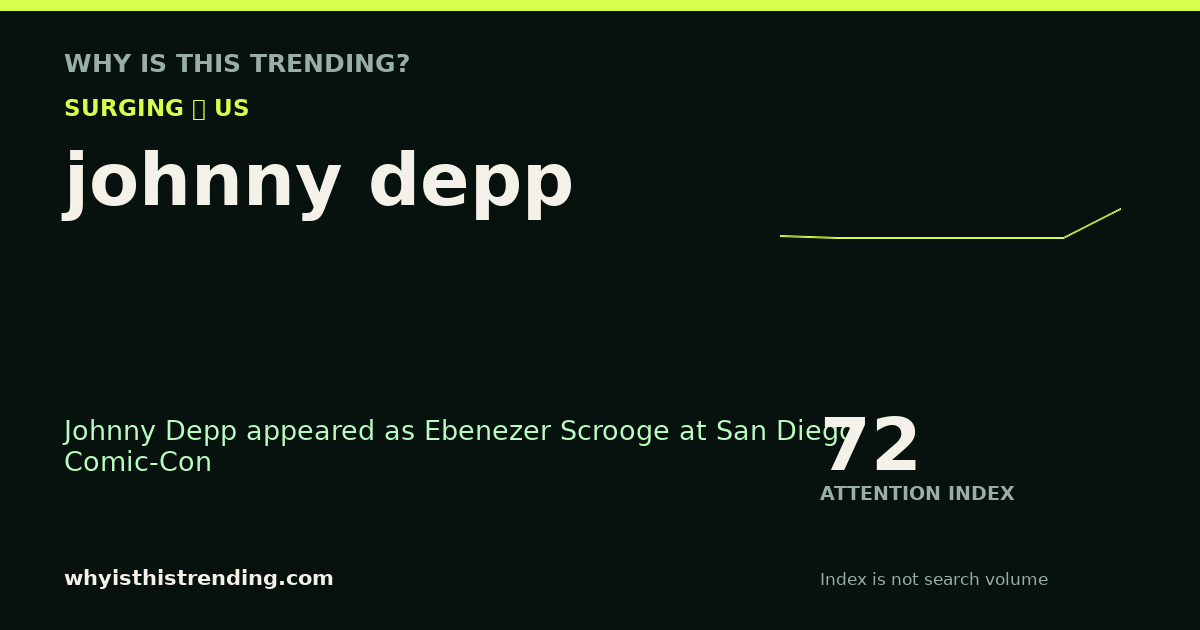
On July 23, 2026, the San Diego Comic-Con Gaslamp district was transformed into a Victorian-era storefront labeled "Scrooge and Marley." The activation, which featured carolers and a faux-snow-dusted facade, culminated in the emergence of Johnny Depp in full prosthetic makeup and period costume. This was not merely a celebrity sighting; it was a carefully calibrated piece of guerrilla marketing for his upcoming film, Ebenezer, directed by Ti West and slated for a November 13, 2026, release.
Depp’s commitment to the bit was total. He remained in character throughout the event, engaging with fans who had gathered to speculate on the studio's plans. Following the street-level appearance, he crashed a panel in Hall H, further cementing the connection between his performance and the film’s official trailer reveal. By appearing as the character rather than the celebrity, Depp utilized a "method" approach that allowed him to interact with the public while maintaining a protective, fictional barrier.
Why This Strategy Matters
The attention surrounding this event is a direct result of the shift in how major studios handle talent-led promotions. In an era where traditional press junkets often feel sterile or overly managed, the "guerrilla theater" approach offers a higher degree of authenticity and virality. For an actor whose public narrative has been dominated by legal disputes since 2021, the choice to hide behind a mask—or in this case, the persona of a miserly, cantankerous Victorian—is a strategic pivot.
This stunt effectively functions as a bridge between his past iconic roles and his future projects. By leaning into the "misfit" archetype that defined his early career, he is signaling to his fanbase that he is returning to the type of character-driven, gothic storytelling that originally made him a household name. As noted in recent reports, this is not his first time using such tactics; however, the scale and timing suggest a concerted effort to reset his public profile ahead of the holiday box office season.
Signal vs. Noise
It is important to distinguish between the "noise" of celebrity gossip and the "signal" of this promotional campaign. While online discourse often focuses on the actor's personal history, the data shows that the primary driver of current search interest is the film itself—specifically the visual transformation and the unexpected nature of the Comic-Con appearance. The "signal" here is the studio's confidence in using Depp as a central, active marketing asset rather than keeping him at a distance.
The following comparison highlights why this specific stunt was effective compared to standard promotional appearances:
| Feature | Traditional Press Junket | Comic-Con Activation |
|---|---|---|
| Audience Engagement | Passive (Media-led) | Active (Fan-led) |
| Narrative Control | High (Scripted) | Medium (Improvised) |
| Visual Impact | Low (Standard attire) | High (Full character regalia) |
Looking Toward November
The success of this stunt will ultimately be measured by the film's performance in November. While the Comic-Con appearance successfully captured the attention of the core fan demographic, the challenge for Paramount and the production team will be sustaining that momentum through the fall. The film, which also stars Ian McKellen and Rupert Grint, is positioned as a dark, gothic comedy—a genre that aligns well with both the director's history and the actor's established aesthetic.
For observers, the key takeaway is that the "Depp brand" is being intentionally rebuilt through the lens of performance. By focusing on the craft—the makeup, the voice, and the commitment to the character—the studio is attempting to shift the conversation away from the courtroom and back to the cinema. Whether this will be sufficient to draw in a broader, general-audience crowd remains to be seen, but for now, the strategy of "zagging when others zig" has successfully dominated the conversation at one of the year’s most crowded media events.