The Sudden Loss of a French Touch Icon
The global attention surrounding Kavinsky began immediately after French media reported that the electronic music artist, producer, and DJ was found dead at his Paris home on Tuesday evening, July 28, 2026 [1]. Born Vincent Belorgey in Paris in 1975, Kavinsky was 50 years old [1]. Authorities and the Paris Prosecutor’s Office stated that an investigation into the cause of his death was opened, though first responders found no suspicious elements at the scene [1]. As tributes poured in from fans and fellow musicians across social media platforms like X, public curiosity immediately translated into a sharp rise in search engine interest as listeners sought to reconnect with his catalog [6].
In analytical terms, search spikes tied to sudden celebrity deaths operate on a dual mechanism of collective grief and retrospective discovery. When a foundational creative figure passes away unexpectedly, audiences naturally turn to digital platforms to verify breaking news reports, read biographical retrospectives, and stream the work that defined their cultural footprint. For Kavinsky, this behavioral loop was amplified by his unique standing in electronic music, bridging underground Parisian club culture with major cinematic milestones.
Decoding the 'Nightcall' Phenomenon and Cinematic Legacy
Much of the attention driving the trend centers on his most famous creation. Released in 2010 and produced alongside Guy-Manuel de Homem-Christo of Daft Punk, Nightcall
became an international cult classic after opening Nicolas Winding Refn’s 2011 thriller Drive, starring Ryan Gosling [1]. The track's hypnotic analog warmth and cinematic scope helped define the aesthetic of the film and cemented its place as one of the signature electronic anthems of the 2010s [5].
For many casual listeners and dedicated synthwave fans alike, the news of his passing served as a poignant reminder of his broader artistic footprint. Operating within the influential French Touch electro scene alongside legendary acts like Daft Punk and Justice, Kavinsky cultivated a distinct persona—often spinning a fictional narrative of an undead driver returning from a fatal Ferrari crash [5]. This retro-futuristic vision shaped albums like his 2013 debut OutRun and his 2022 follow-up Reborn [1]. His cinema connections also extended beyond Drive
through a long collaborative friendship with musician and director Quentin Dupieux, acting in the 2007 film Steak
and making a recent cameo appearance in the Netflix French-language original Banger
[1].
From Parisian Clubs to the Olympic Stage
While his studio output was selective, Kavinsky remained a vital presence in contemporary French culture right up to his final years. Prior to his passing, he reached a massive global audience by performing Nightcall
alongside Phoenix and Angèle at the closing ceremony of the Paris 2024 Olympic Games at the Stade de France [5]. That high-profile appearance sparked a massive increase in streams, pushed a newly recorded studio version featuring his fellow Olympic performers to reach number 3 on the French singles chart with a diamond certification from SNEP, and introduced his signature sound to an entirely new generation of listeners [6].
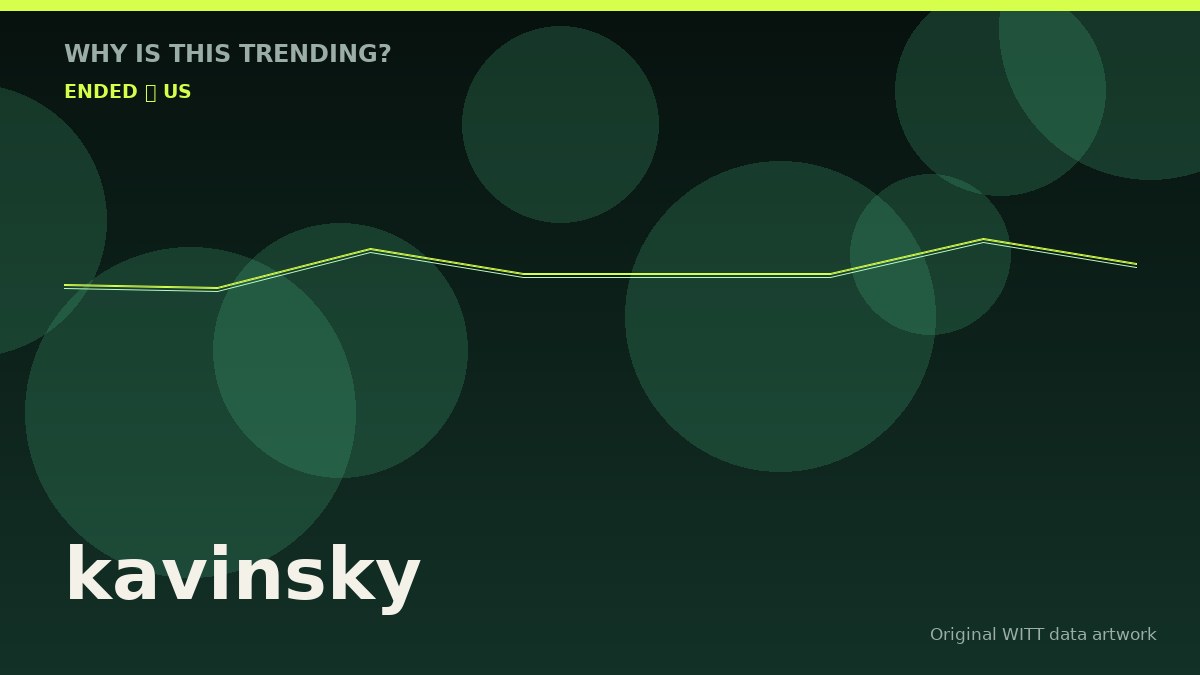
When public figures who helped shape a distinct cultural era pass away unexpectedly, public reaction follows a reliable pattern: grief triggers retrospective listening, which in turn spikes digital search interest as people look for biographies, causes, and shared communal spaces to process the loss. Google Trends measures this collective shift in user curiosity, showing an immediate upward trajectory from the moment news broke on July 28. It is vital to recognize that search attention reflects the volume of queries rather than proving direct economic or streaming causation, though it reliably points to moments when a legacy is being actively reassessed worldwide.
The surge in attention for Kavinsky reflects not just a momentary headline curiosity, but a genuine global acknowledgment of an artist who left an indelible stamp on modern electronic and cinematic music. For those revisiting his discography, the wave of interest ensures that his retro-futuristic soundscapes will continue to echo across club floors and film scores for years to come.