The Anatomy of a Rapid Response
On July 24, 2026, residents in the Tri-Cities region of Washington State faced a sudden and alarming escalation in fire activity. The primary driver of the current public attention is the Locust Grove fire, which grew to approximately 20 acres, according to WatchDuty. This rapid expansion necessitated a significant mobilization of firefighting resources, including multiple wildland strike teams tasked with both containment and structure protection. The visual nature of these events—characterized by reports of orange skies and heavy smoke—has amplified the public’s desire for verified information as the situation unfolded in real-time.
The situation was compounded by the emergence of a separate incident, the Finley Fire, reported in the 205800 block of E Finley Road. While the Finley Fire was initially smaller in scale, its proximity to structures and the subsequent closure of Finley Road between Pullman and Lexington added to the sense of urgency across the community. The combination of these two incidents created a high-visibility event that dominated local discourse throughout the day, as residents shared images and videos of the fires across social media platforms.
Distinguishing Signal from Noise
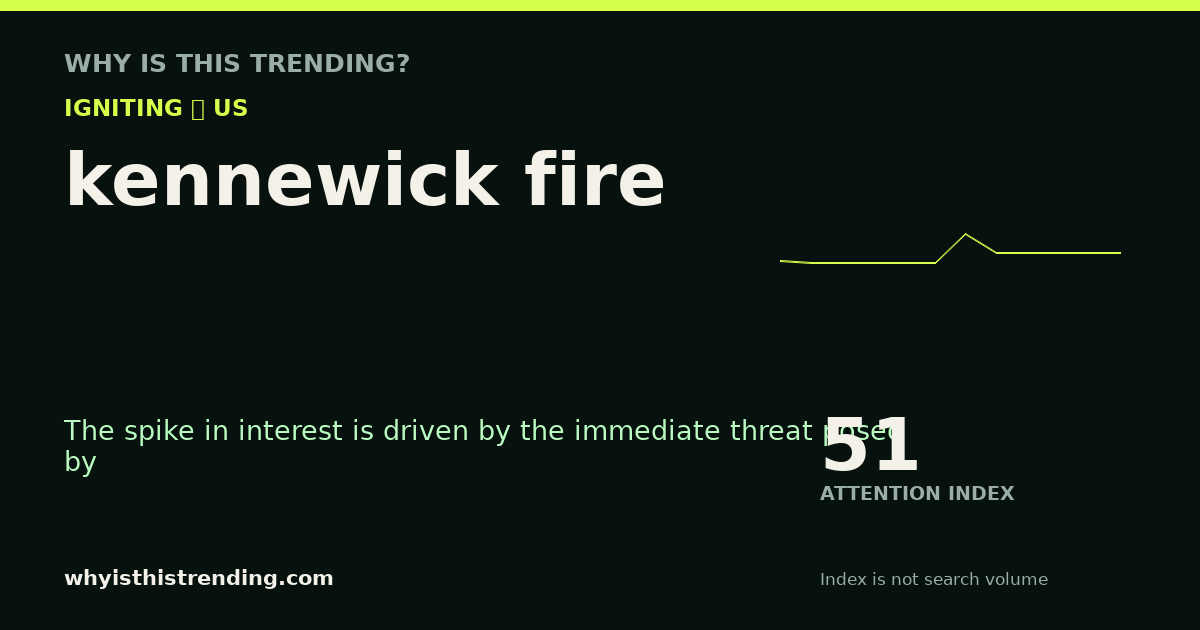
In moments of high-stress news, it is common for unrelated events to bleed into the collective consciousness, creating confusion about the nature of a trend. It is essential to clarify that the current fire activity in Kennewick is entirely distinct from the Amber Alert incident involving the arrest of a suspect in the same city earlier in the week, as reported by KOMO. While both events occurred within the same geographic jurisdiction, they are unrelated occurrences. Attributing the current spike in search interest to the earlier police activity would be a misinterpretation of the data; the current trend is driven specifically by the immediate, physical threat posed by the wildfires and the resulting emergency response.
Evacuation and Public Safety
The most critical element of this trend is the issuance of Level 3 “Go Now” evacuation orders for the Inspiration Heights area. Emergency officials, including the Benton County Fire District 1 and the Kennewick Police Department, moved quickly to clear residents from the path of the flames. The following table summarizes the key operational responses observed during the initial growth phase of these fires:
| Incident | Key Development | Public Safety Action |
|---|---|---|
| Locust Grove Fire | Grew to 20 acres; multiple strike teams requested. | Level 3 'Go Now' orders for Inspiration Heights. |
| Finley Fire | Involved at least one structure; crossed roadway. | Closure of Finley Road between Pullman and Lexington. |
The intensity of the response—characterized by door-to-door evacuations and the deployment of specialized strike teams—has naturally led to a surge in social media sharing and real-time monitoring of incident maps. As noted by Hindustan Times, the rapid progression of the fires required incident commanders to repeatedly request additional resources, including dedicated teams for structure protection. This operational escalation is a primary indicator of the severity of the threat and explains the heightened public concern.
Contextualizing the Risk
The broader environmental context for Eastern Washington has been precarious. Prior to these specific fires, the region was already navigating a period of heightened fire risk, with red flag warnings and air quality alerts impacting multiple counties. The combination of dry conditions and high temperatures creates an environment where even small ignitions can rapidly escalate into incidents requiring significant intervention. Residents are encouraged to continue monitoring official channels, such as those provided by local fire districts and verified incident-tracking platforms, as conditions remain fluid.
The current attention is a direct reflection of the immediate threat to property and the high-stakes nature of the firefighting efforts. As incident commanders continue to assess perimeters and coordinate resources, the primary focus remains on containment and the safety of those in the affected zones. We advise readers to rely on local emergency management updates for the most accurate and actionable information as the situation evolves. Because wildfire conditions are dynamic, residents should prioritize alerts from local authorities over speculative social media commentary.