Why Search Interest Rose
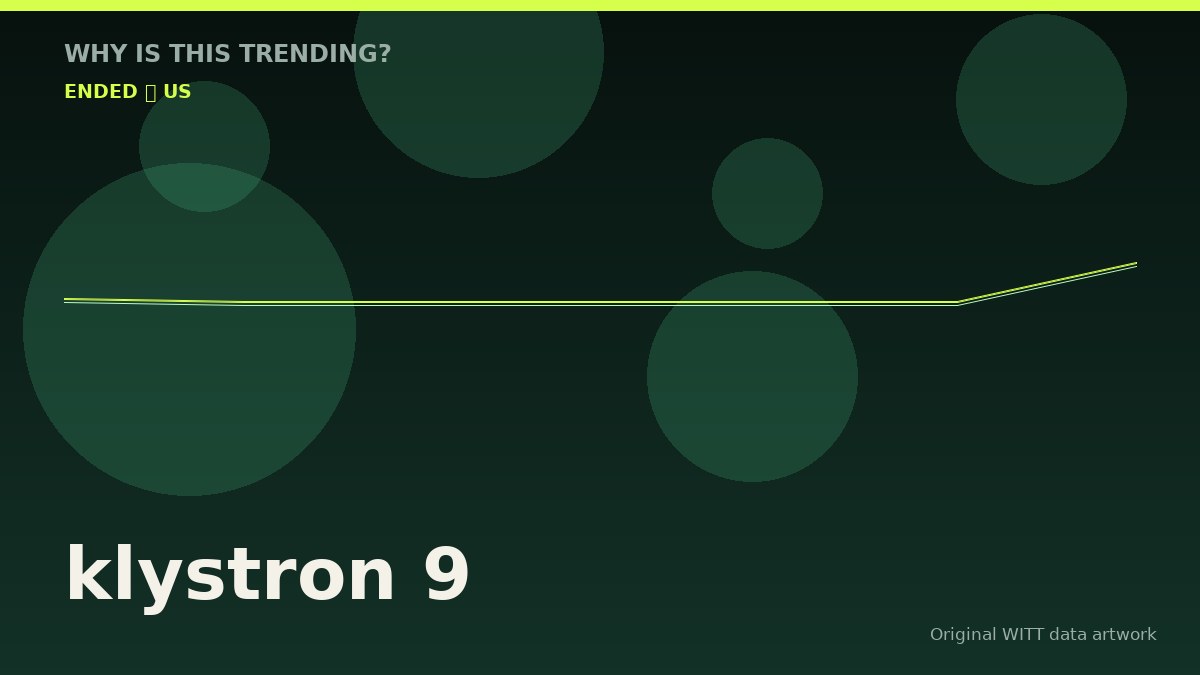
Google Trends recorded a sharp increase in searches for the phrase klystron 9
beginning at 2026-08-20T04:50:02+00:00, immediately following the publication of the St. Petersburg mayoral primary results on 2026-08-19T21:30:00+00:00. The source packet does not identify the meaning or usage context of this search term, and no evidence supports a link to live election coverage or any specific broadcaster. The timing coincides with the release of primary results that triggered a runoff between Ken Welch and Charlie Crist.
Local election rules require a majority winner; when that threshold is not met, the top two vote-getters advance to a runoff. In this race, six candidates competed, but only Charlie Crist (35%) and incumbent Ken Welch (20-21%) cleared the primary stage, setting up a high-stakes November contest. The spike in searches therefore mirrors a moment of civic urgency: voters seeking clarity on who would move forward, where to watch debates, and how the runoff would reshape the city’s leadership.
What the Primary Results Reveal
The primary race was defined by a crowded field addressing pressing municipal issues—including the future of the Tropicana Field site, storm resilience, home affordability, and utility costs. Candidates ranged from longtime city officials to statewide political figures, each presenting distinct visions for St. Petersburg’s next decade. Incumbent Mayor Welch emphasized his administration’s transparency, storm recovery efforts, and inclusive progress, while framing Crist as an outsider whose campaign relied heavily on out-of-town fundraising. Crist, in turn, positioned himself as a unifying force across party lines, criticizing Welch’s handling of hurricane recovery and the stalled Rays stadium negotiations.
These narratives were amplified in post-primary coverage from multiple publishers, including Spectrum Bay News 9 and FOX 13 Tampa Bay, which detailed vote totals, candidate statements, and strategic positioning for the runoff. The depth of reporting underscores that the search spike was not random but tied to a concrete, newsworthy development: the official certification of results that forced a November runoff between two high-profile figures.
Contextualizing the Search Pattern
It is important to distinguish this attention spike from broader search-volume estimates or predictive analytics. Google Trends data reflects relative interest at a specific moment, not the volume of searches in absolute terms, nor does it prove that the term itself caused increased engagement. Instead, it serves as a real-time indicator of where public curiosity converged—specifically, on a local election story that dominated regional news cycles.
The term klystron 9
does not correspond to any known public reference in the source packet, and no evidence explains its usage or intent. As voters navigated fragmented news sources, some may have typed variations of broadcaster names into search engines to find the most current results. This behavior is common during fast-moving local elections, where official results are released incrementally and audiences rely on trusted local outlets for synthesis. The spike therefore validates the role of real-time digital access in shaping public engagement with municipal politics, though the specific term used cannot be definitively interpreted.
Implications for Voters and Campaign Strategy
As the city hurtles toward a November runoff, both candidates are adjusting their messaging to appeal to a broader electorate. Welch continues to highlight his record on infrastructure resilience and equitable development, while warning against what he describes as Crist’s reliance on external funding that could compromise local priorities. Crist, meanwhile, is positioning his campaign as a reset button—one that seeks bipartisan collaboration on issues like affordable housing and storm preparedness.
For voters, the coming weeks will be defined by a shift from parsing primary totals to evaluating detailed policy proposals. Upcoming debates and candidate forums will offer critical opportunities to assess which platform aligns with St. Petersburg’s long-term needs. The earlier search spike serves as an early signal that civic attention is mobilizing, but sustained engagement will depend on how effectively each campaign communicates vision beyond soundbites.