The Intersection of Elite Football and Pop Culture
When digital search interest surges around a pre-season club friendly, it rarely comes down to tactical formations or summer training fitness alone. The spike in attention surrounding the fixture between Manchester City and Atlético Madrid highlights a growing modern phenomenon: engineering major sports fixtures as multi-disciplinary entertainment events. While die-hard supporters tracked team news and squad changes under new management, a wider digital audience tuned in because the fixture transcended standard athletic competition.
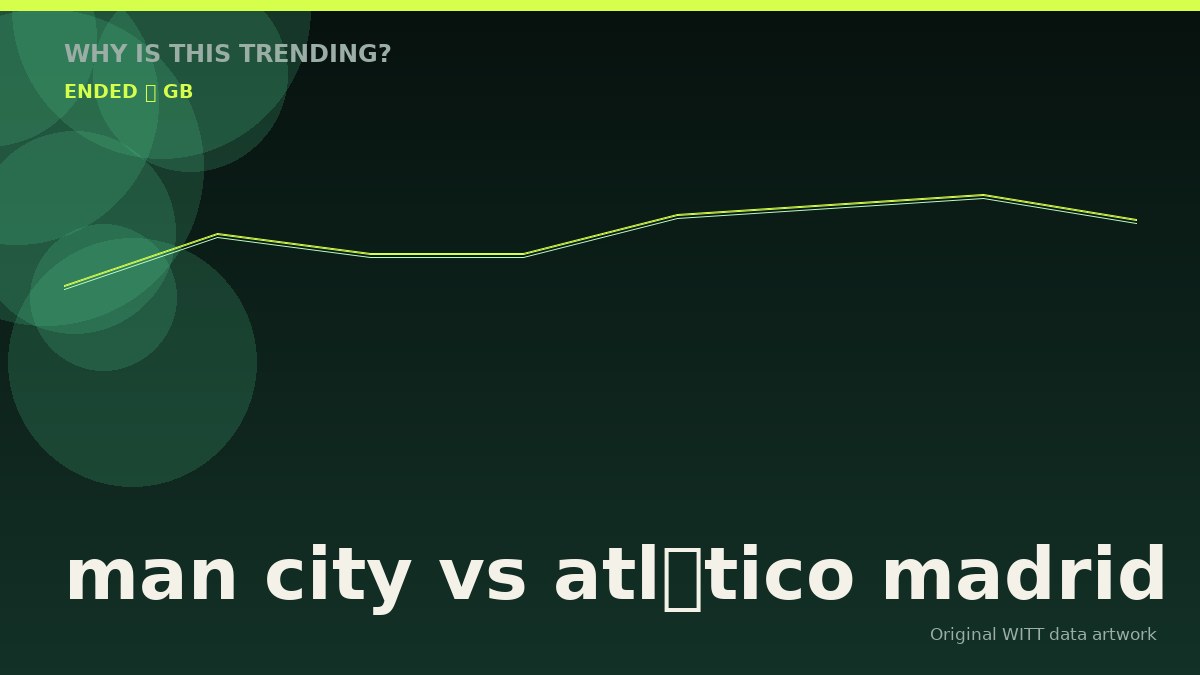
Google Trends recorded a notable increase in search activity for the matchup on 9 August 2026, coinciding directly with the event's execution in South Korea [1]. Rather than viewing this attention purely as a barometer of tactical curiosity, analysts look at how modern promotional packaging expands an audience far beyond traditional sports demographics. Global summer tours have evolved far beyond simple training camps into carefully orchestrated cultural happenings.
Promoters now lean heavily on cross-cultural spectacles to draw local crowds and international eyeballs alike. When a routine exhibition match becomes a marquee cultural date, search engines register the widening ripple effect of overlapping fandoms, pulling in individuals who might otherwise ignore a mid-August club friendly.
Inside the Seoul Showdown and Squad Dynamics
The match was anchored at the Seoul World Cup Stadium, with a 12:00 UK time kickoff on Sunday, 9 August 2026 [1]. For Manchester City, the fixture marked the final stop of their Asian pre-season tour, capping off a demanding summer schedule that included earlier matches in Hong Kong and Seoul [3]. Under the newly implemented leadership of Enzo Maresca—who stepped into the managerial role following Pep Guardiola's departure—the club faced a period of internal reset alongside high-profile roster questions [3].
Meanwhile, Diego Simeone's Atlético Madrid side arrived looking to fine-tune their squad following previous summer fixtures against Getafe and Manchester United [3]. Yet, even with prominent European squads on the pitch, the structural reason for the broader cross-platform visibility lay elsewhere in the matchday lineup. The inclusion of an entertainment act completely shifted the marketing velocity of the game.
The weather also played its part in shaping the week's narrative leading up to the game. Players and media noted the humid conditions in the South Korean capital, with relief finally arriving when a late breeze descended over training sessions [3]. Such human-interest details color the daily reporting leading up to kickoff, feeding into the broader tapestry of online chatter.
Decoding the Signal Versus the Noise
To understand why casual observers joined football traditionalists in searching for the match, it helps to separate routine athletic preparation from deliberate entertainment cross-promotion:
- The Entertainment Factor (Signal): The announcement that K-pop girl group RESCENE would perform during the half-time show injected a completely separate pop-culture demographic into the sports news cycle [4]. Known for viral online presence and outspoken passion for football, the group's integration created a dual-audience event that bridged music fandom and sports media [4].
- The Sporting Context (Noise for Casuals): Squad rotation, tactical experiments, and transfer window speculation regarding players like Rodri dominated dedicated sports columns [3], but these storylines primarily engaged core club supporters rather than driving broad, mainstream search spikes.
By pairing high-level European clubs with top-tier musical acts as part of regional series programming, organizers successfully captured the attention of both music fans and sports enthusiasts simultaneously, proving that modern pre-season tours are increasingly designed as global cultural festivals.
It is essential to remember that a surge in web traffic or search volume measures attention, not necessarily television ratings or tactical outcomes. The digital footprint left by millions of fans querying a fixture reflects the power of hybrid event marketing. When sports organizations blend elite athletic brands with mainstream pop culture icons, they generate an immediate, cross-pollinated spike that traditional football analysis alone cannot fully explain. Readers seeking to evaluate future pre-season spectacles should look beyond the starting eleven to see how entertainment curation influences public curiosity.