The Mechanics of the Trend
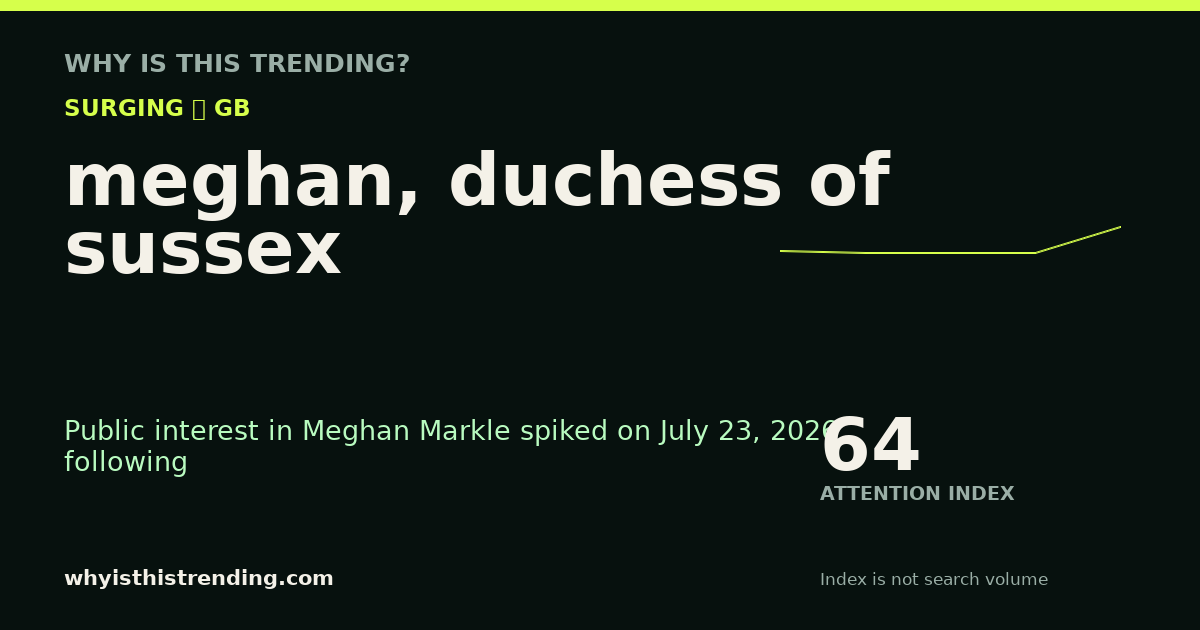
On July 23, 2026, the digital conversation surrounding the Duchess of Sussex experienced a sharp, event-specific increase. While the Sussexes are frequent subjects of media scrutiny, this particular spike was not the result of a vague rumor or a general celebrity update. Instead, it was a precise reaction to a curated Instagram carousel shared by Meghan Markle herself. The post, captioned Summer Holiday,
offered a rare, intimate glimpse into the family’s recent time in Portugal, but it was the specific styling in one photograph that acted as the primary engine for this trend.
In the image, the Duchess is seen wearing a black, backless one-piece swimsuit. By explicitly framing this aesthetic choice within the context of her family’s leisure time, the post invited immediate comparison to the historical fashion legacy of Princess Diana. The public’s attention mechanism, which is highly sensitive to the intersection of modern celebrity and royal iconography, latched onto this visual homage, effectively turning a personal vacation update into a broader cultural discussion about style and lineage.
Signal vs. Noise: Why This Mattered
In the ecosystem of celebrity news, it is essential to distinguish between the noise of general gossip and the signal of intentional narrative building. The noise
here might have been the simple fact of a vacation; however, the signal
was the deliberate invocation of Princess Diana’s 1990s vacation wardrobe.
The media response was immediate because the visual evidence was concrete. Reports quickly highlighted that Diana famously favored backless silhouettes during her own summer travels, notably in Nevis in 1993 and Saint-Tropez in 1997. By aligning her current look with these historical touchstones, the post provided a ready-made narrative for fashion outlets and royal observers alike. This is a classic example of how a controlled release of information can dictate the terms of public discourse, moving the conversation away from speculation and toward a curated comparison.
Contextualizing the Portugal Trip
The attention was further amplified by the geography of the Sussexes' travel. As noted by Town & Country, the family has spent significant time in Melides, Portugal—a region increasingly referred to as the Hamptons of Portugal.
The fact that the couple has reportedly purchased a home in the area adds a layer of permanence to these vacation photos, shifting the narrative from a fleeting holiday to a lifestyle shift.
Furthermore, the curiosity surrounding the family’s movements was compounded by reports of their recent visit to the United Kingdom, where they reportedly spent time at Althorp, the ancestral estate of the Spencer family and the final resting place of Princess Diana. When these two threads—the fashion homage and the visit to Diana’s childhood home—are woven together, it creates a powerful, multi-layered narrative that sustains public interest far longer than a single photograph would on its own.
The Anatomy of the Surge
To understand why this trend took hold so effectively, consider the following elements that transformed a personal post into a public event:
- Visual Anchoring: The use of a high-cut, backless black swimsuit provided a clear, recognizable visual link to established 1990s fashion history.
- Narrative Homage: By positioning the imagery as a reflection of a
Summer Holiday,
the post created a nostalgic framework that encouraged audiences to look backward while observing the present. - Geographic Significance: The focus on Portugal, combined with the underlying context of the family’s recent UK visit, gave the public a sense of a broader, ongoing story rather than a disconnected event.
Ultimately, the surge in interest on July 23 was not merely about a swimsuit; it was about the way the Duchess of Sussex navigates her public image. By bridging the gap between her own life and the well-documented history of the royal family, she ensures that her personal updates remain central to the broader cultural conversation. For observers, the lesson is clear: when the Duchess shares, the public looks—especially when the imagery is designed to resonate with the past.