Decoding the Attention Surge
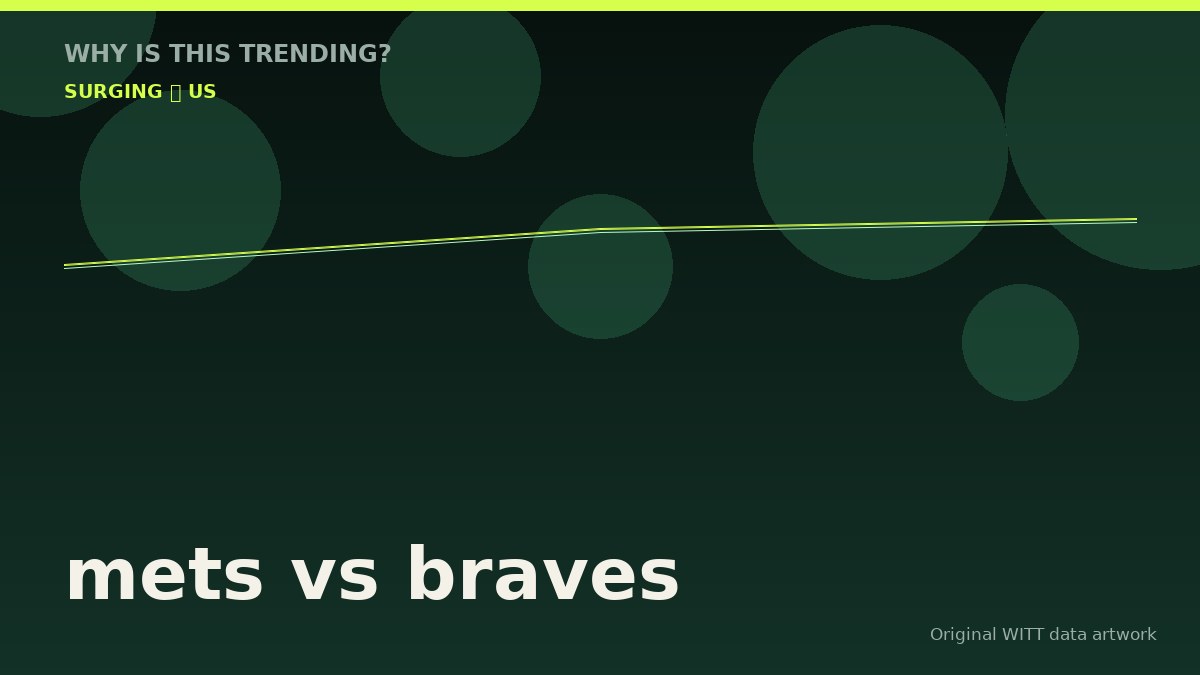
When millions of sports fans concurrently turn their attention toward a specific divisional pairing, it is rarely a coincidence driven by random internet curiosity. Google Trends attention for the query mets vs braves
experienced a sharp upward trajectory as prominent baseball outlets released comprehensive tactical breakdowns and schedule previews for a high-stakes divisional showdown at Truist Park. Far from an arbitrary blip of web traffic, this surge maps directly to published previews detailing opening pitching rotations, recent team momentum, and historic head-to-head implications.
When dissecting a digital spike like this, it is essential to separate the underlying signal from the routine noise of a long, 162-game Major League Baseball season. While daily box scores and individual player slumps naturally fluctuate over a summer, deep divisional context creates lasting gravity. The timing of the search spike leaves little doubt: the conversation was ignited by professional previews published ahead of the series opener, giving fans a centralized reason to look up statistics, probable starters, and historical context.
The Late-Summer Stakes in the National League East
Context is everything when evaluating a late-summer series between bitter divisional rivals. Coming into the matchup, the Atlanta Braves held a 4-6 head-to-head record against their New York adversaries Battery Power. That arithmetic leaves the Braves in an uncomfortable position: they need a clean sweep of the three-game set to avoid losing the regular-season series to the Mets for the first time since 2017.
For a franchise accustomed to regular divisional supremacy, ceding the season series is a bitter pill. Meanwhile, the Mets arrived in Georgia riding positive momentum, punctuated by a solid 5-1 stretch in their previous week of games Metsmerized. Even though the broader campaign has seen the Mets battle underlying metric underperformances and roster adjustments, their recent run of play has injected fresh intrigue into their late-summer trajectory, compelling both loyal supporters and casual observers to examine whether New York can sustain its winning ways.
The Opening Arm Matchup
The immediate catalyst for the chatter centered squarely on the opening pitching duel scheduled for the series opener on Monday, August 10, 2026. The Mets tapped Christian Scott to take the ball for game one, carrying a 3-3 record and a sharp 3.15 ERA Metsmerized into the hostile confines of Truist Park. Despite a minor hiccup against the Cleveland Guardians where his command wavered, Scott's ability to generate high-level swing-and-miss stuff keeps him positioned as a pillar of New York's rotation.
Countering for Atlanta, Bryce Elder stepped onto the mound holding an 8-6 record and a 3.69 ERA Metsmerized. Though Elder has experienced a summer marked by fluctuating command and an uptick in home runs allowed, his July performance featured a solid 3.00 ERA that steadied his season Metsmerized (Battery Power). Because both pitchers carry distinct narratives of recent recovery and high volatility, fans and analysts alike zeroed in on the matchup as a bellwether for the rest of the series.
Signal Versus Noise
It is easy to misinterpret search spikes as definitive proof of a massive cultural shift or permanent standings upheaval. In reality, this attention surge represents concentrated tactical interest ahead of a high-leverage divisional series where historical streaks are on the line. The signal is clear: fans are tracking whether the Braves can protect their historical home dominance against a surging Mets squad. Everything else is standard baseball noise.
As the series unfolds across subsequent nights, keep your focus anchored on the fundamentals rather than temporary fluctuations in online sentiment. Check official team announcements and confirmed lineups closer to game time to understand how these pitching rotations ultimately perform under pressure.