A Convergence of Narrative and Roster News
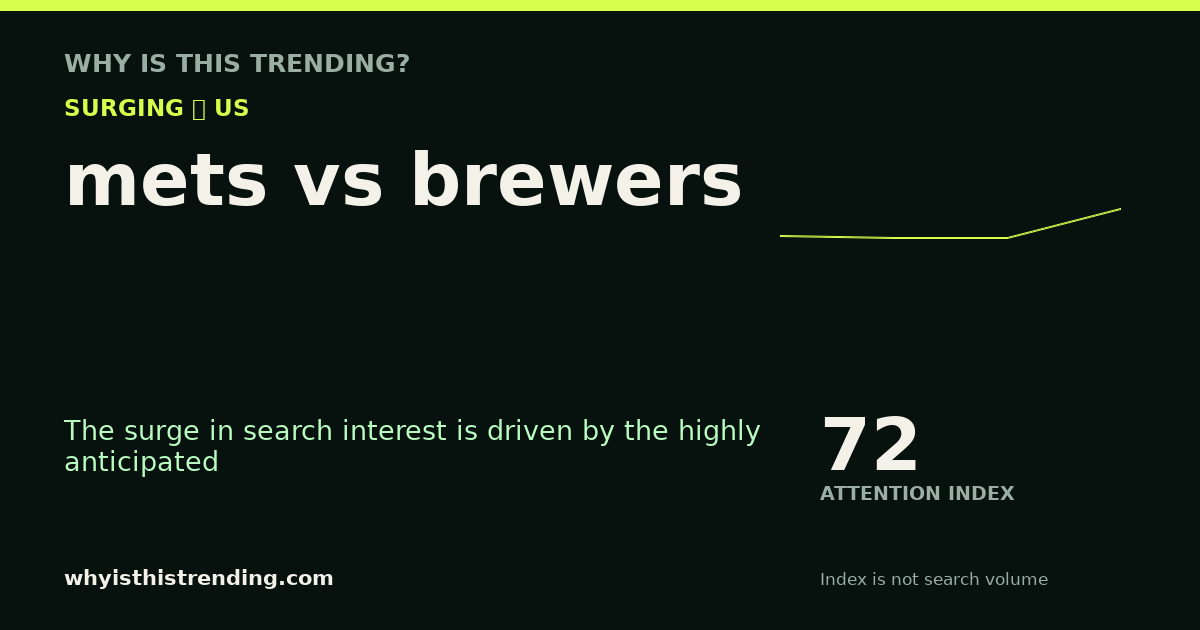
The sudden spike in public interest surrounding the New York Mets and Milwaukee Brewers series, which peaked on July 20, 2026, is a classic case of sports-media momentum. While the two teams occupy vastly different positions in the National League standings—the Brewers leading the NL Central with a 62-37 record and the Mets struggling at 42-58—the attention is not merely about the win-loss columns. Instead, the surge is anchored in the human element of professional sports: the homecoming.
The primary driver of this trend is the return of Freddy Peralta to American Family Field. Peralta, who spent the first eight seasons of his career in Milwaukee and earned the nickname Fastball Freddy
for his high-velocity approach, is making his first appearance in Milwaukee as a member of the visiting team. For local fans and baseball followers alike, the return of a former ace is a high-visibility event that naturally draws eyes to the broadcast, turning a standard regular-season series into a sentimental and tactical focal point.
The Lineup Factor: Luis Robert Jr. Returns
While the pitching matchup provided the initial hook, the announcement that the Mets would activate Luis Robert Jr. for the July 20 series opener acted as a significant accelerant. Robert Jr. has been sidelined since April 27 due to a lumbar spine disc herniation, and his return represents the end of a two-plus month absence for one of the Mets' key offensive contributors. The timing of this activation, confirmed by the team's official lineup announcement, ensured that the series opener carried weight beyond the sentimental return of Peralta. By slotting him into center field for the series opener, the Mets provided an immediate reason for fans to track the game's box score and lineup developments in real-time.
The Pitching Narrative and Transactional History
The series is framed by a compelling contrast in pitching trajectories. The July 20 matchup featured a duel between the Brewers' current standout, Jacob Misiorowski, and the Mets' Peralta. Misiorowski, who boasts a 1.62 ERA, is currently in the conversation for NL Cy Young consideration, adding a layer of elite-level competition to the game. The inclusion of Brandon Sproat in the July 21 matchup adds another layer of intrigue. Acquired by the Brewers in the offseason trade that sent Peralta to New York, Sproat’s performance against his former organization provides a direct, ongoing comparison of the trade's value, keeping the discourse focused on the transactional history between the two clubs.
| Date | Mets Starter | Brewers Starter |
|---|---|---|
| July 20 | Freddy Peralta | Jacob Misiorowski |
| July 21 | Zac Thornton | Brandon Sproat |
| July 22 | Christian Scott | Logan Henderson |
Signal vs. Noise: Why This Matters
In the noise of a long 162-game season, fans often look for specific benchmarks to justify their attention. This series provides two distinct signals: the emotional weight of a franchise icon returning to his former home, and the tactical impact of a star player returning from the injured list. It is worth noting that the Mets also employ former Brewers closer Devin Williams, who is making his first trip back to Milwaukee since his departure. The presence of multiple former Brewers on the Mets roster creates a collective narrative of old friends
returning to the Cream City, as noted in recent series previews. This creates a high-density narrative environment that makes the series feel more significant than a standard mid-season matchup.
Key Takeaway: The trend is not a reflection of the Mets' current playoff viability—as they remain on the outside of the postseason race—but rather a testament to how personal narratives and roster health updates can drive engagement even when the competitive stakes are lopsided. Fans are tuning in for the storylines of Peralta and Williams, and staying to see how the return of Luis Robert Jr. impacts the Mets' offensive output in the final months of the season. Because this surge is tied to specific, one-time events—the return of a player to his former home and a specific injury activation—the interest is likely to be concentrated on the series opener. Future games in the series may see a decline in search momentum as the novelty of these returns fades and the focus shifts back to the daily grind of the MLB schedule.