The Anatomy of a Data Anomaly
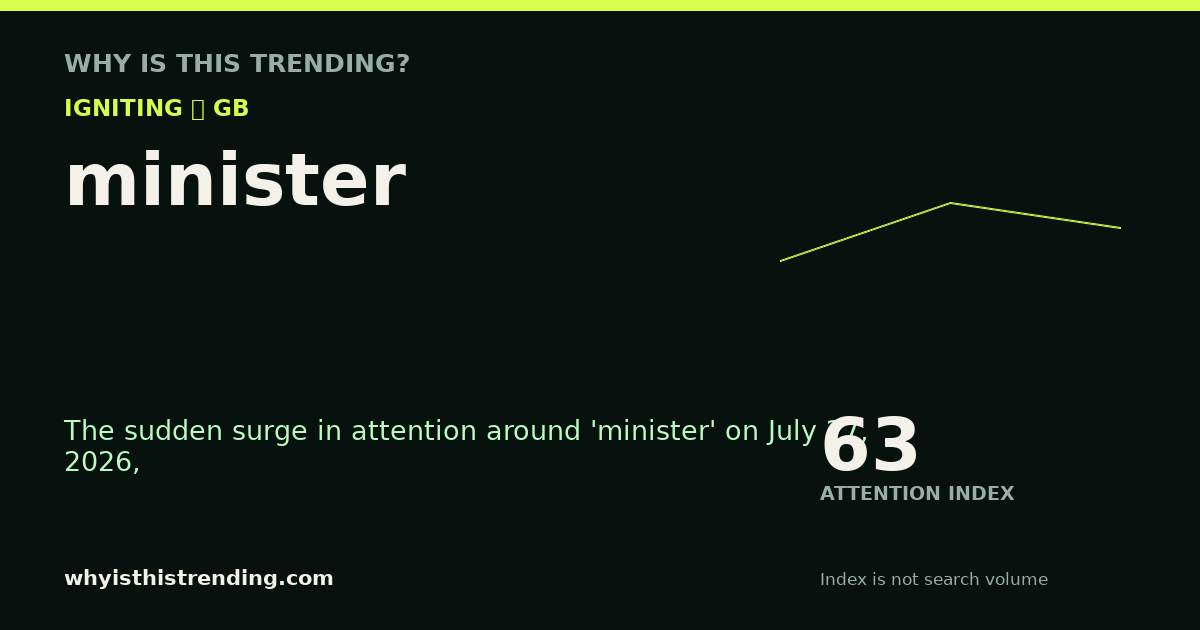
Digital trend analysis often uncovers strange bedfellows. On July 27, 2026, search algorithms registered a sharp, unexpected surge for the query minister
across Great Britain. At first glance, standard media logic might point toward a sudden domestic cabinet shakeup or a parliamentary scandal. Yet a forensic look at the underlying news ecosystem reveals a different reality entirely: the attention spike was galvanized by catastrophic environmental reporting and high-stakes executive crisis briefings rather than isolated domestic political intrigue.
While political analysts were tracking sweeping leadership changes at Number 10, international newsrooms were flooded with terrifying dispatches from the Gironde region near Bordeaux, where French firefighters and government officials confronted a meteorological nightmare in southwest France. The intersection of high-level ministerial briefings on European heatwaves, emergency presidential crisis meetings in Paris, and an unprecedented scientific breakthrough in fire behavior created a unique digital convergence.
When a Wildfire Makes Its Own Weather
The core driver behind the July 27 attention spike was a watershed moment in fire science. French officials confirmed that a massive blaze—which erupted near Saumos on July 22 and ultimately scorched more than 420 square kilometers of forests and scrubland—had crossed a terrifying threshold in Gironde. It generated Europe's first recorded self-sustaining pyrocumulonimbus, or pyroCb, event.
As fire meteorologist Theodore M. Giannaros explained, a pyroCb is essentially a storm cloud born from extreme wildfire heat produced by the flames. Once the smoke column rises and cools, it develops its own weather system, creating violent erratic winds and lightning strikes that ignite brand-new fires far beyond the original perimeter beyond the original blaze.
- Scale of the Crisis: The inferno forced the evacuation of 220,000 people, damaged or destroyed more than 240 homes, and burned over 420 square kilometers of forest and scrubland in the region.
- The Trigger Moment: The pyrocumulonimbus first formed at approximately 6:20 p.m. on July 25 two days after the fire began, with widespread analytical coverage and ministerial crisis updates peaking strongly on Monday, July 27.
- Unprecedented Territory: While common in Australia and North America—where Canada recorded 142 such events in 2023—French authorities confirmed this class of fire-generated thunderstorm had never before been documented in the country by the national firefighters federation.
Signal Versus Noise in Trend Forensics
Why did this environmental disaster manifest under political search terms? Google Trends attention spikes do not measure clean, isolated semantic categories; they reflect the messy way humans consume breaking news. On the morning of July 27, European news feeds were dominated by two massive, concurrent streams: emergency government crisis meetings called by leaders like Emmanuel Macron and updates from regional officials, alongside domestic transitions in British leadership featuring high-profile profiles of newly minted political figures entering Downing Street.
Readers encountering live disaster updates referencing statements from French ministers regarding runaway blazes, combined with concurrent domestic political updates, frequently use broad shorthand keywords. The data registers a proxy relationship: breaking disaster coverage involving ministerial briefings pulls generic institutional search terms upward alongside specific geographical queries, creating a statistical bridge between political curiosity and environmental shock.
Broader Implications for European Climate Reality
The emergence of France's first pyroCb highlights a sobering structural shift across the continent. According to data from the EU’s Copernicus Climate Change Service and the World Meteorological Organization, Europe is heating faster than any other region on Earth—roughly twice the global average since the 1980s according to EU monitoring. As long-term drought cures southern forests into volatile fuel, extreme fire behaviors once restricted to the Australian bush or North American timberlands are becoming an urgent European reality.
When examining search anomalies like the July 27 minister
surge, the takeaway is clear: digital attention often acts as a collision point where human curiosity about institutional leadership meets the raw, unfiltered shock of accelerating environmental extremes.