A Sudden Surge in Tactical Realism
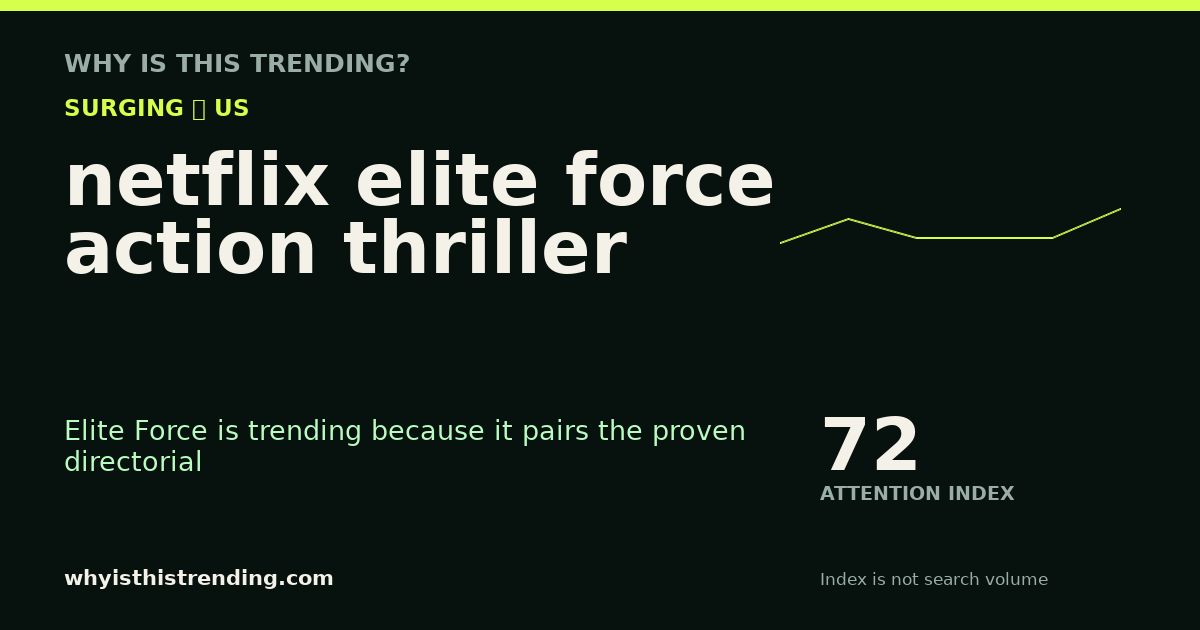
When Elite Force premiered on Netflix on July 22, 2026, it didn't just land in the library; it immediately began a rapid ascent through the platform's viewership rankings. By July 24, 2026, the series had secured the second spot on the Netflix UK charts, a milestone reached within just 48 hours of its debut. This momentum was mirrored by a significant spike in public interest, with a recorded attention index peak of 72.39 at 20:20 UTC on July 24. While streaming platforms are often crowded with genre entries, Elite Force has distinguished itself by bridging the gap between high-octane entertainment and procedural authenticity.
The Mechanics of the Trend
The attention surrounding the series is not a byproduct of broad genre trends, but rather a direct response to the show's specific production pedigree. Director Julien Leclercq, known for his previous work on Ganglands and The Crew, has cultivated a reputation for visceral, grounded action. However, Elite Force elevates this signature style through a rare partnership: direct, operational collaboration with the Groupe d'intervention de la Gendarmerie nationale (GIGN).
This is not merely a marketing footnote. The production team was granted access to the unit's actual training protocols, equipment, and tactical methodologies—details typically shielded by strict state secrecy. For the audience, this translates into a viewing experience that feels less like "tactical cosplay" and more like a document of professional competence. As noted in early critical assessments, the tension in the series is derived from the precision of the choreography rather than reliance on pyrotechnics, creating a sense of dread that is both legible and immediate.
Signal vs. Noise: Why It Matters
In the current streaming landscape, viewers are increasingly sensitive to the difference between artificial spectacle and grounded realism. The "noise" of typical action thrillers often involves inflated stakes and loose logic. The "signal" here is the audience's hunger for procedural integrity. By focusing on the GIGN’s internal logic—how they move, how they communicate, and how they handle the psychological weight of their profession—the show taps into a specific contemporary anxiety: the fear that the institutions we rely on for security are now vulnerable to internal threats.
Key takeaways for the current trend:
- Operational Authenticity: The involvement of real-life GIGN professionals has provided a "grounded grittiness" that viewers are actively praising on social media.
- Pacing as Pressure: The six-episode structure serves as a "pressure vessel," allowing the narrative to build tension without the dilution often found in longer, multi-season formats.
- The Human Element: While the tactical elements draw viewers in, the series sustains interest by grounding the high-stakes missions in the personal, intimate family drama of its lead, played by Tomer Sisley.
Comparative Context
The series is frequently compared to cult favorites like 24 for its urgency and ITV’s Trigger Point for its technical focus. However, Elite Force occupies a unique space in the Netflix catalog. It follows in the footsteps of successful international thrillers like Lupin or Bodyguard, yet it distinguishes itself by prioritizing the "choreography of law" over standard plot twists. The series treats a simple stairwell breach as a high-stakes dramatic event, forcing the audience to live within the same state of suspended alertness as the characters on screen.
Ultimately, the rapid rise of Elite Force suggests that when a production invests in genuine, expert-vetted detail, the audience rewards it with high engagement. The show is not just a thriller; it is a case study in how institutional access can transform a standard action premise into a compelling, must-watch event. As the series continues to hold its position on global charts, it reinforces the growing dominance of European-produced dramas that can compete directly with English-language counterparts by focusing on character depth as much as tactical choreography.