Blazers Complete Sweep Behind Avdija's Night and Lillard's Fourth-Quarter Burst
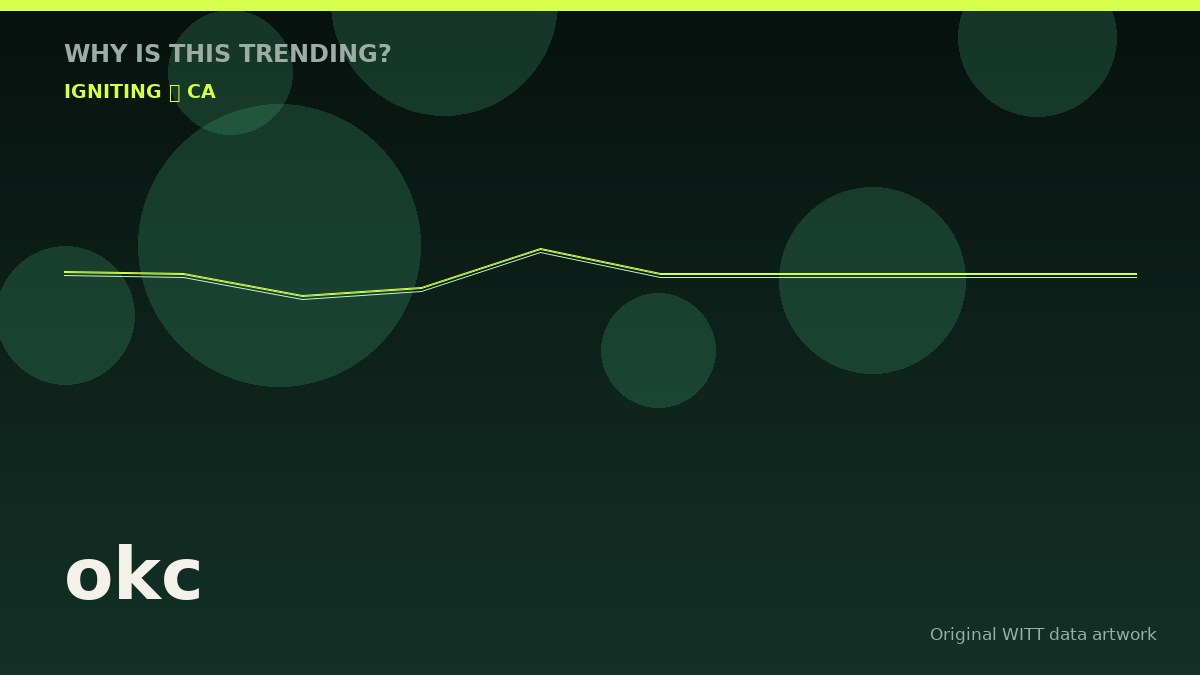
The Portland Trail Blazers secured a 118-108 victory over the Oklahoma City Thunder on Wednesday night, November 11, 2026, completing a two-game sweep that pushed Oklahoma City's search interest in "okc" to a spike during the game window. This attention mechanism—where live sports action drives immediate search curiosity—is a textbook example of how real-time events create trending topics, not through abstract popularity but through concrete, time-bound moments that capture audience attention.
Who Stepped Up When It Mattered
Deni Avdija was the offensive engine Portland needed, finishing with 28 points on efficient shooting. His 20 of Portland's 30 fourth-quarter points carried the Blazers to victory, including crucial free throws that gave Portland its first lead with 5:24 left in the fourth. Damian Lillard added 18 points and delivered in the clutch moments, hitting a 3-pointer with 6:17 left to cut Oklahoma City's lead to 94-93 and finishing with a driving layup and free throws in the final minutes.
"Portland's stars rallied the Blazers, with Avdija and Lillard scoring 20 of their 30 fourth-quarter points."
TSN, Associated Press
The narrative around Lillard's clutch gene—his ability to transform close games through timely scoring—has been a consistent storyline throughout his career. What made this game different was Avdija's emergence as a reliable scorer in high-leverage moments. When a player who wasn't previously a primary offensive option steps up with 28 points and 20 in the fourth quarter, it creates a compelling story that audiences search for in real time. This is the signal beneath the noise: individual performance narratives that transcend box score statistics.
The Thunder's Best Efforts Fell Short
Shai Gilgeous-Alexander proved he could score, leading all players with 31 points, including 23 in the second half alone. However, Oklahoma City's late-game execution stumbled when it mattered most. After trading leads multiple times in the fourth quarter, the Thunder's attempts to pull ahead in the final minute—Jared McCain's 3-pointer with 1:19 left—proved too little, too late.
The attention spike in "okc" searches wasn't just about Portland winning; it was about the dramatic swing from Oklahoma City's apparent momentum to their ultimate collapse. When a team builds a lead and then watches it evaporate in the final minutes, audiences search for explanations, context, and analysis. This is where search interest diverges from simple score reporting—it becomes a quest for understanding the emotional and tactical arc of the game.
Isaiah Hartenstein contributed 20 points and 11 rebounds for Oklahoma City, while rookie Nique Clifford's 3-pointer tied the game at 88 with 11:11 left in the fourth. But a turnover leading to a layup by Kenrich Williams gave the Thunder their first lead since the first half, forcing Portland to call timeout with 10:41 left—a brief glimmer that didn't last. These pivotal moments, captured in real time, become the search queries that drive trending topics.
Portland's Depth and Defense Seal the Deal
While Lillard and Avdija dominated the scoring column, Portland's supporting cast made key contributions. Jrue Holiday provided 19 points off the bench, giving the Blazers a much-needed lift off the pine. Meanwhile, center Donovan Clingan anchored the defensive end with 12 rebounds and 3 blocks, helping Portland maintain control in the paint and limit Oklahoma City's transition opportunities.
The attention mechanism here involves more than star power—it's about role players stepping up when called upon. Holiday's bench scoring and Clingan's defensive rebounding weren't headline-grabbing statistics, but they were essential components of Portland's victory. When audiences search for "okc" during a game, they're often seeking the complete story, including how depth and defense contribute to outcomes that aren't solely defined by top-line scoring.
| Player | Team | Points | Key Stats |
|---|---|---|---|
| Deni Avdija | Portland | 28 | Scored 20 in 4th quarter |
| Shai Gilgeous-Alexander | Oklahoma City | 31 | 23 in 2nd half |
| Damian Lillard | Portland | 18 | Clutch 3-pointer, driving layup, FT |
| Jrue Holiday | Portland | 19 | Bench scoring |
| Donovan Clingan | Portland | — | 12 reb, 3 blocks |
What This Means for Both Teams
The sweep marks Portland's second consecutive win over Oklahoma City, following a 123-103 victory in the series opener. The Blazers are showing signs of a cohesive unit clicking at the right time, with Avdija emerging as a reliable scorer and Lillard making his trademark fourth-quarter comebacks look effortless.
For the Thunder, the loss exposes a tendency to fade under late-game pressure despite strong individual performances. With Shai Gilgeous-Alexander carrying the offensive load, Oklahoma City will need more balanced contributions and better execution in close games to compete against top-tier Western Conference teams. This dynamic—where individual brilliance isn't enough without team execution—creates the kind of narrative tension that drives sustained search interest beyond the initial game window.
Looking Ahead
Oklahoma City faces the Los Angeles Clippers on Friday night, a team that could test whether the Thunder can maintain consistency against a deeper, more experienced Western Conference squad. Portland, meanwhile, travels to Sacramento, where the Blazers will need to continue building on their defensive identity and bench production.
The "okc" search spike during the game reflects how live NBA action drives real-time curiosity—not just about scores, but about storylines like Lillard's clutch gene and Avdija's rise as a go-to scorer in Portland's rotation. When a game swings momentum late, the attention doesn't just peak—it lingers in searches for days. This is the signal: trending topics emerge not from abstract popularity but from concrete moments that audiences need to understand in real time.
Understanding this attention mechanism matters because it reveals how trending topics function as real-time information needs. When people search for "okc" during a game, they're not looking for historical context or statistical analysis—they're seeking immediate understanding of what just happened and why it matters. The signal is the story, and the story is what drives the search.