The Mechanics of a Search Spike
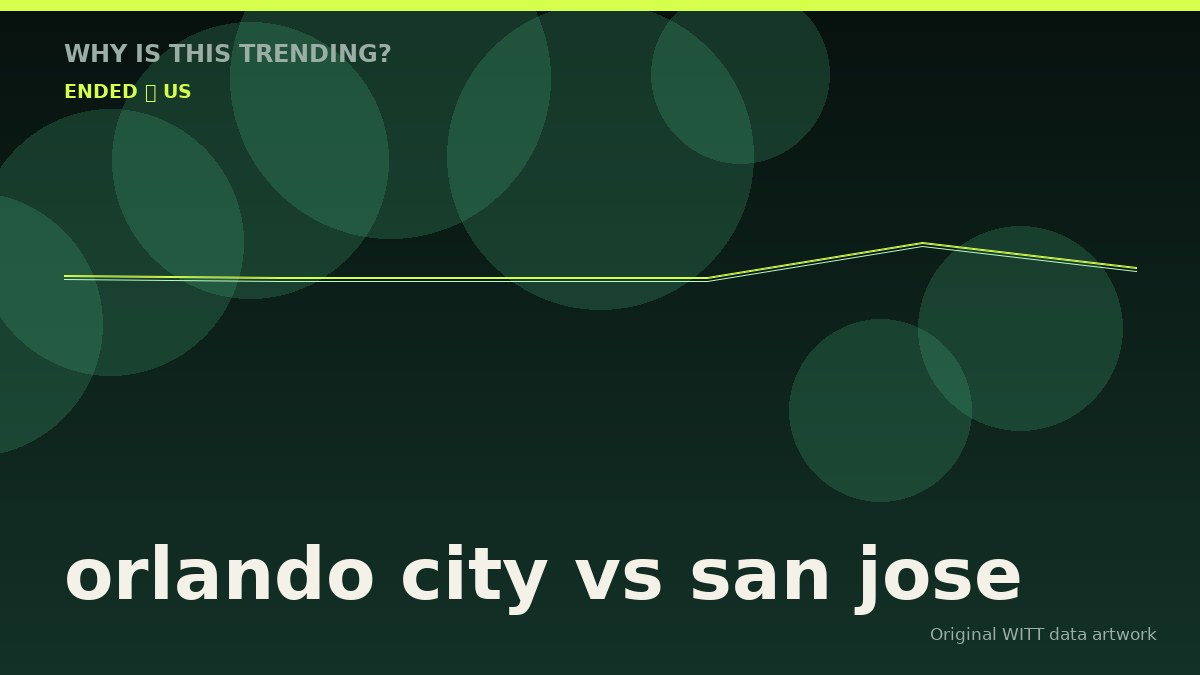
On July 23, 2026, search interest regarding the Orlando City SC vs. San Jose Earthquakes match experienced a notable surge, with activity recorded between 02:10:05 UTC and 02:50:03 UTC. This activity followed a wave of match-day previews published on July 22, which functioned as guides for fans attempting to navigate the broadcast landscape. For the average viewer, the primary friction point was the exclusivity of the broadcast, as the match was primarily available via Apple TV+.
The timing of this search activity aligns with the publication cycle of these previews, which arrived in the hours leading up to the 7:30 p.m. PT (10:30 p.m. ET) kickoff. When major outlets simultaneously publish guides on how to access a match, they create a centralized point of entry for fans seeking clarity on broadcast logistics.
The Exclusivity Factor
Major League Soccer’s broadcast model, which features matches on Apple TV+, has altered how fans engage with game-day logistics. While local radio broadcasts were available via KSFO 810 AM and La Kaliente 1370 AM, the primary digital pathway for the match was Apple TV+. This model requires viewers to understand digital subscription pathways, including the use of free trials. Because the match was not on traditional television networks, fans turned to search engines to confirm the only place to watch, leading to a concentration of traffic around the kickoff window.
This shift involves the requirement for a free trial or subscription to access the content. By explicitly labeling these guides as "how to watch" or "streaming live for free" in their headlines, publishers addressed a specific audience intent: the desire to watch the match while navigating the requirements of an exclusive digital ecosystem.
The Griezmann Effect
Beyond the streaming logistics, the narrative hook was the expected debut of French superstar Antoine Griezmann. The convergence of a high-profile roster addition and a cross-conference matchup against a top-tier Western Conference side like the San Jose Earthquakes contributed to fan curiosity.
The Lions arrive at PayPal Park in difficult form, having conceded six goals in their most recent outing, a road loss to FC Cincinnati, and sitting 12th in the Eastern Conference at 4-9-2. However, Orlando City has entered a new era under Interim Head Coach Martín Perelman.
San Jose Earthquakes
This context—the combination of a struggling team looking for a reset and the arrival of a global icon—amplified the urgency of the search. The match also featured a notable subplot: the first MLS meeting between Griezmann and San Jose’s Timo Werner, two players with significant international history. As reported by Yahoo Sports, the anticipation was palpable, even as the team sought to improve its standing in the Eastern Conference.
Signal vs. Noise
In analyzing this trend, it is useful to observe the relationship between the publication cycle and search behavior. The data shows that the interest spike coincided with the release of match-day previews. This suggests that the trend is a reflection of the media ecosystem's influence on viewer behavior. When publishers provide clear, actionable information on how to access a game, they capture and consolidate the interest of the fanbase. The search volume indicates an audience need for clarity in a digital-first media environment.
It is also important to note that this search volume is a localized phenomenon tied to the specific timing of the match. The search intent is transactional—fans want to know where the game is being hosted so they can tune in. As such, the trend is a reliable indicator of how digital-first sports broadcasting influences search behavior, creating a predictable spike that occurs in the hours immediately preceding a kickoff.
Looking Ahead
As the 2026 MLS season progresses, we can expect similar search patterns whenever high-profile debuts or critical matches occur. The reliance on Apple TV+ as a home for these games means that the "how to watch" query will remain a feature of the match-day experience. For fans and analysts alike, the takeaway is clear: the success of a broadcast is now linked to the ease with which viewers can find the digital front door. As the San Jose Earthquakes continue their push for the Audi MLS Cup Playoffs, the intersection of on-field performance and digital accessibility will continue to dictate the rhythm of online attention. Future matches will likely see similar spikes, provided the media ecosystem continues to prioritize the instructional content that drove this search activity.