Decoding the Regional Media Wave
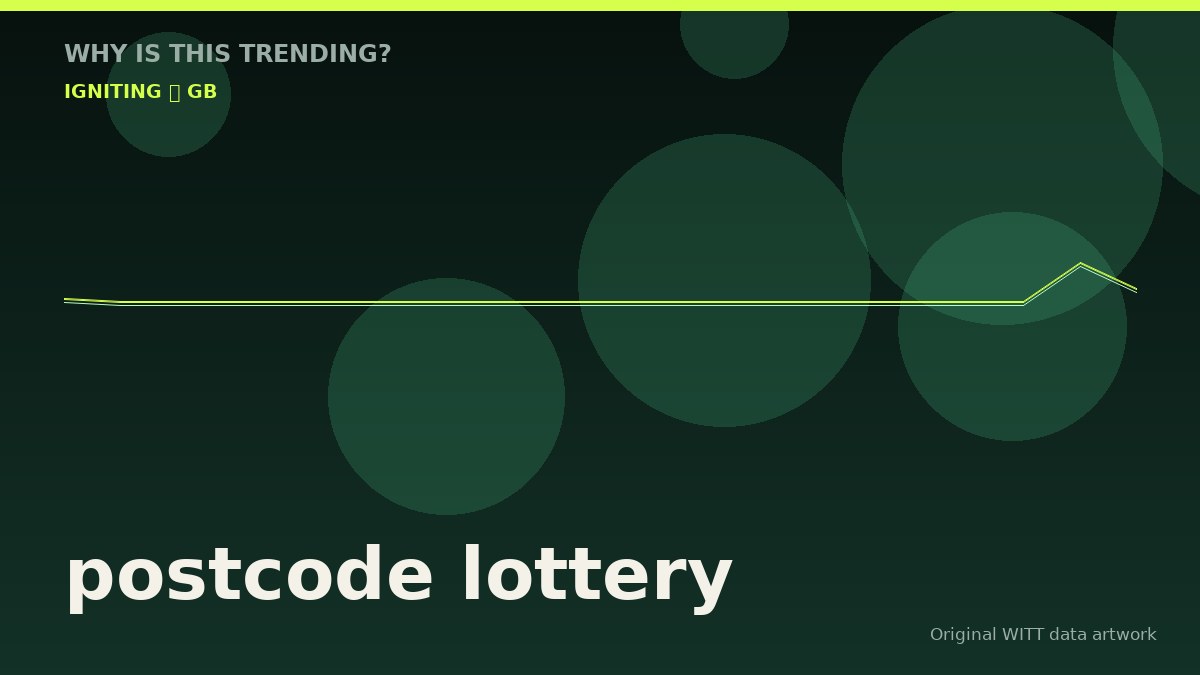
If your local news feed suddenly flooded with headlines about neighbors waking up a thousand pounds richer, you weren't alone. On August 20, 2026, a coordinated cluster of independent regional publications simultaneously reported on localized wins tied to the Postcode Lottery. Rather than marking a single massive jackpot or an anomalous statistical cluster, the flurry of attention reflects the mechanics of the lottery’s daily schedule, which actively distributes localized wins to distinct areas every single day of the year Yahoo News UK.
The attention spike highlights how national subscription models interact with regional journalism. When a popular lottery systematically pushes out localized results across dozens of geographic zones at once, regional newsrooms naturally localize the outcome for their readership. This creates an impression of a centralized national event out of dozens of independent micro-celebrations happening across England, Wales, and the wider UK.
Understanding this dynamic requires looking past the individual human-interest stories to examine how information flows. Independent local outlets from Lancashire to the North East timed their community spotlights around ongoing winner rollouts, turning a standard operational Wednesday into what felt like a coordinated wave of good fortune.
Anatomy of a Daily Prize Cycle
The Postcode Lottery relies on a structured format designed to keep engagement high throughout the month. While weekend draws and special monthly events capture massive headlines—such as the Saturday Millionaire Street prizes or periodic multi-million-pound payouts—the everyday operational heartbeat rests entirely on its daily draws The Northern Echo.
Under this daily mechanism, the organization selects 20 distinct winning postcodes nationwide every day, awarding each participating ticket holder a £1,000 cash prize The Leader. The concentration of reports on August 20 caught fire because multiple regional outlets—spanning Lancashire, Greater Manchester, North Wales, and a mass disclosure of 13 separate postcodes across the North East—published their localized winner roundups on the exact same calendar date Lancashire Telegraph. For instance, residents on Carl Street in Bolton's Halliwell area (postcode BL1 3PQ) found themselves celebrating a morning windfall Yahoo News UK, right alongside neighbors on Cowm Park Way in Whitworth, East Lancashire (postcode OL12 8AH) Lancashire Telegraph.
Further west, communities near the Wrexham and Flintshire border also captured headlines for daily prizes, demonstrating the vast geographic spread that occurs during a single weekly reporting cycle The Leader.
Signal Versus Noise in Regional Wins
It is easy to mistake a calendar alignment of news reporting for a change in the underlying odds or a sudden expansion of the game. What changed on August 20 was not the probability of winning—which remains tied to individual £12.50 monthly subscriptions where a player's postcode serves as their ticket—but rather the velocity and alignment of local press coverage The Northern Echo.
To help separate routine prize distribution from extraordinary jackpot events, consider how the tiers compare:
| Prize Tier | Frequency | Distribution Scope |
|---|---|---|
| Daily Prize | Every day of the year | 20 distinct postcodes (£1,000 each) |
| Millionaire Street | Every Saturday | One shared postcode sector (£1 million pool) |
| Monthly / Millions | Selected dates | Broader sector-wide shares (£250k to multi-million pools) |
The simultaneous reporting wave captured public interest because it mapped the sheer geographic diversity of the daily draw all at once. From Carl Street in Bolton Yahoo News UK to Cowm Park Way in Whitworth Lancashire Telegraph, and across a dozen communities in County Durham and Teesside The Northern Echo, the underlying engine continued its predictable routine while the news cycle amplified the human interest behind it. Beyond the individual wins, the subscription structure also funnels support toward charitable organizations, with a minimum percentage of ticket prices dedicated to good causes across Britain and internationally Lancashire Telegraph.