Decoding the Attention Around 'Primo'
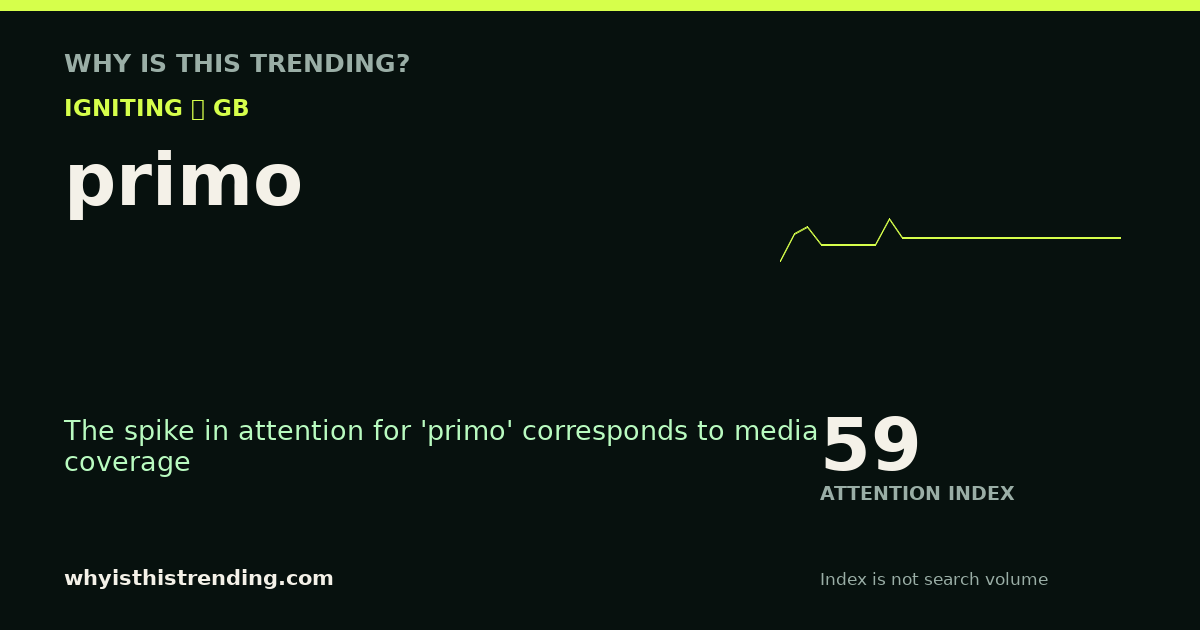
When a singular, common word like primo experiences a sudden surge in digital interest, the immediate challenge for analysts is separating broad linguistic noise from specific real-world catalysts. In this instance, the attention peak—recorded between 2026-07-24T23:20:04+00:00 and 2026-07-25T03:20:04+00:00—ties directly to a wave of news coverage regarding Gambini Spa's first sustainability report published on July 15, 2026.
While the term itself can appear across diverse linguistic and cultural contexts, the concentration of digital queries during this late-July window maps cleanly onto regional publishing schedules. Multiple news sources disseminated details about the milestone between 24 July 2026 16:31 and 25 July 2026 00:14 UTC, directly igniting the observed search momentum across the web.
In forensic trend analysis, tracking these precise release windows helps isolate why a common linguistic root suddenly commands search engine interest. Because the term functions as a primary descriptor in multiple European languages and titles—ranging from corporate milestones to cultural discussions—only the convergence of synchronized media distribution explains the measurable shift in query patterns.
What Actually Changed in the Corporate Landscape
The core narrative driving the attention is a significant corporate pivot by a legacy manufacturing entity. Founded in 1870 and operating out of the Tuscan tissue paper district with international facilities in the United States and Brazil, Gambini Spa published its first sustainability report after more than a century and a half in business.
Crucially, the document—titled Il segno che lasciamo
—was not born out of regulatory coercion. Observers and reports emphasized that the disclosure represents the result of a spontaneous and voluntary choice, not imposed by any rule
(Altopascio.info). By opting into environmental, social, and governance transparency ahead of any legal mandate, the multi-generational family-owned enterprise reframed its public identity from a traditional workshop supplier to a modern, self-auditing global technology leader.
The report itself was compiled over more than a year of internal analysis, involving structured interviews, document reviews, and direct engagement across operational teams. It evaluates everything from internal workplace safety and human capital development to product innovations designed to help clients monitor consumption and minimize waste during manufacturing processes. Guided by an internal committee featuring chief financial, operational, legal, human resources, safety, and marketing leads alongside external sustainability consultants, the project demonstrates how traditional manufacturing sectors are attempting to institutionalize sustainability metrics deep into their operational DNA.
Signal Versus Noise in Trend Forensics
In digital trend analysis, distinguishing between broad terminology and a sharp news trigger is vital. Because primo translates to "first" in Italian and serves as a root component in various names, titles, and phrases, automated tracking tools frequently ingest unrelated chatter. However, the verified attention spike corresponds precisely with financial and corporate media coverage of industrial ESG initiatives rather than casual social media vernacular.
Readers should note that Google Trends attention measures relative changes in query volume rather than absolute search traffic, and it offers no direct proof of consumer intent or long-term behavioral shifts. Furthermore, trending momentum reflects spikes in public curiosity, not direct causal validation of corporate performance or market dominance. Even so, the convergence of a milestone corporate disclosure and subsequent press amplification explains why this specific linguistic footprint flared across digital monitors during this exact window.
The Broader Implications for Industrial Legacy Firms
The voluntary nature of Gambini's report highlights an evolving corporate ethos among legacy industrial manufacturers. As global supply chains face heightened scrutiny regarding resource consumption, waste management, and human capital, proactive disclosure serves as a key differentiator. For a family-run enterprise entering its fifth generation, formalizing internal evaluations across environmental and governance metrics establishes a benchmark for peer companies navigating the shift toward sustainable industrial production.
Ultimately, when a century-old firm opens its operational books to public scrutiny without a regulatory mandate, it signals to markets that transparency is shifting from a compliance checkbox to a core pillar of brand longevity. Observers watching the European industrial sector can expect more legacy firms to adopt voluntary ESG reporting as a mechanism to demonstrate operational maturity and secure trust among international partners, financial institutions, and local communities alike.