Decoding the Attention Spike
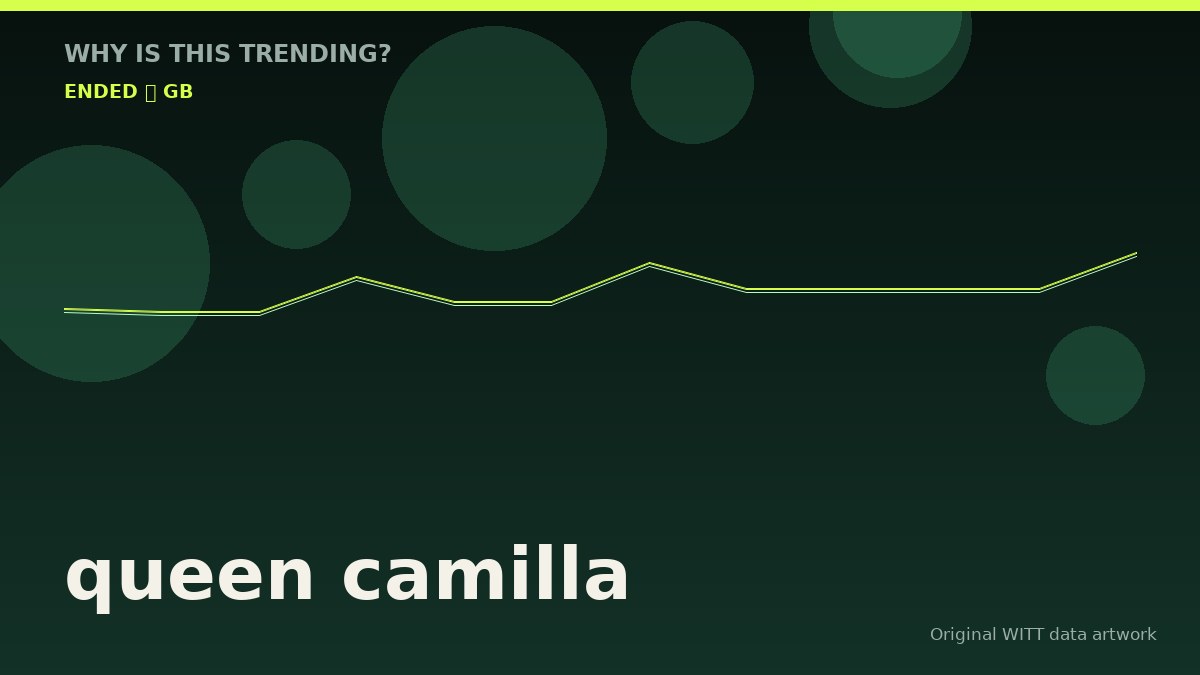
When internet curiosity around a high-profile figure surges overnight, it pays to look past the algorithmic noise and examine the mechanics of the story. Google Trends data shows a sharp upward trajectory beginning on August 8, 2026, directly tethered to the recirculation of claims concerning Queen Camilla and a private family reunion involving King Charles as reported by the Daily Star. Yet, separating confirmed chronology from unverified speculation reveals an ecosystem where anonymous commentary carries as much weight in the news cycle as official palace statements.
The attention mechanism here relies heavily on friction: the juxtaposition of traditional royal protocols with modern, independent digital publishing. While Google Trends attention registers public engagement and curiosity, it does not measure the factual validity of the underlying claims. Understanding what actually changed in the media landscape requires looking closely at the timeline of events, how stories are aggregated across platforms, and why certain narratives capture public imagination faster than others.
In modern digital ecosystems, a trending topic often feeds on preexisting cultural tensions. The intersection of royal family dynamics, personal social media use, and the enduring legacy of Princess Diana creates a potent mix that accelerates sharing. Observers watching these curves climb must constantly ask whether the attention is driven by a genuine institutional shift or simply by the amplification of unconfirmed gossip packaged as breaking news.
Tracing the Timeline: From Althorp to August
The foundational event occurred in late July 2026, when Meghan Markle published a summer-themed photo carousel on social media according to HOLA! USA. The images featured Prince Harry, Prince Archie, and Princess Lilibet during a visit to Althorp House, the ancestral home and final resting place of Princess Diana.
- July 23, 2026: The photo carousel is posted online, immediately generating polarized reactions regarding privacy, digital boundaries, and the legacy of Princess Diana.
- Late July 2026: Reports begin circulating within select media outlets alleging unease inside royal circles regarding the public disclosure of the private family visit.
- August 6, 2026: Further reports surface claiming Queen Camilla explicitly instructed the couple to keep the family reunion offline pursuant to Daily Star coverage.
- August 8, 2026: Public interest indicators register a pronounced upward spike as aggregators and online commentators tie the alleged directive directly to the July photo release.
This sequence demonstrates how a gap of several weeks can exist between an initial event and a broader search attention spike. The delay is typically bridged by secondary commentary, opinion pieces, and tabloid framing that introduces new, unverified narrative elements—such as Queen Camilla's alleged warning—to reinvigorate a story that might otherwise have faded from the daily news cycle.
Signal Versus Noise in Royal Reporting
In trend forensics, distinguishing between verifiable signal and speculative noise is essential for maintaining analytical clarity. The confirmed facts in this sequence are straightforward: the family visited Althorp House, photographs were shared publicly, and the post stimulated intense public debate noted HOLA! USA. Conversely, the assertion that Queen Camilla issued a direct warning—and that her stipulations were intentionally ignored—rests entirely on anonymous attributions reported via the Daily Star.
Neither Buckingham Palace nor Kensington Palace has released an official statement confirming any internal directives, warnings, or reprimands. Observers should note that unnamed sources frequently drive high-engagement headlines during quiet news cycles, transforming routine digital media posts into magnified interpersonal soap operas. The causal link between Camilla's alleged words and the public's fascination is an artifact of media framing rather than verified palace policy or institutional action.
When evaluating these claims, readers must weigh the sourcing credibility. Anonymous insider accounts are notoriously difficult to disprove, which makes them prime vehicles for generating web traffic. However, proximity to power does not equal accuracy, and repetition across secondary news aggregators does not elevate an unverified rumor into an established fact.
A Defensible Point of View
The current surge teaches us more about our collective appetite for royal drama than it does about actual institutional shifts within the British monarchy. When evaluating trending topics involving the House of Windsor, readers should maintain a healthy skepticism toward unsourced directives and dramatic ultimatums. The digital attention graph reacts predictably to conflict, cultural symbols, and emotional triggers—such as the legacy of Althorp House and familial boundaries—long before facts are verified by primary sources.
Treating this trend as hard evidence of an escalating royal rift mistakes algorithmic visibility for substantive news. Instead, view the spike as a reflection of how modern celebrity culture and royal observation intersect online, where narrative friction often outweighs verifiable reality.