The Mechanics of a Routine Spike
In the digital landscape of sports fandom, a sudden surge in search volume often signals a breaking scandal, a career-defining performance, or a high-stakes trade. However, the activity surrounding the Tampa Bay Rays and Toronto Blue Jays on July 20, 2026, serves as a reminder that the most consistent driver of online attention remains the simple, scheduled reality of the professional sports calendar.
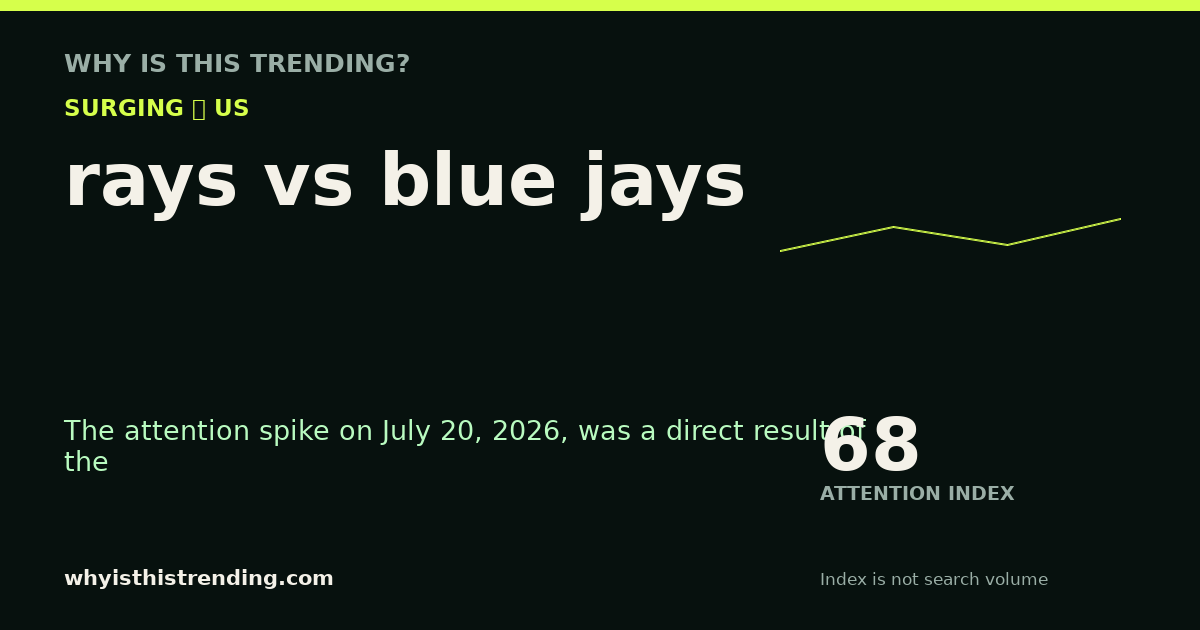
Data indicates that the interest in this specific matchup was not sparked by an anomalous event or an unexpected roster shakeup. Instead, the attention spike on Google Trends—which reached its apex at 22:40 UTC—aligned perfectly with the 7:07 p.m. ET start time of the first game in a four-game series at the Rogers Centre. The timing suggests that the surge was composed of fans looking for broadcast details, confirming starting pitchers, or securing last-minute entry to the stadium.
Contextualizing the Surge
The digital footprint of this event began to form hours before the first pitch. Promotional ticket listings were published at 15:20 UTC on July 20, 2026, creating a clear runway for the subsequent search volume. By the time the game was underway, the combination of fans seeking live updates and those reacting to the promotional availability created a localized, high-intent traffic wave. This pattern is characteristic of "utility-driven" search behavior, where the intent is not to consume news about a controversy, but to facilitate the consumption of a live event.
It is important to distinguish between this type of organic, event-driven traffic and the more volatile spikes associated with breaking news. In this instance, the "signal" is the game itself. The following table highlights the scheduled nature of the series that kept the matchup relevant throughout the week:
View Scheduled Matchups (July 20–23, 2026)
| Date | Matchup | Time (ET) |
|---|---|---|
| July 20 | Rays vs. Blue Jays | 7:07 p.m. |
| July 21 | Rays vs. Blue Jays | 7:07 p.m. |
| July 22 | Rays vs. Blue Jays | 7:07 p.m. |
| July 23 | Rays vs. Blue Jays | 3:07 p.m. |
Signal vs. Noise
When analyzing trending topics, we often look for external triggers—injuries, trades, or controversies. While the Blue Jays' ongoing roster management and the search for trade value in players like Kevin Gausman provide a backdrop of professional urgency, these storylines were not the primary catalysts for the July 20 spike. The noise surrounding the team's season-long struggles and the broader MLB injury report—including news on players like Adley Rutschman or Max Meyer—remained separate from the specific, time-bound interest in the Rays-Blue Jays series opener.
The attention was, quite simply, a reflection of the game-day experience. As the series progressed, the search volume naturally declined, confirming that the initial interest was tied to the immediate event rather than a sustained, long-term narrative shift. For the casual observer, this serves as a useful benchmark: when a sports matchup trends on a game day, the most defensible explanation is usually the most obvious one—the game is happening, and the fans are showing up to watch. The spike is a measurement of engagement with the schedule, not a measurement of public sentiment toward the teams' performance.
The Role of Anticipation
Why does this happen at 22:40 UTC? This timestamp aligns with the middle-to-late innings of a 7:07 p.m. ET start. By this point, the game has established its rhythm, and viewers are likely checking scores, looking for highlights, or confirming the status of the pitchers mentioned in the pre-game notes. The search volume is a lagging indicator of the live broadcast, amplified by the accessibility of mobile-first ticketing and betting platforms that operate in real-time.
Furthermore, the presence of prediction markets for events like the "First Inning Run" on July 21, 2026, highlights how modern sports consumption is increasingly intertwined with micro-betting and data-driven speculation. While these markets are distinct from the July 20 game, they contribute to a broader ecosystem where every game is an opportunity for engagement, keeping the search volume for standard matchups higher than they might have been in previous eras.
Looking Ahead
While the July 20 spike was a standard byproduct of the MLB schedule, the underlying factors that drive such interest remain constant. Fans continue to rely on search engines as their primary interface for ticket procurement and broadcast verification. As the season shortens and teams like the Blue Jays face increased pressure to perform, we may see similar spikes in the future—not because of an anomaly, but because the stakes of each individual game become increasingly significant to the postseason picture. Always verify the specific game-day schedule before concluding that a trend indicates a major league development; in the world of professional sports, the calendar is often the loudest voice in the room.