The Anatomy of a Mid-Week Spike
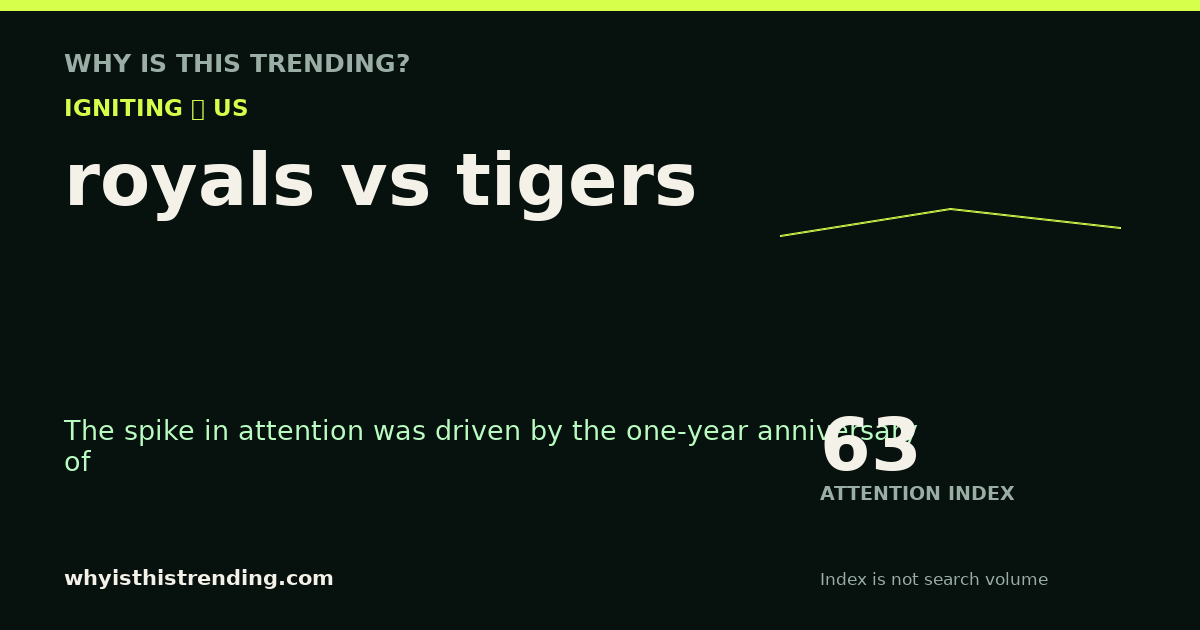
On July 23, 2026, at 22:10 UTC, search interest surrounding the Kansas City Royals and Detroit Tigers matchup experienced a sharp, localized surge. In the world of sports analytics, such spikes are rarely the result of a single, isolated event. Instead, they often represent a “perfect storm” where narrative-driven milestones, institutional news, and commercial incentives collide to pull the casual observer and the dedicated fan into the same digital funnel.
In this instance, the attention was not driven by a singular, explosive play on the diamond. Rather, it was the convergence of three distinct threads: a sentimental anniversary for a rising star, a sudden leadership vacuum in the visiting dugout, and a calculated, region-specific push for betting engagement. Understanding this spike requires us to peel back the layers of what constitutes genuine sports interest versus what is manufactured by the modern digital ecosystem.
The Narrative Anchor: Troy Melton’s Anniversary
The primary driver of pre-game interest was the scheduled start of Tigers pitcher Troy Melton. July 23, 2026, marked exactly one year since Melton’s major league debut against the Pittsburgh Pirates. For fans and sports media, this anniversary provided a natural, human-interest hook to evaluate his development from a struggling rookie—who allowed six earned runs in his debut—to a reliable rotation piece boasting a 1.80 ERA in 2026.
The narrative of “development versus regression” is a staple of baseball coverage. By framing the game as a checkpoint in a rising player's career, sports outlets created a compelling reason for fans to tune in beyond the simple win-loss column. This is the signal: fans are increasingly invested in the longitudinal growth of young talent, and anniversaries serve as the perfect vessel for that analysis. When a player like Melton, who has shown significant improvement in his strikeout-to-walk ratios, takes the mound on a symbolic date, the search volume naturally follows.
The Commercial Multiplier: Betting Incentives
Simultaneously, the digital landscape for the game was heavily influenced by a targeted promotional campaign. As reported by OregonLive, a specific referral code, “OREGON,” was pushed to users in California, Washington, and Oregon, offering a $20 trading bonus for the Royals-Tigers matchup.
This is a classic example of commercial noise acting as a catalyst for search volume. When betting platforms tie incentives to specific games, they effectively manufacture urgency. Users searching for odds or game information were funneled into a broader ecosystem of prediction markets. This activity increases the visibility of the game across search engines, as the platforms themselves optimize for these keywords. It is important to note that while this drives traffic, it represents a shift in the *type* of attention: it is transactional rather than purely athletic.
The Unforeseen Variable: Managerial Absence
Adding to the volatility was the breaking news that Royals manager Matt Quatraro would not be with the team for the game due to a personal matter. In professional sports, the sudden absence of a manager—especially one who recently signed a multi-year extension and holds significant standing in the league—always triggers a flurry of inquiries. This news broke late in the day, likely contributing to the specific timing of the 22:10 UTC spike as fans and media sought clarification on the team’s leadership structure for the series.
The absence of a manager introduces a layer of uncertainty that fans are conditioned to investigate. When a team’s leadership is in flux, the game itself becomes a secondary interest to the story of the dugout. This news acted as a bridge, connecting the casual fan who might have seen a headline about the manager to the deeper, more technical interest of the betting and player-milestone crowd.
Signal vs. Noise: What Matters?
To understand why this trend was so pronounced, we must distinguish between the different types of engagement that created the spike:
- Signal: The genuine interest in Troy Melton’s performance metrics and the professional curiosity regarding the Royals' managerial situation represent the core interest of the baseball-viewing public. This is the “why” that sustains long-term interest in the sport.
- Noise: The surge in search volume driven by the Polymarket referral code is a manufactured metric. While it accounts for a significant portion of the traffic, it does not necessarily reflect an increase in interest in the game’s outcome, but rather an interest in the financial incentives surrounding the game.
When you see a spike like this, it is important to recognize that the “why” is often fragmented. The casual observer might assume the interest was purely about the teams' standings or a high-profile rivalry. However, the data suggests a more complex reality: the modern sports fan is navigating a landscape where the game is increasingly inseparable from the betting markets and the personal narratives of the players involved. The takeaway for the reader is clear: when a game trends, look for the intersection of a human milestone and a financial incentive. That is where the modern attention economy lives.