Decoding the Severe Weather Attention Spike
When public interest surges around a broad search term like severe weather,
it typically takes more than a routine rainy forecast to move the needle. In this instance, the spike maps directly to a concrete cluster of high-impact events occurring across the United States between July 27 and July 29, 2026. Rather than a generalized panic, public attention reflects a string of distinct, damaging weather incidents—ranging from an EF-3 tornado in Wisconsin to severe thunderstorm warnings across Georgia—that left communities grappling with power outages, structural destruction, and life-safety investigations.
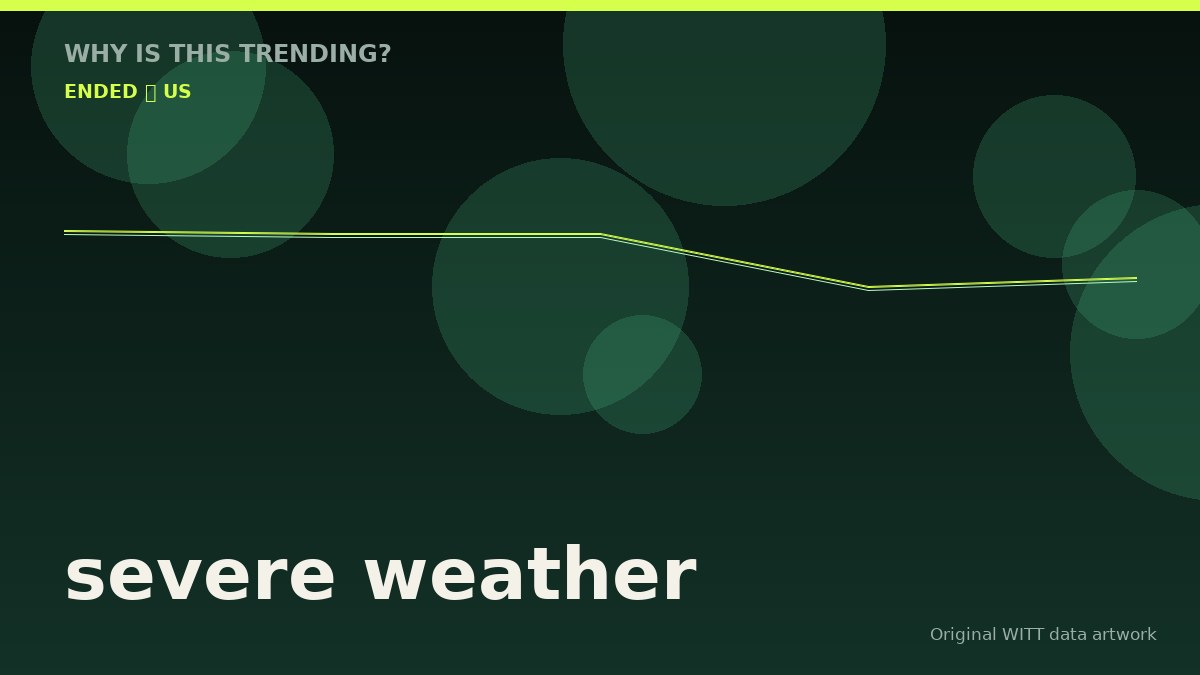
It is crucial to separate actual storm impacts from general search volume fluctuations. Google Trends data illustrates a sharp escalation in inquiries starting July 29, 2026, which aligns cleanly with the timeline of active cleanup efforts, damage assessments, and emergency disclosures following the worst of the severe storms [1].
Anatomy of a Destructive Summer Outbreak
The meteorological setup that fueled these systems carried immense energy. In northeastern Wisconsin, a powerful storm system spawned a violent tornado that traversed 12.1 miles over 26 minutes, packing winds up to 140 mph [6]. National Weather Service meteorologists noted that extreme seasonal instability and rotating updrafts created an environment capable of producing exceptionally large hail and destructive winds [6]. The resulting damage left entire neighborhoods severely impacted, stripping roofs from homes, flipping vehicles, and cutting power to more than 30,000 residents [5].
At the same time, the broader frontal system propagated eastward and southward, generating severe weather hazards in other states:
- Georgia: Multiple counties faced active severe thunderstorm warnings on July 29, bringing heavy downpours, frequent lightning, and gusty winds that triggered localized flooding and debris cleanup [1].
- Pennsylvania: Amid a heavy volume of lightning and torrential rain on July 28, a commercial garage in Oxford Township was completely destroyed by a fire that required a multi-department tanker shuttle operation to extinguish [4].
- North Carolina: Gusty storm conditions forced temporary travel disruptions, including a fallen tree blocking Interstate 77 South near Mooresville [2].
Human Cost and Safety Investigations
Beyond property destruction, the weather event carried severe human consequences that intensified public and regulatory scrutiny. In Downers Grove, Illinois, an unexpected major rain event on July 28 swept two contract workers into a downtown storm sewer pipe during a rehabilitation project [3]. While emergency responders successfully rescued one worker on Monday, a multi-agency recovery effort concluded on Tuesday evening when the second contractor was found dead inside the underground system [3].
We are devastated by the loss of our team member following an unexpected major rain event, and are doing everything we can to support his family during this incredibly difficult time.
Vortex Companies
This fatality prompted immediate investigations by local authorities and the Occupational Safety and Health Administration (OSHA) [3], shifting the public narrative from standard storm tracking to questions surrounding infrastructure safety protocols during fast-moving weather hazards.
Signal Versus Noise in Severe Weather Reporting
When monitoring breaking weather trends, it is easy to mistake widespread social media chatter for actual danger. In this case, however, the digital attention is anchored by solid, verified metrics:
- Signal: Official NWS tornado confirmations, emergency declarations, structural destruction in the Great Lakes, and active OSHA workplace safety probes.
- Noise: Speculative panic over routine summer rain showers and temporary, localized traffic delays that resolved quickly as the cold front pushed offshore.
As the severe threat winds down and clearer, less humid air filters into affected regions [2], attention will naturally pivot from immediate emergency response to long-term recovery and infrastructural reviews. Anyone evaluating future weather risks should rely on real-time alerts from local meteorological offices rather than aggregate trend metrics.