The Dawn Disruption and the Anatomy of an Information Vacuum
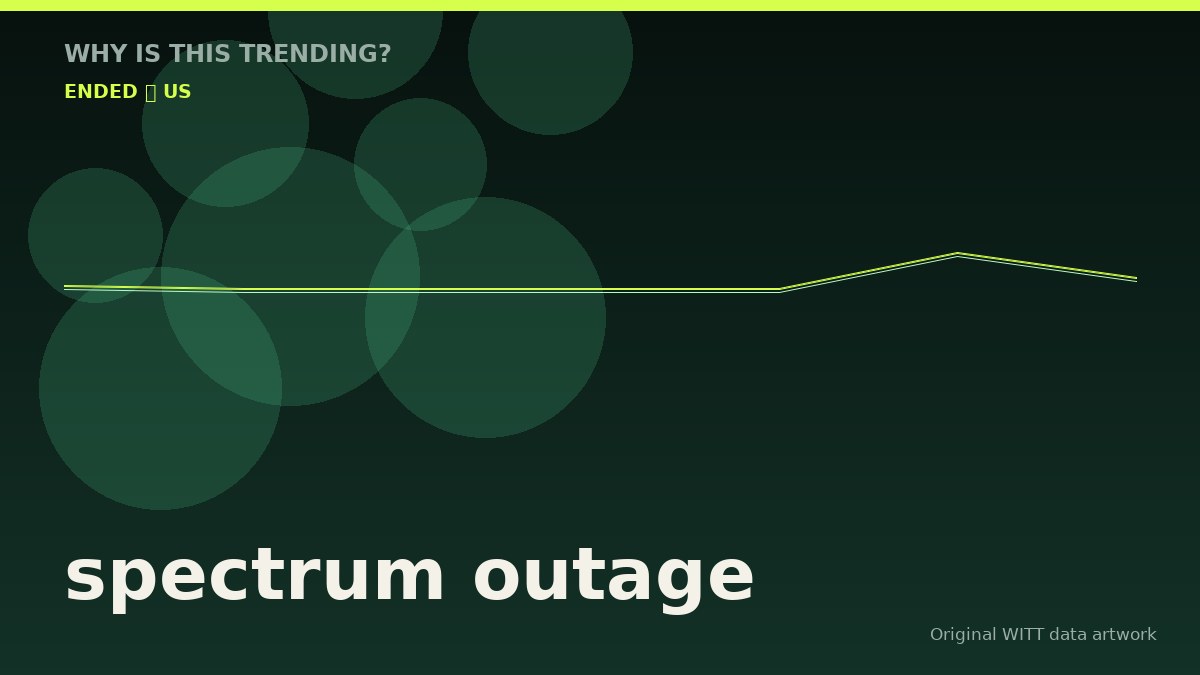
When digital infrastructure fails before the workday even begins, the timeline of information is everything. On July 27, 2026, hundreds of Spectrum customers found themselves locked out of their digital lives while a significant portion of the country was still asleep. According to data from The Sunday Guardian, a sharp increase in user-submitted complaints was recorded at precisely 3:19 a.m. Eastern Time. This early morning jump marked the first documented signal of a broader service disruption, lighting up tracking maps long before corporate support desks opened for standard business operations.
Unlike scheduled maintenance windows or transparently announced updates, this sudden wave of reports caught subscribers entirely off guard. Customers trying to check emails, catch up on remote work assignments, or manage early morning routines instead encountered dropped connections and unresponsive modems. The timing created an immediate information vacuum, as digital service boards lit up across multiple online channels while corporate communications teams raced behind the scenes to assess what went wrong.
In modern digital ecosystems, understanding how these events propagate requires examining the mechanics of crowd-sourced metrics. When thousands of users experience a sudden loss of connectivity simultaneously, tracking platforms register vertical spikes that serve as the earliest warning system available to the public. However, these spikes measure user reporting behavior rather than serving as an official diagnostic broadcast from the telecom provider itself.
What Users Experienced on the Ground
Service disruptions rarely manifest in just one uniform way, and this incident proved to be no exception. Subscribers logging complaints across multiple U.S. regions reported a frustrating array of technical failures, ranging from minor connectivity stutters to complete digital blackouts. The primary issues cited by users included:
- Complete broadband internet service outages featuring zero downstream connectivity.
- Significantly slow, sluggish, or unstable broadband connections that refused to stabilize.
- Frequent, random disconnections that dropped active tasks mid-stream.
- Persistent difficulties accessing external websites, online services, and cloud applications.
- Interrupted remote work setups, video conference meetings, streaming sessions, and online gaming activities.
While broadband connections bore the brunt of the failure, ancillary internet-dependent services like Wi-Fi routing functionality also suffered. Interestingly, early reports indicated that Spectrum’s television and home phone services largely escaped major, widespread impacts, isolating the chaos primarily to data and internet infrastructure.
Social media platforms quickly filled with posts from frustrated customers reporting internet problems, with several users noting they were unable to work remotely or attend online meetings. This online surge matched the timeline captured by tracking platforms, reinforcing that multiple subscribers across disparate locations were losing service at roughly the same time.
Separating Signal From Noise in Crowd-Sourced Outage Reporting
In trend forensics, it is vital to distinguish between a genuine network anomaly and secondary noise. A sudden spike on a crowd-sourced tracking site is a powerful bellwether, but it requires careful interpretation. Because Spectrum has not issued an official statement confirming the cause or scope of the outage, analysts must avoid overstating causation or declaring definitive geographic boundaries without corporate verification.
Social media chatter and crowd-sourced metrics confirm public impact and real-time user frustration, but they cannot reveal the underlying engineering fault on their own. During the early hours of the disruption, the absence of an official breakdown meant it remained difficult to determine whether the failure was concentrated in a few specific hubs or distributed broadly across Spectrum’s national footprint. Recognizing this distinction helps subscribers filter out unverified rumors while waiting for official corporate channels to release accurate restoration timelines.
Navigating Uncertainty While Awaiting Official Word
When major internet service providers experience sudden outages without prompt public disclosures, consumers are left in a holding pattern. The absence of an official timeline or root-cause analysis often magnifies user anxiety, especially for remote workers and digital-first businesses. While crowd-sourced dashboards successfully identify when a network anomaly occurs, they cannot predict when engineers will fully mitigate the fault.
Customers affected by the disruption are advised to monitor official support channels and utilize basic local troubleshooting steps—such as restarting modems and Wi-Fi routers—while awaiting verified restoration updates from the provider.