Decoding the Indian Box Office Surge
When online attention reached high levels on July 27, 2026, for Spider-Man: Brand New Day
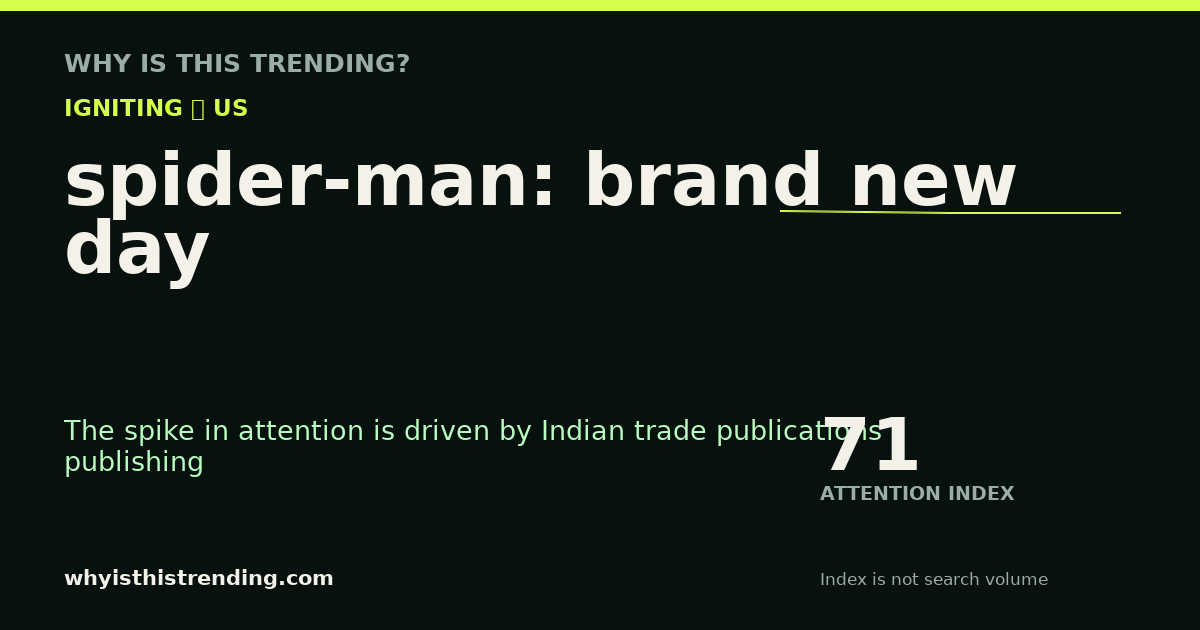
, observers might have initially assumed it was tied to a global marketing rollout or a simultaneous worldwide theatrical drop. Instead, the sudden surge aligns directly with the first wave of regional box office reporting as Indian trade publications began publishing opening day estimates.
Trade pundits and box office analysts in the region revealed that Tom Holland's fourth solo outing as Peter Parker is tracking toward an extraordinary commercial debut. According to regional reports, Spider-Man: Brand New Day is estimated to earn a Rs 50 to 60 crore Day 1 opening in India, signaling a seismic shift in how major Hollywood tentpole films perform within the domestic South Asian theatrical market. Premieres are already witnessing a massive craze, and advance ticket bookings point directly to a bumper opening.
This attention spike underscores a fundamental shift in how digital search interests react to regional financial disclosures. While public tracking captures the velocity of collective curiosity, it does not measure absolute search volume or prove direct causation between a single marketing asset and ticket sales. Rather, the digital spike serves as a downstream reflection of real-world trade reporting hitting digital feeds just as fans prepare for the film's regional release on July 30, ahead of its North American rollout on July 31.
Signal Versus Noise in the Global Hype Cycle
It is vital to separate verified market behavior from the swirling internet noise that always accompanies a major Marvel Cinematic Universe release. While Western social media feeds have been consumed by unverified leaks—such as debated online clips regarding Sadie Sink's mystery character and persistent fan discussions over whether she is playing Jean Grey, Mary Jane Watson, or Gwen Stacy —the tangible financial signal driving the current trend is grounded in hard advance ticket sales and premiere demand.
Star Tom Holland has attempted to tamp down some speculation, noting in promotional interviews that certain characters are not in the movie, while director Destin Daniel Cretton has defended the strict secrecy surrounding the cast as a way to protect the viewer experience. Yet, despite internet debates over hidden clues, the real commercial weight lies in the box office ledger. Hollywood blockbusters are no longer treated as occasional visitors in Indian cinemas; trade observers note they are becoming serious, direct competition for domestic productions by capturing broad cross-demographic appeal by attracting a wider section of the audience.
Furthermore, with no major competing domestic titles occupying the same release window, the Tom Holland vehicle has found an open runway for a dominant theatrical run. If positive word of mouth matches the pre-release frenzy, the film is positioned for an unusually long and lucrative theatrical lifespan in the region.
What This Means for Theatrical Trends
The convergence of intense advance booking demand and a projected Rs 50–60 crore opening reflects more than just baseline fan loyalty to the web-slinger. Director Destin Daniel Cretton’s creative approach—which features visceral first-person web-swinging perspectives inspired by parkour and wingsuit footage studied by the crew —has helped elevate the film past routine franchise fatigue. By utilizing innovative camera placements and miniature perspectives, the production aimed to capture not just what swinging looks like, but what it actually feels like from Peter Parker’s point of view.
Ultimately, if these early trade figures translate into sustained box office retention once audiences fill auditoriums, international markets will wield even greater influence over studio release strategies. As Hollywood blockbusters continue to raise the bar for theatrical spectacle in South Asia, local and global filmmakers alike must adapt to an audience that responds vigorously to immersive craft and clean release windows.