The Catalyst Behind the Digital Surge
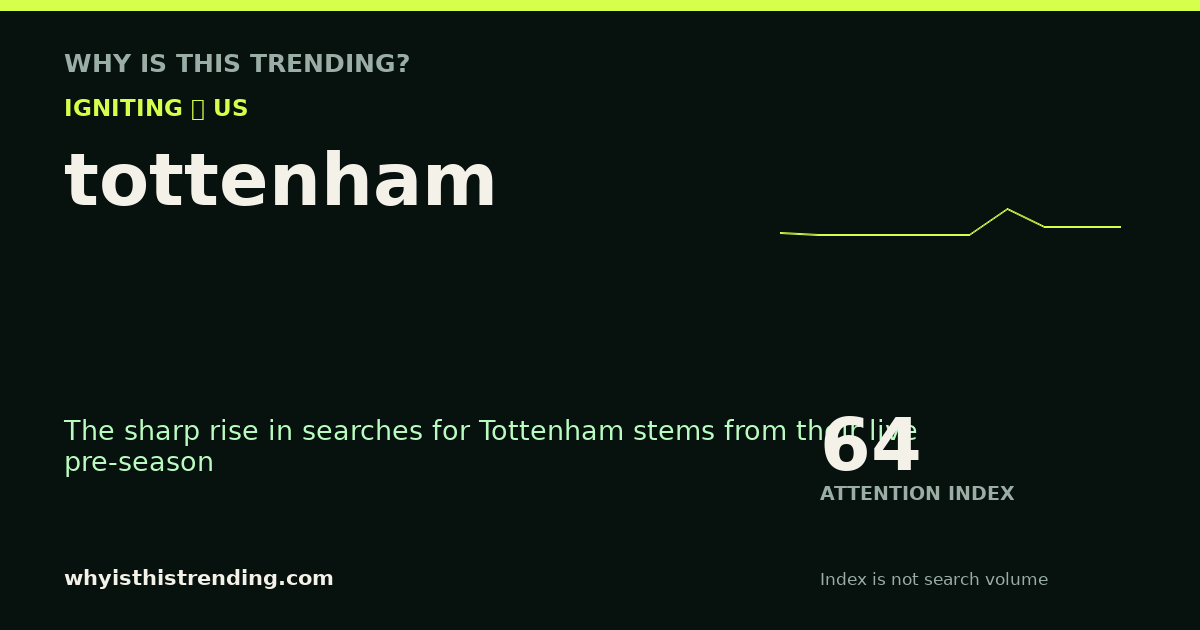
When millions of fans turn their attention toward a single fixture on a weekend, search engines instantly reflect that curiosity. The sudden spike in attention for Tottenham Hotspur is directly tied to their live pre-season friendly match against A-League champions Auckland FC on July 26, 2026. Staged at Eden Park in New Zealand, the encounter served as the marquee opening fixture of Tottenham's Antipodean tour and was widely promoted as a record crowd event.
Because the fixture fell across unusual time-zone boundaries for international supporters—translating to Saturday night in the United States and early Sunday morning in the United Kingdom—supporters flooded online platforms to confirm kickoff times, check broadcast availability, and track real-time score updates. Google Trends data captures this exact window of public engagement, showing how a high-profile live sporting event converts ambient curiosity into immediate search volume.
Understanding this attention mechanism requires looking at how modern football consumption operates across borders. When a Premier League side travels to the Southern Hemisphere for rare summer fixtures, the geographical barrier creates a scramble for digital access. Fans outside New Zealand relied heavily on search engines to untangle regional broadcast variations, find streaming providers, and decode international date-line differences before kickoff.
Contextualizing Tottenham's Antipodean Tour
The fixture at Eden Park carried heightened significance for a club seeking a hard reset. Under the direction of manager Roberto De Zerbi—who took the helm in March—Tottenham entered the new campaign aiming to bounce back from consecutive 17th-place Premier League finishes that placed heavy pressure on the squad. Consequently, every minute of pre-season preparation is being closely scrutinized by a global fanbase eager for signs of tactical evolution.
Adding to the intrigue, the traveling squad featured a distinct blend of emerging youth talent and fresh faces. With several senior internationals tied up in post-World Cup rest periods or recovery programs in London, manager Roberto De Zerbi deployed a youthful starting side captained by Archie Gray. Teenagers like Luca Williams-Barnett and Mikey Moore shared the pitch with established names, drawing intense interest from supporters eager to evaluate the club's next generation.
For Auckland FC, entering the match as reigning A-League champions provided a genuine competitive edge rather than a routine exhibition tune-up under the lights at Eden Park. The contrast between a rebuilding English powerhouse and a confident local champion added a layer of sporting drama that amplified public curiosity worldwide.
Signal Versus Noise in Matchday Attention
It is vital to separate transient matchday logistics from long-term sporting indicators. A massive share of the search traffic surge originated from practical fan queries rather than deep tactical analysis: supporters attempting to navigate regional broadcasting restrictions, locate streaming options on services like SPURSPLAY or Paramount+, and understand the date-line quirk governing the broadcast all contributed heavily to the trend curve.
At the same time, the event underscored the immense pulling power of Premier League clubs visiting previously under-served regions. Marking Tottenham's first tour to New Zealand in more than half a century, the match against Auckland FC provided a rare spectacle for local fans and a stern test against the reigning A-League champions at the historic national stadium. While pre-season results rarely dictate regular-season outcomes, the intense digital reaction demonstrates how effectively global club friendlies can mobilize worldwide attention overnight.
What readers should take away: Search spikes driven by live sports are heavily weighted toward operational logistics—such as kickoff times and streaming links—rather than definitive performance evaluations. When assessing a team like Tottenham during an overseas summer tour, view the initial digital wave as a measure of global reach and logistical curiosity, reserving true sporting conclusions for the competitive fixtures ahead.