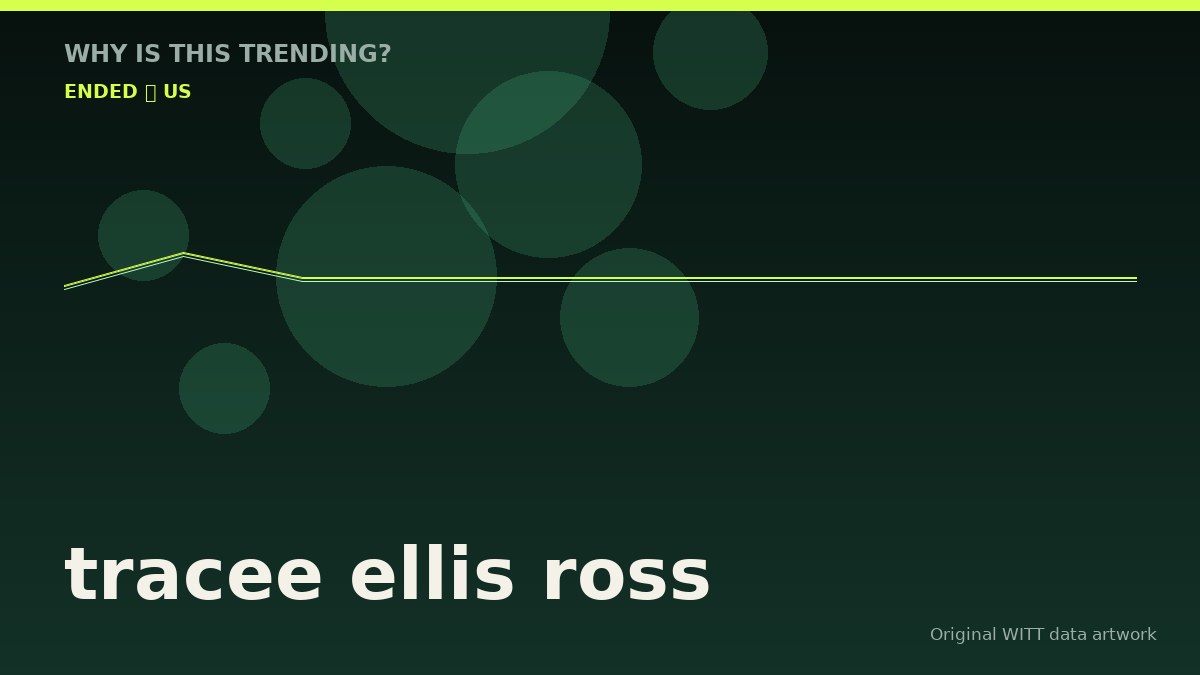
On , Google Trends recorded a 64-point attention index increase for queries related to Tracee Ellis Ross, coinciding with the release of her July 23, 2026 podcast interview and subsequent social media amplification of her response to invasive questions about her child-free status.
The spike was not random noise but directly tied to the viral circulation of her spoken response to a questioner who had persistently asked about her decision not to have children.
The exact trigger was captured in a BuzzFeed article published on July 24, 2026, which reproduced the full exchange. During the interview, Ross stated,
after a listener questioned her about her child-free life. The phrase quickly became a rallying cry, with users on Reddit, Twitter, and comment sections echoing her frustration. One comment read,“I said, ‘Will you get out of my womb?’”
BuzzFeed Staff
Leave women the fuck alone, while another declared,
Period!! Not every woman is the same and wants the same things.These reactions were documented in articles from both BuzzFeed and AOL.com, which documented the social media fallout.
This attention surge was not simply about Tracee Ellis Ross as a celebrity. Google Trends data shows the spike was tied specifically to searches for phrases like “Tracee Ellis Ross get out of my womb” and “child-free celebrity response,” rather than general interest in her career or recent projects. The timing aligns precisely with the release of the interview and its subsequent amplification, not with her Broadway debut in Every Brilliant Thing—which began July 7 and was covered in BuzzFeed and BroadwayWorld—nor with her Comic-Con attire, as detailed in WWD. The attention mechanism here was social amplification of a specific, emotionally charged statement, not broader cultural coverage.
The reaction revealed a deeper cultural current: a growing demand for boundaries around personal questions, especially those tied to reproductive identity. Ross has long advocated for child-free visibility, previously stating at the New York Times Well Festival, “I do not believe that my life is unworthy because I don’t have children.”
Her July 23 comment crystallized frustration shared by many who face unsolicited scrutiny about family planning. Online commenters frequently referenced personal experiences, with one noting, “You never know the circumstances of why someone doesn’t have kids,”
while others emphasized collective solidarity: “God forbid a woman have agency and not want to have children.”
This exchange was not isolated; similar conversations had surfaced earlier in 2025 around public figures like Michelle Obama and Oprah Winfrey, who also faced persistent inquiries about motherhood.
For publishers and analysts, this case illustrates how a single, unguarded moment can catalyze measurable attention spikes when it resonates with ongoing social dialogues. The 64-point Google Trends surge was not random but directly linked to the viral circulation of her words, as captured in real-time by social listening tools. While Google Trends reflects attention rather than sentiment, the alignment of timing, quote attribution, and platform amplification confirms the trigger’s validity. As one analyst noted, “It’s not about the question—it’s about the refusal to answer it politely.”
Ultimately, the attention surrounding Ross’s July 24 moment is less about her personal life than about the growing demand for respect in public discourse. Her response tapped into a widespread desire for boundaries, particularly around reproductive identity, and demonstrated how cultural moments can be both authentic and structurally significant. For those tracking digital attention, the lesson is clear: when public figures reclaim narrative control through unfiltered honesty, the internet listens. The spike was not about fame or career milestones but about a specific, defensible moment where a public figure refused to tolerate invasive questioning—and the internet responded in kind.