Decoding the Spike in Attention
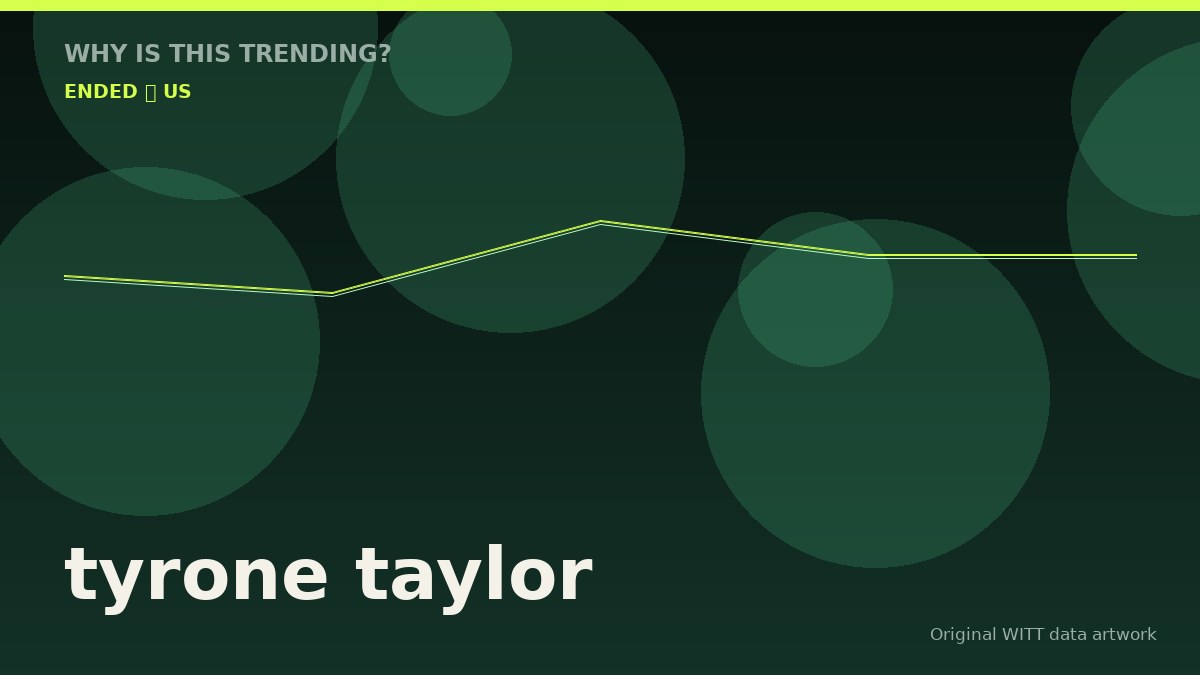
When public interest in a professional athlete suddenly surges, it usually maps cleanly onto a high-stakes, live-broadcast moment. Interest in Tyrone Taylor rose sharply during the afternoon of July 26, 2026. That digital wave aligned precisely with the unfolding drama at Citi Field, where the New York Mets were locked in a tense battle to avoid a series sweep against the Los Angeles Dodgers.
It is vital to separate the mechanics of attention from proof of causation. Public curiosity does not magically cause a baseball to clear an outfield wall; rather, the live athletic event acts as the catalyst, driving fans to search engines for video replays, live statistics, and context. Taylor provided precisely the kind of explosive swing that captures collective curiosity in real time, transforming an ordinary Sunday afternoon ballgame into an urgent query across mobile devices and home computers nationwide.
Understanding this attention mechanism requires looking at how digital behavior mirrors physical sports consumption. As viewers tuned into the broadcast or tracked live win-probability models, a dramatic shift on the diamond immediately triggered parallel activity online. People sought out verification of the score, video clips of the home run, and background data on Taylor's recent performance. The resulting trend is a digital footprint of live sports engagement, charting the exact second a game's narrative pivot point registers in the public consciousness.
How Defensive Lapses Set the Stage
To understand why Taylor's sixth-inning blast carried such immense weight, one has to look at how the Mets arrived at that precarious juncture. Earlier in the week, defensive misadventures had repeatedly undermined strong pitching performances, such as a prior 4-3 loss where unearned runs accumulated rapidly following fielding mistakes as detailed in team coverage.
That pattern threatened to repeat on July 26. After starting pitcher Freddy Peralta ran into trouble, defensive miscues in the fourth inning—including a bungled ground ball by Jared Young and a failure by Peralta to cover first base—helped the Dodgers claw ahead to a 3-1 lead according to game reports. For four innings, the Mets offense scuffled against Dodgers right-hander Emmet Sheehan, managing just a single run and struggling to mount a cohesive threat. Those compounding errors created a high-leverage environment where any mistake carried severe consequences, leaving fans anxious about whether another late-game collapse was looming.
When a team sits at 44-62 with the trade deadline rapidly approaching, every inning takes on an amplified emotional charge. The defensive errors earlier in the series had exposed a roster under stress, trying out unfamiliar positions and searching for stability. This backdrop made the impending offensive breakthrough feel not just like a welcome surprise, but a necessary psychological rescue for a team fighting to stay competitive in front of their home crowd.
The Swing That Shifted the Momentum
The mood of the afternoon flipped instantly in the bottom of the sixth inning. With the offense searching for a spark against the Dodgers bullpen, Taylor stepped up and belted a three-run home run off Evan Phillips to left field, putting the Mets ahead 4-3 according to game recaps. The long ball marked Taylor's fifth home run of the month, capping off a blistering July in which he batted .355 over a sustained stretch of games.
Marcus Semien piled on with another three-run home run in the seventh inning, turning a narrow lead into a comfortable 8-3 advantage reported by NorthJersey.com. The bullpen locked down the final five frames to secure the win, moving the Mets' record to 44-62 as noted in BBC Sport's live coverage. For fans watching the game or tracking scores online, Taylor's clutch hit served as the turning point that rescued the afternoon and averted a demoralizing sweep.
For readers attempting to separate signal from noise in daily sports trends, the lesson of this viral surge is clear. Taylor's trending status was not an arbitrary social media artifact or an ephemeral meme; it was the direct digital echo of a high-impact athletic achievement delivered precisely when his club needed it most. As the team pivots toward its upcoming series, performances like Taylor's remain the definitive signal that cuts through the statistical noise of a challenging season.