The Anatomy of a Digital Spike
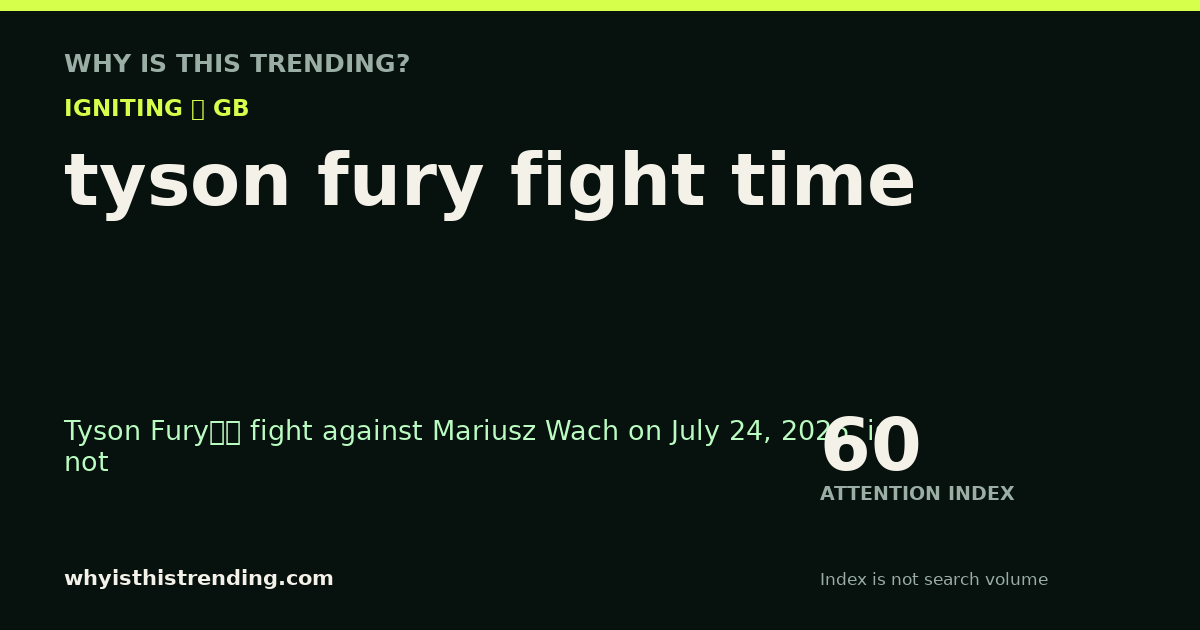
If you spent your Friday searching for a way to stream the Tyson Fury versus Mariusz Wach fight, you are not alone. Search interest for the heavyweight's 39th professional outing surged on July 24, 2026, as fans attempted to locate a broadcast channel for the bout. The confusion is understandable: in an era where most major professional boxing matches are gated behind pay-per-view or premium streaming subscriptions, the absence of a live feed for a high-profile fighter feels like an anomaly.
However, the lack of a broadcast is by design. The bout, held in Pattaya, Thailand, is not being shown on any television channel, barring an unforeseen last-minute change. For the average viewer, the traditional experience of watching a fight live is not available for this specific matchup.
From Live Sports to Documentary Content
The primary driver behind this arrangement is the ongoing production of the Netflix series At Home with the Furys. The streaming giant is currently filming the show's third season, and footage captured during the Fury-Wach encounter is intended for that release. This approach highlights a shift in athlete branding, moving away from the infrastructure of live pay-per-view events toward the controlled, narrative-driven environment of long-form documentary content.
For Fury, who is 37 years old, this fight serves as a tactical warm-up. He is preparing for a potential showdown with Anthony Joshua later this year. By opting for this environment, Fury can maintain his activity levels and sharpen his skills without the logistical requirements of a major televised event. As noted in reporting from BBC Sport, Fury weighed in at 18st 13lb—notably lighter than his opponent—and emphasized his desire to stay busy in the ring, even joking about the possibility of having 10 fights this year.
Understanding the Event Format
The spike in search volume reflects a disconnect between the public's expectation of a televised sporting event and the reality of this match. It is helpful to distinguish between the anticipation of a major fight and the specific format of this engagement:
- The Expectation: The assumption that every professional heavyweight fight involving a name as large as Tyson Fury will be available on a standard sports platform.
- The Reality: The event is taking place in Pattaya, Thailand, in front of approximately 1,500 fans, with the primary intent of capturing footage for documentary production.
While fans might be frustrated by the lack of a live stream, the event serves as a bridge to a larger goal. With Anthony Joshua scheduled to fight Kristian Prenga in Saudi Arabia on Saturday, the timing of Fury’s bout is intended to keep him in the mix without overshadowing the broader heavyweight landscape. The fact that Fury may attend the Joshua fight in person suggests that the focus remains on the eventual Battle of Britain
rather than the immediate broadcast of his current exhibition.
Contextualizing the Shift
It is worth noting that this is not the first time a major athlete has leveraged streaming platforms to bypass traditional media models. However, the decision to keep a fight off live television is a reminder that the commercialization of boxing is evolving. When a fighter of Fury’s stature chooses to forgo a live broadcast, it signals a shift in how value is generated—moving from immediate viewership metrics to long-term content engagement on platforms like Netflix.
For those still looking for updates, the best approach is to monitor official social media channels or sports news outlets that are tracking the event through live blogs, such as the coverage provided by Sky Sports. These outlets serve as the primary conduits for information in the absence of a live video feed. Do not expect a last-minute broadcast link to appear; the nature of this event is firmly rooted in the documentary production cycle, and it is unlikely to change before the final bell rings.