The Game Driving the Spotlight
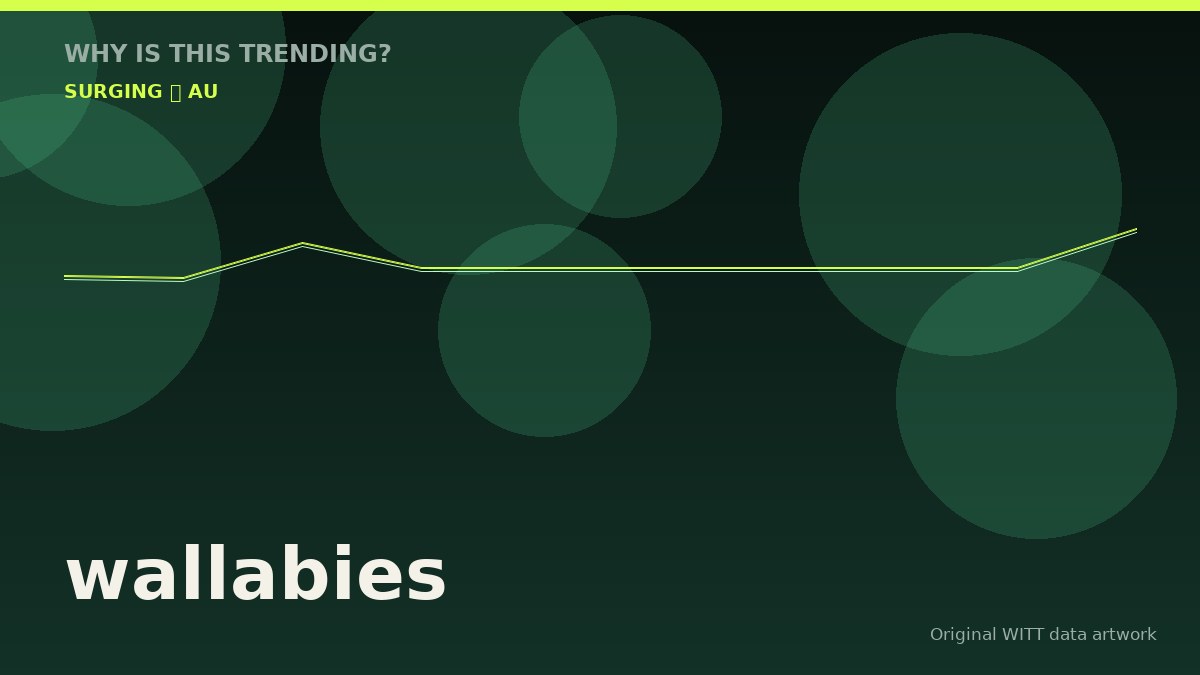
Search interest in the Wallabies surged across Australia ahead of their heavyweight international men's rugby union Test against South Africa's Springboks at Optus Stadium in Perth. With the prestigious Mandela Challenge Plate on the line—a trophy the Springboks have held since 2023—the fixture captured the nation's sporting attention as coach Les Kiss's side faced the reigning world champions. Both teams entered the match carrying significant momentum, with the Australians looking to build upon an unbeaten run under their coach while welcoming a massive, vocal crowd into a sun-drenched stadium environment.
Bookmakers had listed the Springboks as warm favorites at $1.47 compared to the Wallabies at $2.70, setting the stage for an immense challenge (Nine.com.au). Perfect dry conditions and a buzzing match-day atmosphere provided an ideal backdrop for a classic encounter, even as local fans in Western Australia shared their sporting bandwidth with a massive Australian rules football frenzy happening across the city.
The Suaalii Experiment and Tactical Tweaks
Much of the pre-match analysis focused heavily on code-hopper Joseph-Aukuso Suaalii, who was named to start in the No.11 jersey on the left wing for the first time in his Test career. Having performed solidly in the centers through 22 internationals following his high-profile switch from rugby league, the shift to the flank was designed to give the powerful runner more open space to exploit. Analysts and commentators noted that Suaalii's exceptional aerial ability and roaming brief would provide crucial attacking impetus, allowing him to swing off his wing on counter-attacks when not required to hold strict width as a primary aerial target.
This positional shuffle allowed Len Ikitau to slot into outside centre alongside experienced inside centre Hunter Paisami, recreating a proven midfield combination. Meanwhile, coach Les Kiss opted for a six-forward bench split to combat the physical challenge expected from the visiting pack, retaining tactical flexibility with utility back Harry Potter among the reserves (The Sydney Morning Herald). This deliberate bench strategy was engineered to match the famous physical depth of the South African reserves late in the game, forcing both sides into an 80-minute physical arm wrestle.
Furthermore, the tactical adjustments extended to how the Wallabies planned to handle the breakdown and aerial contests. Kiss emphasized that the team needed to back their game plan and maintain concentration against the top-ranked side in international rugby. The inclusion of versatile reserves gave the coaching staff options to modify their defensive structures as the game wore on, creating intense public discussion across digital platforms and sports broadcasts regarding how Australia would manage the physical onslaught.
Late Disruption in the Forward Pack
The Wallabies' preparations suffered a significant setback when in-form lock Josh Canham pulled up lame with a hamstring issue during training (Nine.com.au). Losing a primary line-out caller and a player who had been in stellar form presented an acute strategic problem just hours before kickoff. Captain Harry Wilson noted the magnitude of Canham's absence, acknowledging his exceptional jumping ability and line-out capabilities.
To patch the gap, firebrand Lukhan Salakaia-Loto was promoted directly into the starting side. While he may not replicate Canham's exact aerial presence, Salakaia-Loto brought immediate abrasive physicality and a relentless work rate into the tight exchanges, lining up alongside Jeremy Williams to test themselves against formidable Springbok enforcers like Eben Etzebeth and Franco Mostert.
Signal Versus Noise
It is crucial to separate temporary search metrics from proof of causation or long-term team trajectory. The spike in attention observed on search engines reflects immediate match-day curiosity, lineup debates, and pre-match broadcast tune-ins rather than a permanent shift in international rugby dominance. While casual observers might view the Wallabies' underdog status purely through the lens of bookmakers' odds, the underlying signal points to genuine public intrigue over tactical evolution under Les Kiss—particularly how experimental selections like Suaalii's wing switch hold up against the most clinical defense in world rugby.
Readers tracking this trend should understand that search volume spikes driven by live sporting events mirror immediate appointment-viewing behavior rather than sustained structural shifts in fan engagement. As the international rugby calendar progresses toward future fixtures and looming global tournaments, analysts must look past the initial game-day noise to evaluate whether structural adaptations in squad depth and positional versatility yield enduring competitive results on the pitch.